Henry Charles Carey Quotes
It the British System is the most gigantic system of slavery the world has yet seen, and therefore it is that freedom gradually disappears from every country over which England is enabled to obtain control.


Canada was then still under British rule.


He was making a generalization based on his historical study of nations and societies.


"Imperium" is a Latin word which, in a broad sense, translates roughly as 'power to command'. In ancient Rome, different kinds of power or authority were distinguished by different terms "Imperium" referred to the sovereignty of the state over the individual—Wikipedia. The Consul was a wonderful diplomat. He had no respect for the South not only because they were fighting to maintain slavery, but also he found most of their diplomats and officials very incompetent. He found it hard to participate in all the Confederate ceremonies as he was their exhibit number one that they had International Recognition and they "exhibited him frequently. Despite this he was charming and never argumentative about slavery or other political positions that he loathed. As a matter of fact, the Southern Diplomats regarded him as a man sympathetic to the South with an understanding of their point of view. As a result he gained a huge amount of intelligence which he regularly dispatched back to London. England was neutral {35520} in the Civil War, but England did not recognize the Confederacy as a nation, else they would have sent an ambassador. The Southern politicians worked hard to get him to carry their message that if they would be recognized, they would grant England many favorable trade advantages as the English textile industry really wanted Southern cotton. While apparently sympathetic to the Southern cause, his reports contained all the negative information about the South and counseled against recognition just as the English Ambassador in Washington did—see {583131}.


Burke argued for England giving America much more freedom and self determination.


Referring to the Arawak natives he found when he landed in the "new world—San Salvador:"

Referring to Black Congressman Julian Bond: Louis Eugene Walcott


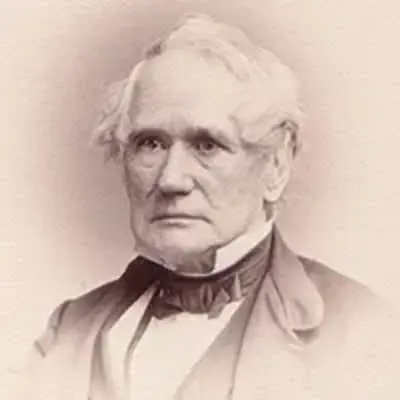
Henry Charles Carey was the leading 19th-century economist of the American School, and chief economic adviser to U.S. President Abraham Lincoln.
