Arthur Chichester Quotes
If His Majesty will, during their [the earls of Ireland] absence, assume the countries into his possession, divide the lands amongst the inhabitants … and will bestow the rest upon servitors and men of worth here, and withal bring in colonies of civil people of England and Scotland … the country will ever after be happily settled.
The Irish Earls of Ulster, after a failed rebellion against English rule, fled to the European continent. As Chichester realized, this created an opportunity for the King to name new Earls and grant them the lands and possessions of the Earls who had fled. And since the Irish people were loyal to their traditional Earls. He suggested that English and Scots colonists be recruited to settle the lands. The King agreed and referred to the project as the “Ulster Plantation”. This was the reason that Northern Ireland had a much larger Protestant population percentage than the rest of Ireland and wanted to remain part of England when Ireland obtained its independence.
Arthur Chichester, 1563–1625, 1st Baron Chichester, English administrator and soldier, English Lord Deputy (Governor) of Ireland, Recommendation to English King James I, September 1607
Sourced by: Eigen's Political and Historical Quotations


While the economics of land is described accurately, immigrants from most of the world would never in their home country ever be able to earn enough in a few years to acquire that much land. So the prospect of land ownership was a fundamental selling point and was a major spur to immigration to America where land was and is plentiful.

At this point in the convoluted history of Irish-English politics, the majority of the Irish upper class and members of Parliament were large landholders whose estates had been accumulated and legalized under English


One of the reasons that Jefferson and others were so anxious to expand the territory of the United States was that Britain had operated with the policy that curtailed and limited the population growth of the American colonies and the resentment of this policy led to growth of America and the Westward expansion.


When the British first colonized South Africa, the area they used was akmost uninhabited or very sparcely so. However, some Black tribes (including the Zulus) were moving from the north and themselves were colonizing or annexing the areas to their kingdom. The British were most interested in Trading so did not have large land asperations. The Dutch white Boer Africanners, in contrast, wanted to farm the lands and use the range for their cattle. They wanted the land. The English policy was that there would be friendly relations with the Black tribes surrounding their Cape Colony and no one should take their land. However the Boers started attacking the Black areas and seizing their farms and villages. At first, the English assumed that the Blacks would easily be able to ward off the invasion as the Afrikanners had no professional troops like the British. However, the neighboring tribes were not very warlike or good fighters. They were being overrun by the Zulus coming from the North and the Boers from the South. The British Government had a real problem in that they would have to have British soldiers fight the white Afrikanners if they wanted to stop the illegal white invasions. This was the root of the Boer War where the British would be fully at war with the Africanners.


Because of the classic historical anti-Semitism and discrimination, Jews were barred from land ownership and as a result few were farmers or had agricultural experience in their families. They were tradesmen, artisans, professionals in Europe. So amongst Jews and non Jews alike the notion of Jews settling the land of Palestine and farming it or trapping, the way the Boers had in South Africa or the French in Canada, was not a very credible image. The Zionists, realizing this potential weakness, placed strong emphasis on agriculture, developed the agricultural kibbutz concept and encouraged Jews to become farmers. The effort was so successful that almost all the leading early Zionist immigrants to Palestine became farmers. When independence came to Israel, the Jewish agriculture was more productive than most of that in Europe and almost on a par with small farms in the United States. The Israelis were known for “making the desert bloom.

Executed by the English for his part in the Easter Uprising.

The whites had come to South Africa by sea—English and Dutch. Many settled at the Southern Shore—Capetown area. The Dutch Boers however were more interested in farming and commerce and moved North taking land from the natives who sparsely populated the interior of the land. At the same time the aggressive and sophisticated Zulus came from the North. Like the Boers, they were after land and seized it from the natives. It was inevitable that the two conquering, land grabbing groups would run into each other. The English had had a number of wars with the Zulus, but the English were not real competitors with the Zulu for land. So when England annexed the Tranvaal area, the Zulus were pleased as the English would control the Boers and the Zulus did not have to be contesting every bit of ground. However, the Boers and the English split over the English restricting the Boers from seizing native and Zulu land (which the Zulus had seized just like the Boers). The Boer War resulted, and to this day the Zulus and the native Black tribes are more comfortable with the South Africans of English extraction than those who are in the Boer community.


The King wanted colonists for the American colonies, but did not want Roman Catholics.

There had been no tradition of self government or even rights in Germany and some like Hamilton thought that the immigrants from such a totalitarian tradition would not handle the relative freedom of America. They were wrong.

They were corresponding about the anti-Chinese movement in America and the attempt to exclude Chinese from immigration to the United States and ethnically cleanse the country.

He was a great believer in moving large numbers of Dutch settlers to the Dutch colonies in the East Indies.

See {633119} for the basic provision of the Dawes Act.


English owners of Irish Estates did not get along with the Irish natives very well. They were perceived by most Englishmen as uncivilized, primitive barbarians who were not hard workers or industrious people. Further, England had turned Protestant and made Ireland such, and the Roman Catholic Irishment did not want to have much to do with the English who were occupying their land and robbing them of their religion. So the English estate managers sought to induce English to settle in Ireland.
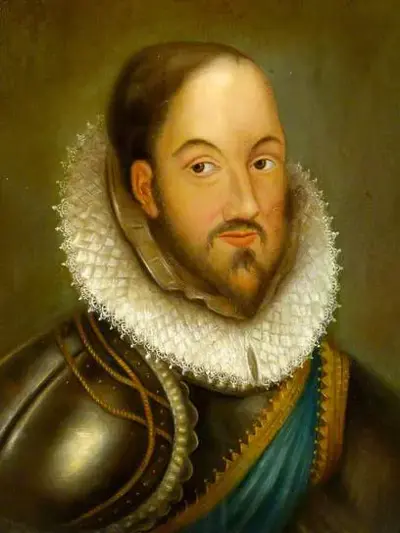
Arthur Chichester, 1st Baron Chichester, (known between 1596 and 1613 as Sir Arthur Chichester), of Carrickfergus in Ireland, was an English administrator and soldier who served as Lord Deputy of Ireland from 1605 to 1616. He was instrumental in the founding and expansion of Belfast, now Northern Ireland's capital. Several streets are named in honour of himself and his nephew and heir Arthur Chichester, 1st Earl of Donegall, including Chichester Street and the adjoining Donegall Place, site of the Belfast City Hall.
