Nicholas Vansittart Quotes
In order to assist unemployed workmen, in removing to one of our colonies…the not inconsiderable sum of 50,000 pounds would be set aside to subsidize emigration to the Cape, where from the mildness of the climate and the fertility of the soil in these parts, a rapid and abundant return may reasonably be expected.
Nicholas Vansittart, 1766-1851, Chancellor of Great Britain, July 1819
Sourced by: Eigen's Political and Historical Quotations

This was the justification for the Boer, South African farmers trekking North and seizing Black Native land


When the British first colonized South Africa, the area they used was akmost uninhabited or very sparcely so. However, some Black tribes (including the Zulus) were moving from the north and themselves were colonizing or annexing the areas to their kingdom. The British were most interested in Trading so did not have large land asperations. The Dutch white Boer Africanners, in contrast, wanted to farm the lands and use the range for their cattle. They wanted the land. The English policy was that there would be friendly relations with the Black tribes surrounding their Cape Colony and no one should take their land. However the Boers started attacking the Black areas and seizing their farms and villages. At first, the English assumed that the Blacks would easily be able to ward off the invasion as the Afrikanners had no professional troops like the British. However, the neighboring tribes were not very warlike or good fighters. They were being overrun by the Zulus coming from the North and the Boers from the South. The British Government had a real problem in that they would have to have British soldiers fight the white Afrikanners if they wanted to stop the illegal white invasions. This was the root of the Boer War where the British would be fully at war with the Africanners.
He led 88 Black Americans to colonize Africa as the first official U. S. Government colonization attempt in conjunction with the American Colonization Society.

He was a great believer in moving large numbers of Dutch settlers to the Dutch colonies in the East Indies.


He was pushing the idea of getting the poor and destitute of England to go to the American colonies where a labor force was needed. “Fry” was a term for offspring — children.

Fiji had undergone a succession of coups and the unstable political situation and the ethnic strife had caused man of the educated young people to emigrate. This “brain drain” is common in many third world countries.

Because of the classic historical anti-Semitism and discrimination, Jews were barred from land ownership and as a result few were farmers or had agricultural experience in their families. They were tradesmen, artisans, professionals in Europe. So amongst Jews and non Jews alike the notion of Jews settling the land of Palestine and farming it or trapping, the way the Boers had in South Africa or the French in Canada, was not a very credible image. The Zionists, realizing this potential weakness, placed strong emphasis on agriculture, developed the agricultural kibbutz concept and encouraged Jews to become farmers. The effort was so successful that almost all the leading early Zionist immigrants to Palestine became farmers. When independence came to Israel, the Jewish agriculture was more productive than most of that in Europe and almost on a par with small farms in the United States. The Israelis were known for “making the desert bloom.
The White Africaners were attacking the Blacks to force them off their land so the Afrkaners could take over. The country was under British rule and the unarmed Blacks were being slaughtered by the Afrikaners who were British Subjects. Eventually the Boer War set the English against the Afrikaners. See {583902} for a related quotation.


Most free Blacks were not enthusiastic about the possibility of colonization. Those that were, wanted a colony in the Western part of America—not Africa or the Caribbean. See {613811}.

The King wanted colonists for the American colonies, but did not want Roman Catholics.
He and others were generally uncomplimentary about the Boers education, values, industry and habits. Yet he identified a minority of the Boers who he praised for the industry. There had to be Boers who had these traits else they never would have survived in South Africa and would not have been able to enslave the Blacks. There were those with talent and ambition although the shared the gross immorality of the culture.

English owners of Irish Estates did not get along with the Irish natives very well. They were perceived by most Englishmen as uncivilized, primitive barbarians who were not hard workers or industrious people. Further, England had turned Protestant and made Ireland such, and the Roman Catholic Irishment did not want to have much to do with the English who were occupying their land and robbing them of their religion. So the English estate managers sought to induce English to settle in Ireland.

The Irish Earls of Ulster, after a failed rebellion against English rule, fled to the European continent. As Chichester realized, this created an opportunity for the King to name new Earls and grant them the lands and possessions of the Earls who had fled. And since the Irish people were loyal to their traditional Earls. He suggested that English and Scots colonists be recruited to settle the lands. The King agreed and referred to the project as the “Ulster Plantation”. This was the reason that Northern Ireland had a much larger Protestant population percentage than the rest of Ireland and wanted to remain part of England when Ireland obtained its independence.

Over a decade later a leading English politician realized the same possibility and took steps to prevent it {636871}. Brazil was a colony of Portugal which grew at so fast a comparative rate, that Brazil became many times the size of the original mother country.


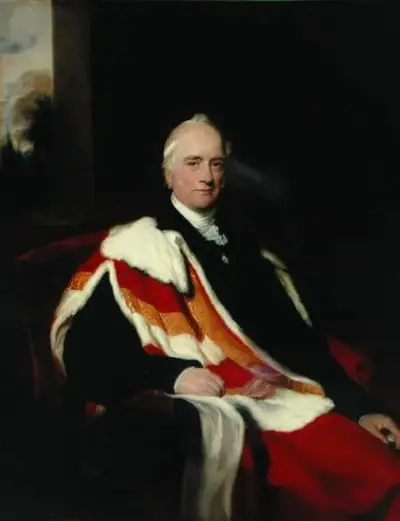
Nicholas Vansittart, 1st Baron Bexley, PC, FRS, FSA was an English politician, and one of the longest-serving Chancellors of the Exchequer in British history.
