James Edward Oglethorpe Quotes
The Trustees intend to relieve such unfortunate persons as cannot subsist here [England], and establish them in an orderly manner, so as to form a well regulated town…. By such a Colony, many families, who would otherwise starve, will be provided for, and made masters of houses and lands…. The Trustees for establishing the Colony of Georgia in America. … are impowered to collect benefactions; and lay them out in cloathing, arming, sending over, and supporting colonies of the poor, whether subjects on foreigners, in Georgia
James Edward Oglethorpe, 1696-1785, Founder of Georgia, Founding Vision for Georgia, 1733
Sourced by: Eigen's Political and Historical Quotations

Over a decade later a leading English politician realized the same possibility and took steps to prevent it {636871}. Brazil was a colony of Portugal which grew at so fast a comparative rate, that Brazil became many times the size of the original mother country.


Workhouses were factories using unskilled or semiskilled labor established by the government to employ poor people constructively. The problems caused by these were many. The government workhouses competed with private factories, and generally taught no skills so that a poor person could ever escape poverty. Opponents of big government complained that the government was adding millions more people to its employment roles. Conservatives have liked the idea of requiring work for welfare benefits wherever possible, but they do not care for the other problems. America instead has workfare where welfare recipients must work where possible but they work for private firms. This tends to break down when there are no or few priate jobs available as in a recession. The belief that welfare will erode the quality of the work force in general, has proved to be a false notion, but it was widely held in 17th century England and is still held by some people. The problem of work and welfare is a very complicated one.

This was quite unusual at the time when Kings were more interested in buying the loyalty and support of the rich and powerful nobles.

He was very conservative in almost all things, but here and with the equality of women (see {638806}) he was far ahead of his time.

The Irish Earls of Ulster, after a failed rebellion against English rule, fled to the European continent. As Chichester realized, this created an opportunity for the King to name new Earls and grant them the lands and possessions of the Earls who had fled. And since the Irish people were loyal to their traditional Earls. He suggested that English and Scots colonists be recruited to settle the lands. The King agreed and referred to the project as the “Ulster Plantation”. This was the reason that Northern Ireland had a much larger Protestant population percentage than the rest of Ireland and wanted to remain part of England when Ireland obtained its independence.

He was pushing the idea of getting the poor and destitute of England to go to the American colonies where a labor force was needed. “Fry” was a term for offspring — children.


When the British first colonized South Africa, the area they used was akmost uninhabited or very sparcely so. However, some Black tribes (including the Zulus) were moving from the north and themselves were colonizing or annexing the areas to their kingdom. The British were most interested in Trading so did not have large land asperations. The Dutch white Boer Africanners, in contrast, wanted to farm the lands and use the range for their cattle. They wanted the land. The English policy was that there would be friendly relations with the Black tribes surrounding their Cape Colony and no one should take their land. However the Boers started attacking the Black areas and seizing their farms and villages. At first, the English assumed that the Blacks would easily be able to ward off the invasion as the Afrikanners had no professional troops like the British. However, the neighboring tribes were not very warlike or good fighters. They were being overrun by the Zulus coming from the North and the Boers from the South. The British Government had a real problem in that they would have to have British soldiers fight the white Afrikanners if they wanted to stop the illegal white invasions. This was the root of the Boer War where the British would be fully at war with the Africanners.

This is one of the first formal efforts to provide health care to the poor. It is also the first formal recognition that the access to care is inherently different for the poor and special devices, systems and cures as well as publications may be needed.

This quotation is significant in that it tells us the methods of coping with poverty—the early American form of a social safety net.

The British had closed Boston Harbor until the English merchants who lost their goods at the Boston Tea Party were paid for their damages. Even though Boston being the second port in the colonies after New York were commercial competitors to the New Yorkers. None the less, New York raised money for assistance to the Bostonians who were jobless as a result of the port closure. See {589414} for the other steps that New York was willing to take.


The major motivation of the French for their many voyages to North America was to find a Northwest Passage to the Orient. Settlement came as an afterthought, and even then to develop a base in Canada for future exploration.
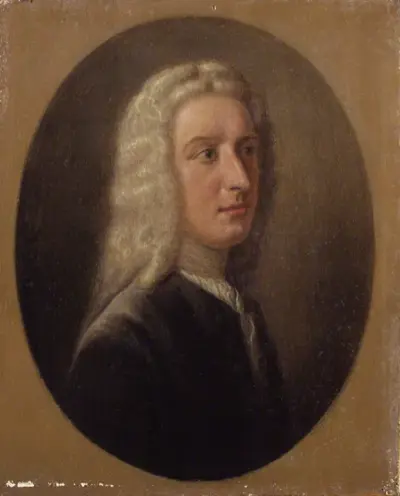
James Edward Oglethorpe was a British soldier, Member of Parliament, and philanthropist, as well as the founder of the colony of Georgia in what was then British America. As a social reformer, he hoped to resettle Britain's worthy poor in the New World, initially focusing on those in debtors' prisons.
