John Stuart Mill Quotes
One of the most difficult and embarrassing, questions of political morality is the extent and limits of the, right of those who have first taken possession of the, unoccupied portion of the earth's surface to exclude the, remainder of mankind from inhabiting it.
They were corresponding about the anti-Chinese movement in America and the attempt to exclude Chinese from immigration to the United States and ethnically cleanse the country.
John Stuart Mill, 1806-1873, Member of Parliament, British Political Economist, Letter to American Henry George, 1869
Sourced by: Eigen's Political and Historical Quotations


The meeting included several Indians, President Grant, and the Secretary of the Interior and the Director of the Bureau of Indian Affairs. The Indians had been offered $25,000 and land in the Oklahoma Indian Territory in exchange for moving from their traditional lands.


This was an effort to keep Asian immigrants—who were ineligible for citizenship under the racist Federal laws though the 1930s from competing with American farmers. Many of the Western states also had laws or Constitutions prohibiting Asians to not only own land but also forbidding them from even having long tern leases on land. The Japanese in California were so successful that in the 1920s that state passed a version of Asian land ownership prohibition. The Supreme Court at the time actually ruled that this kind of discrimination was legal. A French alien could own land but not a Japanese. The loophole however was that many Japanese short term tenant farmers who had saved enough money to buy land, had children who were born in the United State and hence where citizens. The land was purchased by the citizen children. California however went so far as to make it illegal for a Japanese person to be a guardian of his minor children if the children were born in the United States, but that law was struck down as unconstitutional by the Supreme Court.


While the economics of land is described accurately, immigrants from most of the world would never in their home country ever be able to earn enough in a few years to acquire that much land. So the prospect of land ownership was a fundamental selling point and was a major spur to immigration to America where land was and is plentiful.

The central Indian policy problem for Jefferson’s Administration was the fact that most Indians hunted for subsistence and the amount of land needed to support a hunting society was per capita much greater than an agricultural and especially an industrial one. Jefferson had no personal animosity against the Indians as many in his day did. But he perceived the need to obtain Indian lands for white agricultural use.

At the time, some Palestinian Arabs claimed exclusive rights to the territory on the grounds that Arabs had dominated the area for the longest period of time. They gave no credence to the fact that the Jews had dominated the area and it was the center of their kingdom for many years before—that Jews had constantly lived in the area of longer than the Arabs, nor did they give any credence to the fact that the Christians had conquered the area from the Muslims during the Crusades.
Some whites opposed Slavery and new slave states, not becasue of any sympathy with Negroes or concern for the immorality of slavery, but becasue slavery made it difficult for the working white man to thrive.

President Jackson was the most extreme President in terms of abuse of Native American Rights. His racist views and policies were a large reason for the continuing problems that Indians have had gaining fair treatment and equality. Jackson was the only American President who ever refused to obey a Supreme Court decision when he removed the Cherokee Indians from their lands, despite the fact that the Supreme Court had ruled that such a removal was illegal. See {623405} for other Jackson views on Indian policy.


Note that this opportunity to obtain very inexpensive public land was given not only to citizens, but to new immigrants as well provided they had filed their intention to become nationalized citizens. Loyalty was required however.


Essentially whereas many property owners have paid for their ownership in recent times, almost all real estate, wherever it is, that is privately owned was at some time in the past obtained by force, fraud, deceit, from someone else. In most cases, the owners who were killed, defrauded or otherwise removed from their land, had previously killed, defrauded or otherwise removed owners before them. There is almost no guilt untainted land. This was not just a product of capitalism, but has been a factor in every ism that has governed human society.

Most of her modern admirers tend to repress this quotation which is very embarrassing for most modern conservatives. However, there is a minority of thinkers who maintain that land, unused, is open to anyone who will make use of it to improve civilization. Many conservationists, in contrast, extol unused land for preservation.

_0_thumbnail_47x47.jpg "A portrait of Richard Allen, a Methodist bishop and founder of the African Methodist Episcopal Church")
Many whites thought that the solution to the problem of free and emancipated Negroes was to send them to Africa. They assumed that the negroes would by desirous of that solution also, but they rarely asked them. When they did, they received answers much like this one from one of the leading Black clergymen in America.

The French demand for land The French had demanded that the new Dutch Republic pay them an indemnity of 100 million florins to pay for the army expenses and that the Dutch cede France some territory at near the border and some of the Dutch Islands. The French had sent a small army to help the Dutch Revolution. The Dutch were ethically and morally outraged and sent this resolution on to France who were very surprised that their weak ally would even protest to them. The result was that the French compromised in the land and limited it to Maastricht, Venlo and Flanders and money.
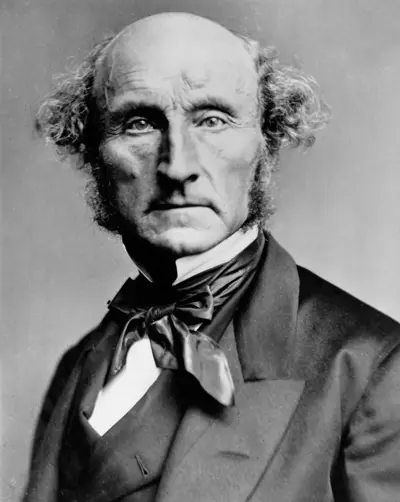
John Stuart Mill, usually cited as J. S. Mill, was an English philosopher, political economist, Member of Parliament, and civil servant. One of the most influential thinkers in the history of classical liberalism, he contributed widely to social theory, political theory, and political economy. Dubbed "the most influential English-speaking philosopher of the nineteenth century", he conceived of liberty as justifying the freedom of the individual in opposition to unlimited state and social control.
