John Marshall Harlan Quotes
The idea that this country may acquire territories anywhere upon the earth, by conquest or treaty, and hold them as mere colonies or provinces, the people inhabiting them to enjoy only such rights as Congress accords them, is wholly inconsistent with the spirit and genius as well as with the words of the Constitution
John Marshall Harlan, 1833-1911, U. S. Supreme Court Justice, Dissent, Plessy v. Furguson, 1896
Sourced by: Eigen's Political and Historical Quotations


They were corresponding about the anti-Chinese movement in America and the attempt to exclude Chinese from immigration to the United States and ethnically cleanse the country.


Hobson, like Mark Twain in America, was a major critic of imperialism.


Despite the fact that there were no formal political polls at the time, public opinion was very influential in curtailing what might be a tendency to use of the American military. Starting with the Cold War later, Presidents tended to use American military force regardless of public opinion or would exaggerate or lie (Vietnam and Iraq wars for example) to temporally gain some public support.


In one of the most unusual revolutions in world history, Brazil became independent from Portugal via a revolution led by the son of the Portuguese King and heir to the throne, Pedro I. The crown prince of Portugal, led Brazil in her breakaway from Portugal and by popular acclaim became Pedro I, Emperor of Brazil. He is probably the only monarch in history who was the heredity monarch of one kingdom and selected by popular acclaim to the throne of another.


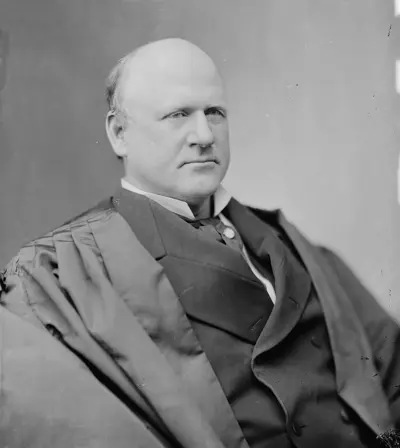
John Marshall Harlan was an American lawyer and politician who served as an associate justice on the U.S. Supreme Court. He is often called "The Great Dissenter" due to his many dissents in cases that restricted civil liberties, including the Civil Rights Cases and Plessy v. Ferguson. Many of Harlan's views expressed in his notable dissents would become the official view of the Supreme Court starting from the 1950s Warren Court and onward. His grandson John Marshall Harlan II was also a Supreme Court justice.
