Ambrose Bierce Quotes
Aborigines, n.: Persons of little worth found cumbering the soil of a newly discovered country. They soon cease to cumber; they fertilize.
Bierce, Ambrose. The Devil's Dictionary. The Neale Publishing Company, 1911, p. 11.

First Published American Indian Author
Even at this early time, it was clear that whites had brought numerous diseases that decimated the Indians. Alcohol and disease killed many more native Americans than all the wars—intertribal and with the whites—ever did. Neolin warned but did not have more than regional influence.


What is interesting is that when he cites the dreadful facts about American slavery, he never points out that the American slave traders rarely raided the villages and captured the slaves themselves. Most often this was done my Khamenei’s Muslim brethren slave traders who dominated the slave trade in Africa. Nor does he point out what after realizing the evil that Americans perpetrated with slavery, we ended it in the 1860s. Saudi Arabia, the central nation of Islam, did not make slavery illegal until 100 years later, and even today, there are many Saudi’s who get caught practicing slavery with household servants and forms of indentured servitude. And while Christians and the Bible tolerated slavery, the Koran and the Prophet never once condemn the practice of slavery. Democracy at any point in time is not always morally right, but it is a process by which under pressure from the people it improves over time because the people can change it and do.

This quotation is often used as the greatest evidence the white usurpation of Indian land and the dubious value of all the treaties that had been made with the Indians guaranteeing them specific lands. Jackson, however, was not completely accurate. The Iroquois who fought on the American side in the Revolution were still on their lands in New York State. However, the Iriquois had their dealings with the State and local governments, and fared better than those tribes that depended in the Federal Government—especially with racists like Jackson in the Presidency.


Samuel Langhorne Clemens, 1835-1910. He was describing the generation of Chinese immigrants to the West Coast who were discriminated against and treated badly by the established population.

They were corresponding about the anti-Chinese movement in America and the attempt to exclude Chinese from immigration to the United States and ethnically cleanse the country.

This quotation distressed many ultra rightists who otherwise were avid followers of Mises. See {632407} for another quotation that distressed many European conservative devotees of Mises.

This is a very interesting quotation because it shows that the South American Indians were not only the victims of Spanish colonialism, but before Europeans ever set foot in the New World, expansionism, conquest and colonialism was alive and well. It was just that one Indian people imposed it on others. Note also the techniques of sending colonists to the new colonies to “civilize” the conquered peoples. Although this was common in Western History (even Alexander the Great used it, it was independently created as a colonial technique in the New World. The most extensive use of this technique was used by the Russians as that expanded to the Soviet Union the consequences of which we see in ethnic strife in the Balkans and the Ukraine even into the 21st century. Often these colonists were used as spies as well, in Peru {641657} as in all the Western examples.

This idea has been rejected by American Blacks from before the Civil War. There were many Black families that have been in America longer than Rockwell who always had the choice to go back to where they cam from if they were unhappy with America but they never did.
This quotation is the most hypocritical statements made by any President in his Inaugural Address. Jackson would not only flip flop on this principle and force the Indians (Cherokee and the Trail of Tears) to remove from their traditional lands in the East, but the Federal Government by Treaty was obligated to guarantee the sovereignty of the Cherokee land. What even made Jackson’s actions worse, was that the Cherokee had won their case before the Supreme Court, and Jackson became the only President in American history to refuse to enforce a Supreme Court decision that the Cherokee were entitled to their traditional land.


Gold had been discovered in the Black Hills lands that were sacred to the Lakota Sioux and were reserved for exclusive use of the Indians by the Fort Laramie Treaty. Greedy whites, ignoring the treaty provisions not only entered the Black Hills to pan and mine for the gold, but killed many Indians they ran across Sherman was angry and wrote to his old friend President Grant. Grant, now a political, had to contend with public opinion that thought it absurd that gold should not be mined because a few Indians regarded the land as sacred. Meanwhile Grant was working with a few others to portray minor clashes between whites and Indians in the Black Hills as violent and dangerous Indians breaking the treaty.

At the time, Jefferson was the Governor of Virginia and the Indians and white settlers in the Western part of the state were coming into increasing conflict. This rather heartless and blood thirsty quotation of Jefferson’s surprises many of his great admirers. Especially because of his historical sophisticated and empathetic way he treated Indians. See {589102}, {589103}, {589113}, {589125}, and {605068}. Jefferson saw Indians much like he saw whites—differentially. Some were friends, some neutral, and some dangerous enemies. His wish to exterminate or ethnically cleanse these Indians was limited to these Indians—not to Indians in general. Nonetheless, it shows a violent side of Jefferson that was in play with enemies. As President, he was aggressive against the Muslim Pirates (see {623707} and {617123}).


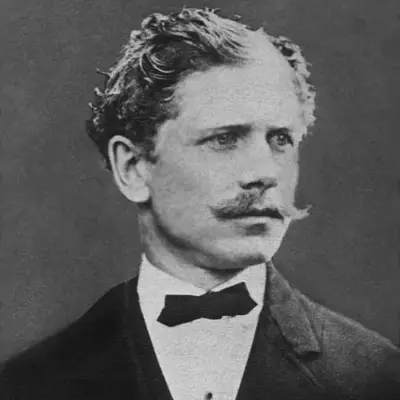
Ambrose Gwinnett Bierce was an American short story writer, journalist, poet, and Civil War veteran. His book The Devil's Dictionary was named as one of "The 100 Greatest Masterpieces of American Literature" by the American Revolution Bicentennial Administration. His story "An Occurrence at Owl Creek Bridge" has been described as "one of the most famous and frequently anthologized stories in American literature"; and his book Tales of Soldiers and Civilians (also published as In the Midst of Life) was named by the Grolier Club as one of the 100 most influential American books printed before 1900.
