Joseph Conrad Quotes
Exterminate all brutes.
Joseph Conrad, 1857-1924, English Author, Heart of Darkness
Sourced by: Eigen's Political and Historical Quotations

This quotation distressed many ultra rightists who otherwise were avid followers of Mises. See {632407} for another quotation that distressed many European conservative devotees of Mises.


See Ferdinand I for the Bulgarian denial {601322}.

The German catastrophic classification of people as superior and inferior did not start with the Nazis. It had been part of the German culture. What many feel makes Bismarck more cold-blooded than most Germans is that the latter were led to a hatred of the other ethnicities and would exterminate them for that reason, but Bismark had sympathy for the Poles yet advocated genocide simply on practical grounds. The analogy with the wolf shows this mentality at its worst.
This was part of the continual conflict between the Muslims and the Eastern Orthodox Christians. The Greeks ended up doubling their territory.

Ignorant political opposition to new scientific findings has been characteristic of some of the politicians in most governments in most eras.
This argument—that Christians were more cruel and uncivilized than heathens in some respects was very persuasive to many serious white Christians who began to see slavery and the slave trade in a new light.


The White Boers viewed themselves as superior to the Blacks and the Blacks and Whites competed for land. In an early form of ethnic cleansing, the Boers attacked the undefended women and children of the Black tribes. The authorities opposed these atrocities but did not have any way of enforcing their orders.


The Tanguts were a major Chinese Buddhist culture and people with generations of history, emperors, books and religion. The Mongols had been fighting them for over 20 years. After his death, his army obeyed the order and not only murdered every Tangit they could in the capital city in Western Xia, but razed their buildings, burned their books, destroyed their tombs and artifacts. Tanguts who were in other parts of Western Xia were absorbed and assimilated into the Mongol culture. Even the Tangut language died out in a few generations. The Tanguts had been made to “vanish”.

Although a very aggressive military commander, Grant did not approve of proposals to have wars of extermination which many called for against different Native American tribes.


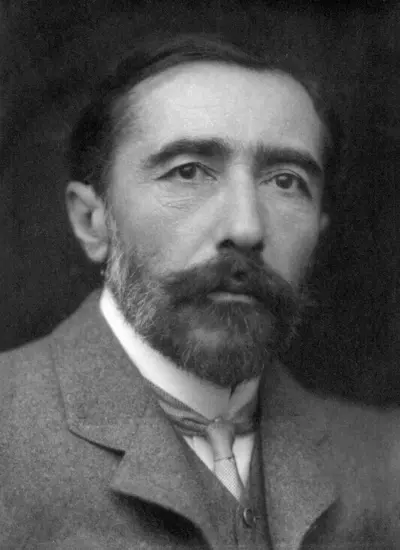
Joseph Conrad was a Polish-British writer regarded as one of the greatest novelists to write in the English language. Though he did not speak English fluently until his twenties, he became a master prose stylist who brought a non-English sensibility into English literature. Conrad wrote stories and novels, many with a nautical setting, that depict trials of the human spirit in the midst of what he saw as an impassive, inscrutable universe.
