Mark Twain Quotes
They are a harmless race when white men either let them alone or treat them no worse than dogs; in fact they are almost entirely harmless anyhow, for they seldom think of resenting the vilest insults or the cruelest injuries. They are quiet, peaceable, tractable, free from drunkenness, and they are as industrious as the day is long. A disorderly Chinaman is rare, and a lazy one does not exist.
Samuel Langhorne Clemens, 1835-1910. He was describing the generation of Chinese immigrants to the West Coast who were discriminated against and treated badly by the established population.
Mark Twain, Writer, Founder, Anti-Imperialist League, Roughing It
Sourced by: Eigen's Political and Historical Quotations

He was writing about the natives of what is today Indonesia. At the time Indonesia was controlled by the Dutch. Heurmius was writing about the difficulty in converting Indonesians to Christianity.


Even at this early time, it was clear that whites had brought numerous diseases that decimated the Indians. Alcohol and disease killed many more native Americans than all the wars—intertribal and with the whites—ever did. Neolin warned but did not have more than regional influence.
First Published American Indian Author

He was urging the majority Sinhalese to be more aggressive in dealing with the Tamils.


His reference was to ethnic Indians and Chinese living in Kenya and other countries of Africa. Asians are a minority group in African countries and the legally sanctioned discrimination against them is part of an ugly type of discrimination which still exists.


This quotation is significant. Ibn Khalodun was one of the great intellectual Arab scholars, yet he looked upon Blacks as subhuman and fit for slavery. While Islam preaches the equality of all people, the Arabs had and many still have a raciest view of Blacks. The Arabs were the leaders among the slave traders and many an American Captain of a slave trader bought his slaves from Arab slave traders. Saudi Arabia was the last nation to outlaw legal slavery (1963) and it is still illegally practiced in Saudi Arabia and other Arab states of the Middle East. The attitude can be seen in much of the Arab Middle East even today. For examples, the Muslim Arabs in Northern Sudan refer to the Black non-Islamic Southerners using a derogatory term that means slave.

Standing Bear and some other Indians left the Indian territory where the government had assigned their tribe and with an invitation went to live on another Indian reservation designated for another tribe. The Government sent the military police to take the Indians back to the Indian Territory. The Indians claimed that they had the right to live wherever they wanted and did not have to live in the place the government had assigned them. The Indians won and since then, Indians like all other Americans were free to go wherever in the country that they wanted so long as they were not trespassing or violating other laws.

What is interesting is that when he cites the dreadful facts about American slavery, he never points out that the American slave traders rarely raided the villages and captured the slaves themselves. Most often this was done my Khamenei’s Muslim brethren slave traders who dominated the slave trade in Africa. Nor does he point out what after realizing the evil that Americans perpetrated with slavery, we ended it in the 1860s. Saudi Arabia, the central nation of Islam, did not make slavery illegal until 100 years later, and even today, there are many Saudi’s who get caught practicing slavery with household servants and forms of indentured servitude. And while Christians and the Bible tolerated slavery, the Koran and the Prophet never once condemn the practice of slavery. Democracy at any point in time is not always morally right, but it is a process by which under pressure from the people it improves over time because the people can change it and do.
This quotation illustrates that without political freedom, many people are dissatisfied even if their standard of living has been increased by an occupying colonial power.

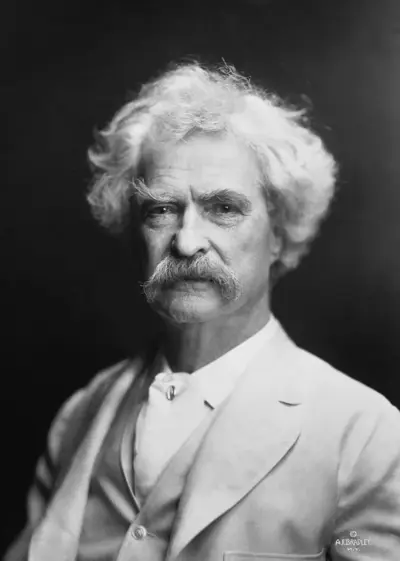
Samuel Langhorne Clemens, known by his pen name Mark Twain, was an American writer, humorist, entrepreneur, publisher, and lecturer. He was lauded as the "greatest humorist the United States has produced," and William Faulkner called him "the father of American literature". His novels include The Adventures of Tom Sawyer (1876) and its sequel, the Adventures of Huckleberry Finn (1884), the latter often called "The Great American Novel".
