Thomas J. Morgan Quotes
...They [Indians] should be made familiar with the lives of great and good men and women in American history, and be taught to feel a pride in all their great achievements. They should hear little or nothing of the 'wrongs of the Indians,' and of the injustice of the white race. If their unhappy race is alluded to, it should be to contrast it with the better future that is within their grasp.
Thomas J. Morgan, 1839-1902, U. S. Commissioner of Indian Affairs, 1885
Sourced by: Eigen's Political and Historical Quotations


This comprehensive report of 457 pages was written, printed and distributed at her expense prior to her Federal appointment.


He had done an analysis of American History textbooks and found that 9 pages about American Indians and their history before and after Europeans came to America. He and most other historians consider that to be inadequate.

Samuel Langhorne Clemens, 1835-1910. Twain was one of the few whites who realized that success in assimilating American Indians would destroy their culture and identity. Even today, whites and Indians alike constantly debate the desirability of assimilation policies and supporting independent reservations.
In early America large numbers of whites who had been captured by Indians would refuse to leave their new families even when they had the opportunity to do so. J. Hector St. John

Shabonee in a warning ride reminiscent of Paul Revere, warned many white settlers of an impending attack by unfriendly Indians. He also gave an eyewitness account of the Battle of Tippecanoe which propelled Harrison to the Presidency. The U. S. Navy named a ship in his honor in the 1940s. Several schools are named for him also.


Published 100 years after it was written. This is the first known written statement of what became a de facto policy regarding the American Indian.

First Published American Indian Author


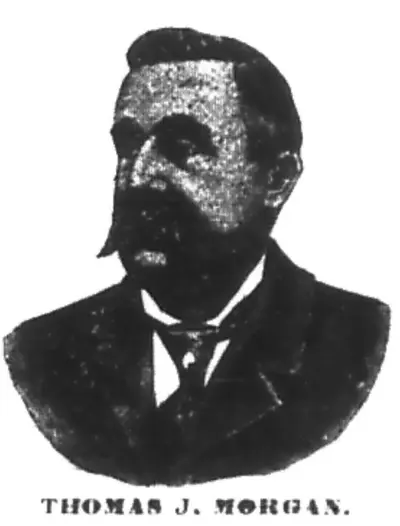
Thomas John "Tommy" Morgan, Jr. was an English-born American labor leader and socialist political activist. Morgan is best remembered as one of the pioneer English-speaking Socialists in the city of Chicago and a frequent candidate for public office of the Socialist Party of America. Morgan was also one of the founders and leading figures of the United Labor Party, an Illinois political party which elected 7 of its members to the Illinois State Assembly and another to the Illinois State Senate in the election of 1886. He was married to Elizabeth Chambers Morgan.
