Helen Hunt Jackson Quotes
A Century of Dishonor
This comprehensive report of 457 pages was written, printed and distributed at her expense prior to her Federal appointment.
Helen Hunt Jackson, 1830-1885, Special Commissioner of Indian Affairs, Report to Congress on the history of the treatment of the Indians by the government, 1872
Sourced by: Eigen's Political and Historical Quotations


The first Native American to become a General Officer. Appointed by President Grant in 1869


The Indians did not have the wheel when the whites came, but soon there were wagons, stage coaches and railroads.


First Indian newspaper in the U.S.

Note that there was still a serious attempt to coexist with the Indians and to pay for lands that whites moved into. This would change radically in the administration of Andrew Jackson who would replace Adams.


Published 100 years after it was written. This is the first known written statement of what became a de facto policy regarding the American Indian.

The century to which he was referring was the 19th century---1800-1899.

The Mormons, not unlike other whites at the time, in effect invaded the Indians’ land, and took possession. At first the Mormons tried to convert the Indians and when the Indians preferred their own religion, there was constant occupation of Indian land in the Salt Lake Valley.

Wayne played so many parts depicting whites in the process of expanding Westward that many people saw him as an expert on the history of the Westward Expansion. He did not comment on the whites who then kept huge ranches “selfishly” for themselves or those who selfishly would not share the mineral rich land that they had taken with anyone including the original Indian owners. So in this view, the Indians should have not been capitalists but they should have been socialists and shared their resources.


Gold had been discovered in the Black Hills lands that were sacred to the Lakota Sioux and were reserved for exclusive use of the Indians by the Fort Laramie Treaty. Greedy whites, ignoring the treaty provisions not only entered the Black Hills to pan and mine for the gold, but killed many Indians they ran across Sherman was angry and wrote to his old friend President Grant. Grant, now a political, had to contend with public opinion that thought it absurd that gold should not be mined because a few Indians regarded the land as sacred. Meanwhile Grant was working with a few others to portray minor clashes between whites and Indians in the Black Hills as violent and dangerous Indians breaking the treaty.

He was a brutal officer who by modern standards committed various war crimes.

In March of 1814 Jackson led a force to track down the Red Sticks. When they did so at Horseshoe Bend. Jackson made a frontal assault on the Red Stick Breastworks which might have gone badly had not a cotangent of Cherokee Indians—also concerned about the Red Sticks attack on their settlements, assaulted the Red Sticks from the rear. The Red Sticks, caught between the two uncoordinated attackers, lost over 900 men and the battle which then decided the war. In this Battle, Junaluska, a Cherokee, saved Jackson’s life. Years later he would not differentiate between the different Indian peoples and contrary to a Supreme Court order, forced the Cherokee from their settled farms and ranches and moved them to the Oklahoma Territory.
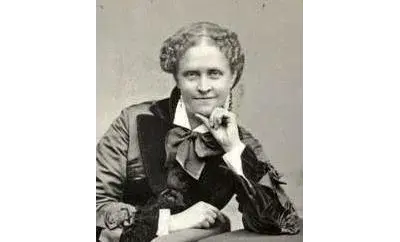
Helen Hunt Jackson was an American poet and writer who became an activist on behalf of improved treatment of Native Americans by the United States government. She described the adverse effects of government actions in her history A Century of Dishonor (1881). Her novel Ramona (1884) dramatized the federal government's mistreatment of Native Americans in Southern California after the Mexican–American War and attracted considerable attention to her cause. Commercially popular, it was estimated to have been reprinted 300 times and most readers liked its romantic and picturesque qualities rather than its political content. The novel was so popular that it attracted many tourists to Southern California who wanted to see places from the book.
