Mahatma Gandhi Quotes
Ours is one continued struggle against degradation sought to be inflicted upon us by the European, who desire to degrade us to the level of the raw Kaffir, whose occupation is hunting and whose sole ambition is to collect a certain number of cattle to buy a wife with, and then pass his life in indolence and nakedness.
Gandhi, Mahatma. The Collected Works of Mahatma Gandhi. Vol. 2, Publications Division, Ministry of Information and Broadcasting, Government of India, 1958, p. 74.

The Boers, the early Dutch settlers to South Africa were a “scurvey lot” who were very uneducated, narrow minded, and insular. They eventurally esterminated whole tribes of Blacks, caused the Boer War, and operated the disasterous apartheid era of South Africa. But the early Dutch governors of South Africa had great trouble with the Boers as well. See {583928} & {583928} for English similar assessments.

The highway was planned to go through a poor neighborhood which had a high percentage of Black residents—all of whom would have to find other housing and move to make room for the highway. If the government plans a highway through a wealthy area, the cost to condemn and pay for the land will be much greater than if a poor neighborhood is acquired. For urban highways, the poor almost always bear a disproportionate share of the inconvenience while the major benefit inures to the wealthy and middle class. Abbot had been a labor organizer and a professional artist before he entered politics. The graphic is of his famous poster which by itself stopped the plans to build the highway very quickly.


He was urging the majority Sinhalese to be more aggressive in dealing with the Tamils.


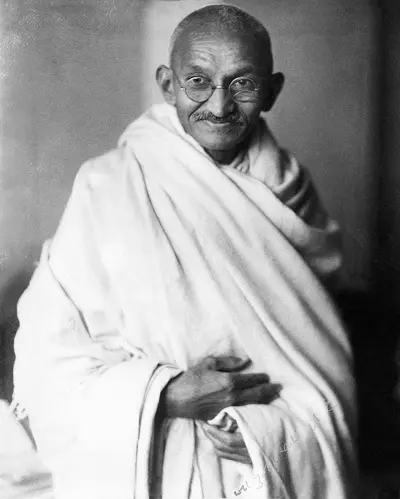
Mohandas Karamchand Gandhi was an Indian lawyer, anti-colonial nationalist, and political ethicist, who employed nonviolent resistance to lead the successful campaign for India's independence from British rule, and in turn inspired movements for civil rights and freedom across the world. The honorific Mahātmā (Sanskrit: "great-souled", "venerable"), first applied to him in 1914 in South Africa, is now used throughout the world.
