Carter G. Woodson Quotes
The so-called modern education, with all its defects, however, does others so much more good than it does the Negro, because it has been worked out in conformity to the needs of those who have enslaved and oppressed weaker peoples.
Woodson, Carter G. The Mis-Education of the Negro. Associated Publishers, 1933, p. xxxiii.

The Boers, the early Dutch settlers to South Africa were a “scurvey lot” who were very uneducated, narrow minded, and insular. They eventurally esterminated whole tribes of Blacks, caused the Boer War, and operated the disasterous apartheid era of South Africa. But the early Dutch governors of South Africa had great trouble with the Boers as well. See {583928} & {583928} for English similar assessments.


The highway was planned to go through a poor neighborhood which had a high percentage of Black residents—all of whom would have to find other housing and move to make room for the highway. If the government plans a highway through a wealthy area, the cost to condemn and pay for the land will be much greater than if a poor neighborhood is acquired. For urban highways, the poor almost always bear a disproportionate share of the inconvenience while the major benefit inures to the wealthy and middle class. Abbot had been a labor organizer and a professional artist before he entered politics. The graphic is of his famous poster which by itself stopped the plans to build the highway very quickly.


This was in the first article of their Constitution upon gaining their independence. With a long tradition of Dutch colonialism and a particularly brutal Japanese colonization during WWII, the Indonesians were most preoccupied with this issue.


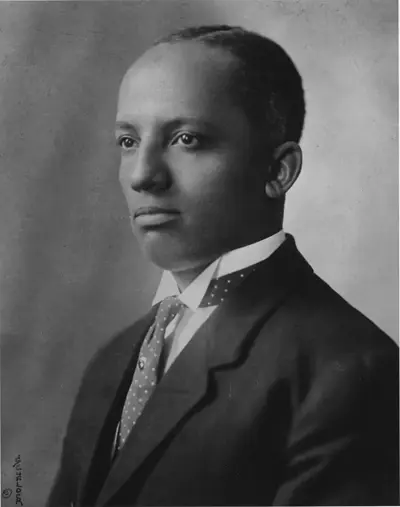
Carter Godwin Woodson was an American historian, author, journalist, and the founder of the Association for the Study of African American Life and History. He was one of the first scholars to study the history of the African diaspora, including African-American history. A founder of The Journal of Negro History in 1916, Woodson has been called the "father of black history". In February 1926 he launched the celebration of "Negro History Week", the precursor of Black History Month.
