Minh Mang Quotes

Compare his report with that of his counterpart of then rival Vietnam: {43139} and the Vietnamese Emperor: {607695}.

The highway was planned to go through a poor neighborhood which had a high percentage of Black residents—all of whom would have to find other housing and move to make room for the highway. If the government plans a highway through a wealthy area, the cost to condemn and pay for the land will be much greater than if a poor neighborhood is acquired. For urban highways, the poor almost always bear a disproportionate share of the inconvenience while the major benefit inures to the wealthy and middle class. Abbot had been a labor organizer and a professional artist before he entered politics. The graphic is of his famous poster which by itself stopped the plans to build the highway very quickly.


Twenty years earlier (see related quote) Mugabe invited the whites to stay in the country promising a non discriminatory government of racial equality. However, when he lost favor and grew unpopular and was about to be voted out of office, he started a race conflict, and destroyed what had been one of the strongest economies of Africa in the process. Mugabe sanctioned the murder of a number of whites as well as Blacks who did not share his racist views.
The Boers, the early Dutch settlers to South Africa were a “scurvey lot” who were very uneducated, narrow minded, and insular. They eventurally esterminated whole tribes of Blacks, caused the Boer War, and operated the disasterous apartheid era of South Africa. But the early Dutch governors of South Africa had great trouble with the Boers as well. See {583928} & {583928} for English similar assessments.


The song was sung by and inspired many South African patriots including Nelson Mandella. “Barefoot” was the name given to the apartheid Prime Minister Verwoerd. The composer was hung by the apartheid government for refusing to name his revolutionary compatriots.

The Frenchmen living in America are

Mather was urging the community to protect their children against the Devil and his band. To exemplify just how terrible Devils were to his audience, he used a comparison to the worst thing the audience was familiar with—Indians. Although there were a few examples in Colonial America of Indians being perceived as benign or even people, they were few and far between, and tended to be in New York and Pennsylvania.

The Turks had massacred the vast majority of their Armenian population, and treated the Greeks badly killing and them many of them from territories the Ottoman Turks had conquered. Jews fared better but were 2nd class citizens. Bristol was the American State Department’s senior official and was very “understanding” of the murders and ethnic cleansing despite the fact that President Wilson and most American politicians were very opposed to the Turkish massacres. See {620614} and {620599} . Two factors makes this quotation very significant. First, at the time the State Department was not really under the control of either the President or the Congress. It was not rare for the Department to have its own policies and implement them. This began to change in WWII and FDR exercised much more control than previous presidents since Theodore Roosevelt. The second factor is that there were many racists throughout the State Department—Bristol was only one. There was little concern for minorities’ welfare and the emphasis was on commerce. See {620600} Even in Truman’s administration, the President had massive opposition from the State Department for his policy of recognizing the State of Israel. Today, this kind of racism in the State Department is very rare, and human rights has been one of their major concerns. There were many changes in 75 years.


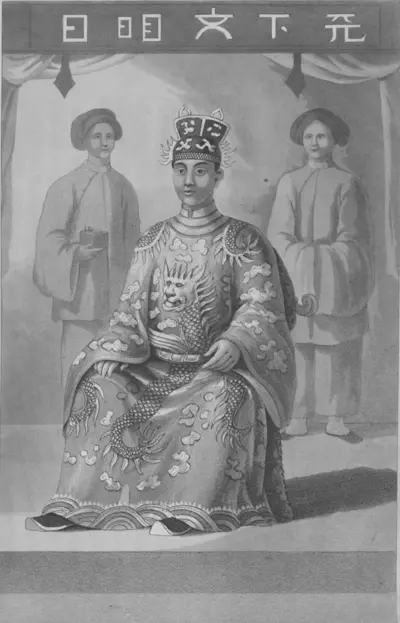
- Born: May 25, 1791
- Died: January 20, 1841
- Nationality:
- Profession:
Minh Mạng was the second emperor of the Nguyễn dynasty of Vietnam, reigning from 14 February 1820 until his death, on 20 January 1841. He was the fourth son of Emperor Gia Long, whose eldest son, Nguyễn Phúc Cảnh, had died in 1801. He was well known for his opposition to French involvement in Vietnam and his rigid Confucian orthodoxy.
