Robert Mugabe Quotes
Our party [Zanu-PF] must continue to strike fear in the heart of the white man, our real enemy!
Twenty years earlier (see related quote) Mugabe invited the whites to stay in the country promising a non discriminatory government of racial equality. However, when he lost favor and grew unpopular and was about to be voted out of office, he started a race conflict, and destroyed what had been one of the strongest economies of Africa in the process. Mugabe sanctioned the murder of a number of whites as well as Blacks who did not share his racist views.
Robert Mugabe, President of Zimbabwe, Speech to ZANU-PF congress, Harare, December 14, 2000
Sourced by: Eigen's Political and Historical Quotations

At the time he was probably sincere as the whites—especially the farmers—had a great deal of know-how and provided a backbone for the economy. However, as he lost popularity, in order to hang on to power, he established a dictatorship and 20 years later pitted the Blacks against the whites destroying the economy and the country in the process. See related quote.

Wilson, a history and government professor and college president before politics, was has been accused of being one of the most racist Presidents since Reconstruction. Prior to his Presidency, the Federal Government had been making steady progress in hiring African Americans. Under Wilson there was a wholesale firing of a large proportion of them. Some apologists argue that his League of Nations and other major aspirations required the votes and cooperation of Southern Senators who insisted that many of the blacks be terminated. At the same time, the KKK was near the zenith of its membership and political power and was an intimidating force. Wilson’s home state of New Jersey not only had a large KKK membership but there were lynching of Blacks in his own state and when Governor and President he never asked for any anti-lynching legislation.


Johnson was the first Black man who won the heavyweight championship at a time when racism in America was rampant. Many whites referred to Jeffries as “The Great White Hope” who would take the champion back for the whites. He didn’t and was beaten badly.


In 1911 the citizens of Honea Path, SC, led by Joshua W. Ashleigh, the State Legislator representing the district and his son, the editor of the local newspaper, dismembered and lynched a Black man, Willis Jackson. Some South Carolinians were distressed and asked the Governor to initiate and investigation. See his later statement on lynching in 1930.


Historically, until recently there has been a migration from the South to other parts of the country. After legal segregation ended, the out migration slowed and by the end of the 20th century, people—including intellectuals began moving to the South. Generally, the vestiges of the anti intellectualism began to fade, but even into the 21st century the College Board Test Scores and other educational measures were generally lower in the South than in the rest of the country. Ironically, whereas the Southern insistence on segregated schools was to prevent the intellectual erosion that racists thought would come with integration, the educational achievement of the schools and population of the less segregated school areas was considerably better. With legal segregation, there were very few high quality universities in the South and no “World Class” schools. However, along with desegregation has been the intellectual and academic improvement of the Southern Schools and the South began to have, for the first time in America, some educational institutions that were on a par with the rest of the country. The South paid a heavy price for segregation and insularity.


Bilbo was one of the worst racists who ever served in the Congress.
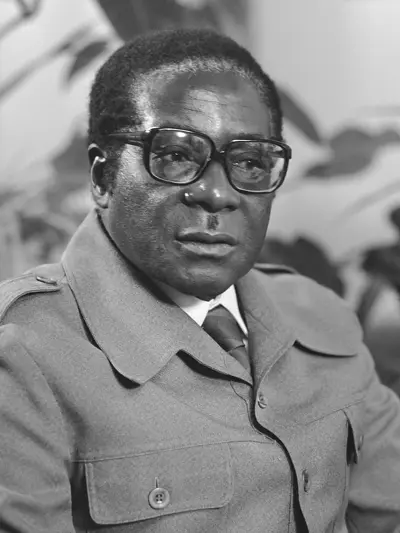
- Born: February 21, 1924
- Died: September 6, 2019
- Nationality: Zimbabwean
- Profession: Statesman
Robert Gabriel Mugabe was a Zimbabwean revolutionary and politician who served as Prime Minister of Zimbabwe from 1980 to 1987 and then as President from 1987 to 2017. He served as Leader of the Zimbabwe African National Union (ZANU) from 1975 to 1980 and led its successor political party, the ZANU – Patriotic Front (ZANU–PF), from 1980 to 2017. Ideologically an African nationalist, during the 1970s and 1980s he identified as a Marxist–Leninist, and as a socialist after the 1990s.
