Robert Mugabe Quotes
Stay with us, please remain in this country and constitute a nation based on national unity.
At the time he was probably sincere as the whites—especially the farmers—had a great deal of know-how and provided a backbone for the economy. However, as he lost popularity, in order to hang on to power, he established a dictatorship and 20 years later pitted the Blacks against the whites destroying the economy and the country in the process. See related quote.
Robert Mugabe, President of Zimbabwe, Statement to the white minority of Zimbabwe, speech, ZANU-PF party rally, January 27, 1980
Sourced by: Eigen's Political and Historical Quotations

Twenty years earlier (see related quote) Mugabe invited the whites to stay in the country promising a non discriminatory government of racial equality. However, when he lost favor and grew unpopular and was about to be voted out of office, he started a race conflict, and destroyed what had been one of the strongest economies of Africa in the process. Mugabe sanctioned the murder of a number of whites as well as Blacks who did not share his racist views.


McGee was one of the first visionaries of a pluralistic Canada. his advocacy of multi-ethnic unity and multiculturalism which brought him assassination at his home in Ottawa by a fellow Irishman.


The first Native American to become a General Officer. Appointed by President Grant in 1869. When Lee arrived there were many Black troops and he mistook General Parker for a Negro but then apologized saying that “I am glad to see one real American here.” This was Parker’s reply.


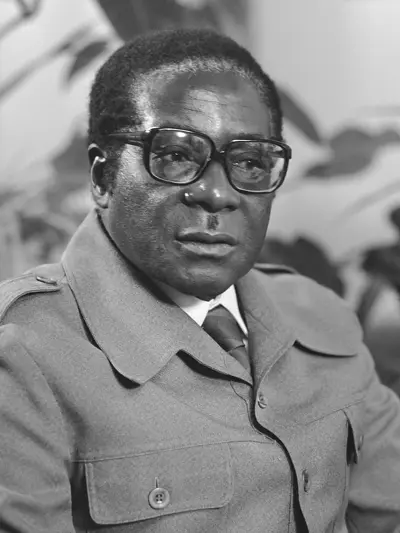
- Born: February 21, 1924
- Died: September 6, 2019
- Nationality: Zimbabwean
- Profession: Statesman
Robert Gabriel Mugabe was a Zimbabwean revolutionary and politician who served as Prime Minister of Zimbabwe from 1980 to 1987 and then as President from 1987 to 2017. He served as Leader of the Zimbabwe African National Union (ZANU) from 1975 to 1980 and led its successor political party, the ZANU – Patriotic Front (ZANU–PF), from 1980 to 2017. Ideologically an African nationalist, during the 1970s and 1980s he identified as a Marxist–Leninist, and as a socialist after the 1990s.
