Wilfrid Laurier Quotes
We [French Canadians] may not assimilate, we may not blend, but for all that we are still the component parts of the same country.
Wilfrid Laurier, 1841-1919, First French Canadian Prime Minister of Canada (Liberal), Speech, December 1886
Sourced by: Eigen's Political and Historical Quotations


Before the French Revolution, Jews could freely practice their own religion in France but they could not hold citizenship, become professionals, or a host of other privileges of citizenship. Clermont-Tonnerre and other liberals argued that Jews should be given citizenship. The Jacobins--conservative Catholics close to the Papacy--opposed granting citizenship to Jews or Protestants. One argument that the Jacobins gave was that each of these sects would be separate nations within France and not necessarily have French national interest as a priority. Clermont-Tonnerre gave this response which has been the French philosophy about minority citizenship since then. Their thought was that anyone may become a French citizen as an individual but he or she should do so because he/she wants to accept French values and support the French nation. This view worked quite will over the years until the large immigration of Muslims starting in the 1960s where many new immigrants just wanted to live in France and earn a living there, but did not want to identify with French national aspirations or adopt French culture or values. America, had no such demands and those immigrants who tended to identify primarily with their country or culture of origin and not assimilate were allowed to do so, but the American way of life was so attractive that many immigrants did adopt it and even if they did not, their children almost inevitably did. That has not happened in France.


McGee was one of the first visionaries of a pluralistic Canada. his advocacy of multi-ethnic unity and multiculturalism which brought him assassination at his home in Ottawa by a fellow Irishman.


Most immigration reformers want to open immigration more widely. Ward wanted immigration restricted to certain ethnicities and limited. He wanted a uniformity of assimilation and not diversity.


At the time he was probably sincere as the whites—especially the farmers—had a great deal of know-how and provided a backbone for the economy. However, as he lost popularity, in order to hang on to power, he established a dictatorship and 20 years later pitted the Blacks against the whites destroying the economy and the country in the process. See related quote.


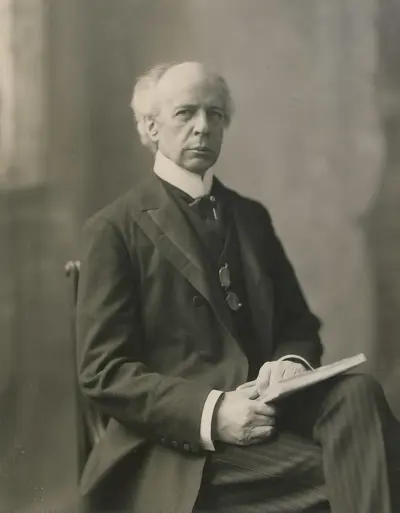
The second child of Carolus Laurier and Marcelle Martineau, Wilfrid Laurier was born in Saint-Lin, Canada East (modern day Saint-Lin-Laurentides, Quebec), on 20 November 1841. Laurier was among the seventh generation of his family in Canada. He was a sixth-generation Canadian. His ancestor François Cottineau, dit Champlaurier, came to Canada from Saint-Claud, France. He grew up in a family where politics was a staple of talk and debate. His father, an educated man having liberal ideas, enjoyed a certain degree of prestige about town. In addition to being a farmer and surveyor, he also occupied such sought-after positions as mayor, justice of the peace, militia lieutenant and school board member. At the age of 11, Wilfrid left home to study in New Glasgow, a neighbouring village largely inhabited by immigrants from Scotland. Over the next two years, he familiarized himself with the mentality, language and culture of British people. Laurier attended the Collège de L'Assomption and graduated in law from McGill University in 1864.
