Sterling A. Brown Quotes
The black herring of intermarriage has been dragged too often across the trail to justice. 'Would you want your sister to marry a nigger?' is still the question that is supposed to stun any white man who sponsors rights for Negroes. It stirs Negroes to ironic laughter, although on all levels they recognize the white man's fear of intermarriage as deep seated…
Sterling A. Brown, 1901-1989, Educator & Poet, Count Us In, 1944
Sourced by: Eigen's Political and Historical Quotations


Brigham Young, the Mormon Leader and Territorial Governor, was strongly opposed to Interracial sex. See {629150}. An earlier clause provided for loss of the rights to a slave if the master had sexual relations with the slave, something that no Southern State had ever done.

Jessie Helms was his young assistant who drafted this race baiting ad. There are two vicious but subtle aspects to this kind of attach ads. First, not that the ad does not address the problem of white men working along side of blacks. It only refers to wives and daughter. This interracial sex innuendo played on and increased the fear of whites that Blacks would commonly rape white women. The second nasty aspect of the ad is the specific attack on the opponent. Instead of saying that he favored desegregation, the phrase “mingling of the races” was used which implied that Graham was in favor of biracial intermarriage and children—again another sex innuendo. When integration of the workforce finally occurred in the South, there was no increase in Black men sexually assaulting white women. There has been a substantial increase in racial intermarriage however as racial bigotry has diminished in America.


Smith, an extreme racist, was so rabid that MacGregor was supporting the Civil Rights Bill, he followed him off the House floor to make this statement. MacGregor jokingly told Smith that he was wrong. He had 17 Negroes in his District.

This classic quotation illustrates several things. First, the degree of racism that existed in 1944 in West Virginia. Second, not how young Robert Byrd immediately leaped from the possibility of integrating our fighting forces to interracial sex. That has been typical of white racism in America—a preoccupation with race and sex. Last, Byrd who became a member of the KKK, completely changed his mind over the year and ended up supporting the things that, as a youth were worse than the demise of the nation. He matured and grew on the race issue as much of the country did and ended as a strong supporter of equality and civil rights—including affirmative action.


This painting depicted a young black girl walking to school surrounded by 4 U. S. Marshalls protecting her from the crowd of white racists trying to prevent her from attending an elementary school under court order. The vicious race hatred that school integration revealed was the national problem that was then surfacing. The graphic is the illustration that appeared in Look with that name.

Booth was the younger son of a very prominent Northern family of actors. His older brother was considered the greatest American actor, and the rest of the family were abolitionists and vehement Union supporters. They found young John’s views reprehensible.

Bilbo was one of the worst racists who ever served in the Congress.

Referring to Montgomery Alabama in 1950.

This quotation shows two important historical facts about Southern Racism. The first is now great the social pressures were against any white who would try and alter the status quo. The second was that none the less there have always been whites in the South who, despite the great social penalties, did the right thing and not only improved the situation, but more important, made most Americans realize that Southerners were not all racists any more than all of any group had any negative behavior.

He was advocating separation of the races.


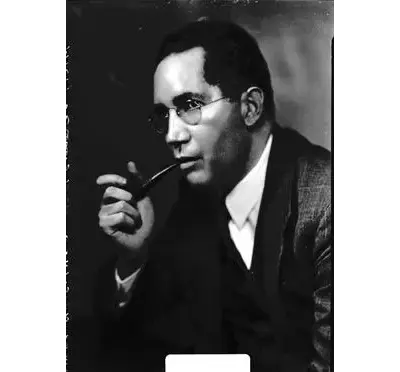
Sterling Allen Brown was a black professor, folklorist, poet, literary critic, and first Poet Laureate of the District of Columbia. He chiefly studied black culture of the Southern United States and was a full professor at Howard University for most of his career. He was a visiting professor at several other notable institutions, including Vassar College, New York University (NYU), Atlanta University, and Yale University.
