Theodore G. Bilbo Quotes
Mrs. Roosevelt has gone so far in aiding the campaign for complete social equality that she has, in effect, endorsed intermarriage. She thinks marriage between whites and Negroes is an individual matter since it is a very personal problem. The unanimous condemnation of the Southland came down upon her.
Theodore G. Bilbo, 1877-1947, Mississippi Governor (Democrat), U. S. Senator (Democrat, MS), Take Your Choice: Separation or Mongrelization
Sourced by: Eigen's Political and Historical Quotations

For anyone in government not to take a stand against intermarriage was almost unthinkable, but when the First Lady did so, it became a national scandal, especially in the South. See {625628} for one reaction.


Essentially this quotation led to a major war and yhrn a later war of independence for Blacks in South Africa. Porter was the Attorney General of the English Cape Colony in South Africa. In an early legal ruling he observed that South Aftica was a colony under English law which did not permit discrimination on the basis of skin color. However, there was a large proportion of Afrikaners—whites of Dutch Ancestry who were culturally strong racists and saw the Blacks as a combination of potential rivals for land and a potential subjegated labor force. They tended to leave the Capetown area and English law. The Afrikaners ended up in a major war—the Boer War—against the English and although the English won the war, the Afrikaners won the political peace and ended up dominating South Africa and imposing apartheid. The Blacks of the mid 20th century had if nothing else, the 100 year old legal and moral precendent from Porter’s opinion which justified the ANC leading the attack on apartheid which finally succeeded. It took 100 years and millions of suffering and dying people but finally, the law of South Africa was as Porter had stated it, and since the Blacks were in the great majority, the Whites became the minority, but due to the ANC leadership of men like Nelson Mandella, the Blacks did not seek revenge on the Afrikaner whites although there was resentlent for generations.
Bilbo was one of the worst racists who ever served in the Congress.

Racial intermarriage was the greatest fear of those who opposed integration.


Amazing as it is to most Americans today, the first time there was an interracial kiss depicted on television was on the Science Fiction TV Show Star Trek in the late 1960s. Although the public reaction was not as hostile as the television executives and politicians of the time feared, there were organized boycotts of NBC and many death threats to the actors, writers, producers and executives.

The Quakers were in the forefront of not only the abolition of slavery but of the integration of the races.


Moynihan was actually not the political originator of the "benign neglect" phrase which became so controversial. It had been first used by The Earl of Durham in his 1839 Durham Report on the English policy towards Canada.

Jessie Helms was his young assistant who drafted this race baiting ad. There are two vicious but subtle aspects to this kind of attach ads. First, not that the ad does not address the problem of white men working along side of blacks. It only refers to wives and daughter. This interracial sex innuendo played on and increased the fear of whites that Blacks would commonly rape white women. The second nasty aspect of the ad is the specific attack on the opponent. Instead of saying that he favored desegregation, the phrase “mingling of the races” was used which implied that Graham was in favor of biracial intermarriage and children—again another sex innuendo. When integration of the workforce finally occurred in the South, there was no increase in Black men sexually assaulting white women. There has been a substantial increase in racial intermarriage however as racial bigotry has diminished in America.

Note that Alabama not only had a law against miscegenation but with this constitution made it illegal for a legislature in the future to ever legalize miscegenation. After the Supreme Court made anti-miscegenation laws illegal, Alabama had to amend this part of its constitution.

At the time, the Southern segregationists were all Democrats and they blocked any Democratic attempt to pass any Civil Rights legislation. When he could not get a Civil Rights commitment from his own party, Powell turned to the Republicans and the President wrote this letter. In return, in November, Powell endorsed and supported Eisenhower instead of Stevenson, his own party’s nominee. Eisenhower could not get any legislation on Civil Rights as the Southern Democrats would always block it. When President Lyndon Johnson finally forced the 1963 Civil Rights Act through the Congress, the racist Southern Democrats cut a deal with Goldwater and the conservative Republicans, and switched parties. Since then the Civil Rights stance of the two parties reversed. The Democrats were thereafter pro Civil Rights and the Republicans, the party of Lincoln and Reconstruction, thereafter reversed their Civil Rights position and opposed progress in this area.
This quotation illustrates one of the earliest major political dirty tricks. The pamphlet was published supposedly as a Republican campaign piece. The Democratic ploy was to turn votes from Abraham Lincoln to the Democratic candidate, George B. Mclellan. It also appears to be the first English usage of the word “miscegenation”. Lincoln was re-elected in spite of the Republicans being portrayed as radical race mixers.


In the middle of WWII where Black soldiers were fighting and dying on the war front. Some had an expectation that they would, when they returned, would have their civil rights and an end to discrimination. Southerners did nothing but perpetuate the racist customs and laws of the South and it was not until the 1963 Civil Rights Act that there was to be major change.

Brigham Young, the Mormon Leader and Territorial Governor, was strongly opposed to Interracial sex. See {629150}. An earlier clause provided for loss of the rights to a slave if the master had sexual relations with the slave, something that no Southern State had ever done.


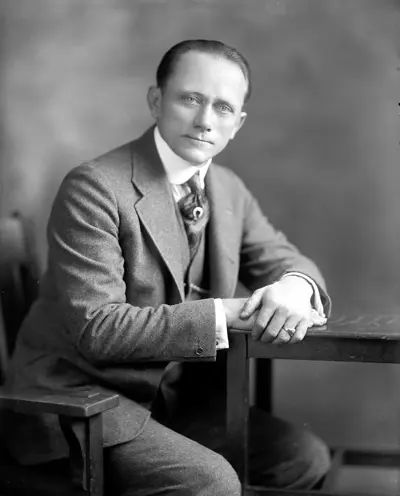
- Born: October 13, 1877
- Died: August 21, 1947
- Nationality: American
- Profession:
Theodore Gilmore Bilbo was an American politician who twice served as governor of Mississippi (1916–20, 1928–32) and later was elected a U.S. Senator (1935–47). A lifelong Democrat, he was a filibusterer whose name was synonymous with white supremacy—like many Southern Democrats of his era, Bilbo believed that black people were inferior; he defended segregation, and was a member of the Ku Klux Klan.
