W. E. B. Du Bois Quotes
In the matter of purely personal contacts like marriage, intimate friendships and sociable gatherings, 'equality' means the right to select one's own mates and close companions. The basis of choice may be cultured taste or vacant whim, but it is an unquestionable right so long as my free choice does not deny equal freedom on the part of others. No one can for a moment question the preference of a white man to marry a white woman or invite only white friends to dinner. But by the same token if a white Desdemona prefers a black Othello; or if Theodore Roosevelt includes among his dinner guests Booker T. Washington, their right also is undeniable and its restriction by law or custom an inadmissible infringement of civil rights.
W. E. B. Du Bois, 1868-1963, Educator & Author, Co-Founder of the NAACP, My Evolving Program for Negro Freedom, 1944
Sourced by: Eigen's Political and Historical Quotations

Racial intermarriage was the greatest fear of those who opposed integration.

Bilbo was one of the worst racists who ever served in the Congress.

This was a bomb-shell statement at the time. Advocates for equality and desegregation usually tried to avoid this issue and Black leaders in particular were afraid of a backlash if they included this issue in the argument for equality. Du Bois did not run from the issue. His position was used by segregation leaders to show what “evils” would befall the nation if segregation was ended. See {586739}.

One of the most amazing things about Abraham Lincoln is the way he grew and matured over time. In 1854 he was not sure that the Negro could be the equal of the white. As he met more Black leaders, saw more, reflected more, and had more responsibility, he grew and developed his views on race. But it was statements like this that led to the great distrust that the very strong abolitionists like Wendell Phillips had in him.


This was the first major civil rights speech. He had previously in his political career tread carefully in the civil rights arena. The Southerners had disproportionate control over the Congressional committee chairmanships and they could hold up his entire legislative agenda. JFK’s father was a right wing fascist who supported Hitler earlier and always advised against pushing civil rights.

Jessie Helms was his young assistant who drafted this race baiting ad. There are two vicious but subtle aspects to this kind of attach ads. First, not that the ad does not address the problem of white men working along side of blacks. It only refers to wives and daughter. This interracial sex innuendo played on and increased the fear of whites that Blacks would commonly rape white women. The second nasty aspect of the ad is the specific attack on the opponent. Instead of saying that he favored desegregation, the phrase “mingling of the races” was used which implied that Graham was in favor of biracial intermarriage and children—again another sex innuendo. When integration of the workforce finally occurred in the South, there was no increase in Black men sexually assaulting white women. There has been a substantial increase in racial intermarriage however as racial bigotry has diminished in America.


This quotation illustrates one of the earliest major political dirty tricks. The pamphlet was published supposedly as a Republican campaign piece. The Democratic ploy was to turn votes from Abraham Lincoln to the Democratic candidate, George B. Mclellan. It also appears to be the first English usage of the word “miscegenation”. Lincoln was re-elected in spite of the Republicans being portrayed as radical race mixers.

This is one of the earliest public positions taken against the legal prohibition on interracial marriage. On this issue, even the vast majority of the Northerners were against her. The “commonwealth” to which she refers, is the Commonwealth of Massachusetts. Note that freedom of choice then meant the freedom to choose of marriage partners without regard to race. A century later, it became the freedom to choose the medical procedures that a woman would be subjected to.

Johnson had a white mistress who accompanied him visibly at a time when Blacks were lynched for dating white women in many parts of the country. He was criticized heavily by whites for going with a white woman and many Blacks for the same.

This was the first named Civil Rights Act passed in the United States. It was passed over the veto of President Andrew Johnson, a Southerner, who tried to thwart Congress’s efforts at Reconstruction.

Knight led a band of whites and blacks who fought off the Confederate Troops sent to Jones County of Missisippi, to eleminate the Free State of Jones which tehy had set up, and seceded from the Confederacy. They had infuriated teh Confederate Government becasue it was an interracial community with a great deal of intermarriage and no discrimination agaisnt Blacks and they welcomed runaway slaves and white deserters from the Confederate Army.


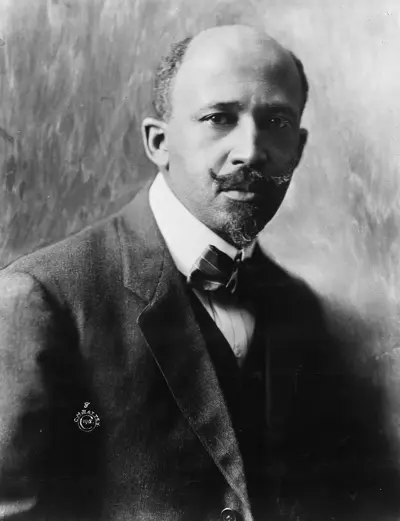
William Edward Burghardt Du Bois was an American sociologist, socialist, historian, and Pan-Africanist civil rights activist. Born in Great Barrington, Massachusetts, Du Bois grew up in a relatively tolerant and integrated community. After completing graduate work at the Friedrich Wilhelm University (in Berlin, Germany) and Harvard University, where he was the first African American to earn a doctorate, he became a professor of history, sociology, and economics at Atlanta University. Du Bois was one of the founders of the National Association for the Advancement of Colored People (NAACP) in 1909.
