Mary McLeod Bethune Quotes
The rights, privileges and responsibilities of full American citizenship. This is all that the Negro asks. He will not willingly accept less. As long as America offers less, she will be that much less a democracy. The whole way is the American way
Mary McLeod Bethune, 1875-1955, Educator, President of the National Council of Negro Women, Certain Unalienable Rights, 1944
Sourced by: Eigen's Political and Historical Quotations

This was the first major civil rights speech. He had previously in his political career tread carefully in the civil rights arena. The Southerners had disproportionate control over the Congressional committee chairmanships and they could hold up his entire legislative agenda. JFK’s father was a right wing fascist who supported Hitler earlier and always advised against pushing civil rights.


He was the first FHA administrator to make statements saying that non-discriminatory housing services should be available to the American people. He was not able to change the agency’s equal opportunity performance because the Southern states had laws allowing and protecting legal segregation especially in housing. The Southern staff interpreted his position to be sure that both blacks and whites had access to FHA services, but they used the “separate but equal” doctrine: Provide services to both races but always in segregated housing projects. This was typical of the kinds of problems that motivated the Civil Rights Acts offered by President Kennedy in 1963 and passed by President Johnson in 1964 See {637271} for a similar Mason statement.
The power structure of England and the English administrators of South Africa were strong advocates of racial equality at the beginning of the 19th century. They insisted on equal administration of law. However the Boer white population could think of nothing more absurd. In a sense the Boers were much like the Southern Whites at the same time. The South African government however could not enforce its equality policies in the rural area – the majority of South Africa at the time. When democracy and self rule came to South Africa, the racially moderating force of the English was minimized and the majority of South Africans wanted a racially segregated society. Apartheid resulted.

The statement was made just before Kenyan Independence was official. His statement was surprising to many people who perceived him as a racist and anti-white. There was a fear that whites would no longer be welcome in Kenya after independence, but Kenyatta’s leadership maintained a pluralistic society.

Note the early use of the term “March on Washington.” See {625658}.


The rights possessed by the Arab minority of Israel exceeds not only those of Jews in any Arab nation, and exceeds those of any minority in an Arab state. And because Israel is the only democracy in the Middle East, the Arabs of Israel possess more political rights than do Arabs anywhere else in the Middle East. The number of Arab political parties in Israel is larger than that of most Arab nations where opposition parties are rarely permitted.

As hard as it is for us to imagine today, while her husband was President of the United States, the First Lady wrote a nationally syndicated newspaper column every single day with politics frequently the subject. While she usually agreed with the President, there were occasions where they seemed to not see things exactly the same. She tended to be more liberal than he. However, there were those who believed that when she criticized politicians, it was with FDR’s knowledge and blessing and she sometimes did his “dirty work.” Eleanor Roosevelt was one of the most influential people in the country—certainly more-so than any First Lady before and since.


This was a very courageous speech for the President to give. Senator Hubert Humphrey had proposed civil rights legislation. At the time most of the racial conservative members of Congress were Democrats and not Republicans as they would become after Civil Rights legislation actually passed in 1964. There was little possibility that the civil rights law would pass as the Southern Democrats could filibuster it in the Senate. None the less Truman supported the legislation and the principle of equal rights despite the fact that he was a Southerner and he knew he would lose the support of the conservative wing of his party.


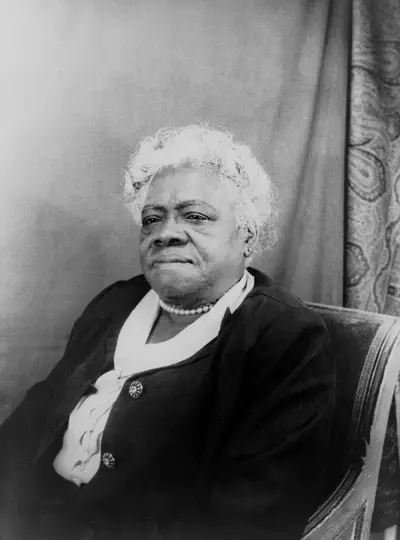
Mary Jane McLeod Bethune was an American educator, stateswoman, philanthropist, humanitarian, womanist, and civil rights activist. Bethune founded the National Council for Negro Women in 1935, established the organization's flagship journal Aframerican Women's Journal, and resided as president or leader for myriad African American women's organizations including the National Association for Colored Women and the National Youth Administration's Negro Division. She also was appointed as a national adviser to president Franklin D. Roosevelt, whom she worked with to create the Federal Council on colored Affairs, also known as the Black Cabinet. She is well known for starting a private school for African-American students in Daytona Beach, Florida; it later continued to develop as Bethune-Cookman University. Bethune was the sole African American woman officially a part of the US delegation that created the United Nations charter, and she held a leadership position for the Women's Army Auxiliary Corps. For her lifetime of activism, she was deemed "acknowledged First Lady of Negro America" by Ebony magazine in July 1949 and was known by the Black Press as the "Female Booker T. Washington". She was known as "The First Lady of The Struggle" because of her commitment to gain better lives for African Americans.
