Virginia Foster Durr Quotes
When I came here, there were two groups of United Church Women, one black and one white.
Referring to Montgomery Alabama in 1950.
Virginia Foster Durr, Description of when she first came to Montgomery, Alabama in 1950 Outside the Magic Circle. Tuscaloosa, AL: The University of Alabama Press, 1990
Sourced by: Eigen's Political and Historical Quotations


Billy Sunday was the most famous preacher of the day. Unlike the vast majority of white preachers, he not only preached to black audiences but exuded an atmosphere of friendliness and comfort around Blacks that amazed most. Most Black leaders thought Sunday was very good for race relations, but there were some critics like Grimke. Sunday was castigated by many racist whites for preaching to Blacks, but he did not go as far as to condemn or preach against racism and the discrimination of the day and he would not preach to an integrated audience. See {585416} for another critique.


Jessie Helms was his young assistant who drafted this race baiting ad. There are two vicious but subtle aspects to this kind of attach ads. First, not that the ad does not address the problem of white men working along side of blacks. It only refers to wives and daughter. This interracial sex innuendo played on and increased the fear of whites that Blacks would commonly rape white women. The second nasty aspect of the ad is the specific attack on the opponent. Instead of saying that he favored desegregation, the phrase “mingling of the races” was used which implied that Graham was in favor of biracial intermarriage and children—again another sex innuendo. When integration of the workforce finally occurred in the South, there was no increase in Black men sexually assaulting white women. There has been a substantial increase in racial intermarriage however as racial bigotry has diminished in America.

The first sentence is inscribed on the Jefferson Memorial in Washington DC. The last two sentences are rarely quoted.

The Quakers were in the forefront of not only the abolition of slavery but of the integration of the races.
Warren a Republican from California who knew Palmer for years, stood up, put his arm around Palmer and told him, “Kyle, you and I will always be friends” and walked out.

Booth was the younger son of a very prominent Northern family of actors. His older brother was considered the greatest American actor, and the rest of the family were abolitionists and vehement Union supporters. They found young John’s views reprehensible.


Brigham Young, the Mormon Leader and Territorial Governor, was strongly opposed to Interracial sex. See {629150}. An earlier clause provided for loss of the rights to a slave if the master had sexual relations with the slave, something that no Southern State had ever done.

This view was extremely popular with the White establishment but decried by Du Bois and a few other Black leaders. Unfortunately for African Americans and the rest of the country. Washington in this quotation turned out to be very wrong. Blacks quickly produced all kinds of goods and services that whites wanted, but the Jim Crow culture of the South and much of the North would simply not allow any relations between the races that might diminish the friction. Southerners for over 100 years blamed and resented the Negro for the destruction of the South in the Civil War and trying to act as if he was equal to the whites. And Blacks blamed whites for the century of slavery and then not enforcing the laws and denying them civil rights and equality.

This quotation explains why so many of the Southern poor so actively supported the racist Slavery system even though they could not afford slaves and received no direct benefit from slavery or the discrimination against free Blacks. The poor were not at the bottom of the totem pole, and therefore had a dignity and social status, that the poor in a racially integrated society never possessed.

[This was the first Abolition appeal written by a Black Man. It was published in Boston and despite the fact that it was very critical of whites, was very popular going through two more printings within the next two years.]
Some whites opposed Slavery and new slave states, not becasue of any sympathy with Negroes or concern for the immorality of slavery, but becasue slavery made it difficult for the working white man to thrive.


Bilbo was one of the worst racists who ever served in the Congress.


Eight years and a Civil War later, he had changed his mind and was the sponsor of the Civil Rights Act of 1866—the first Federal civil rights law in America. See {587711}.
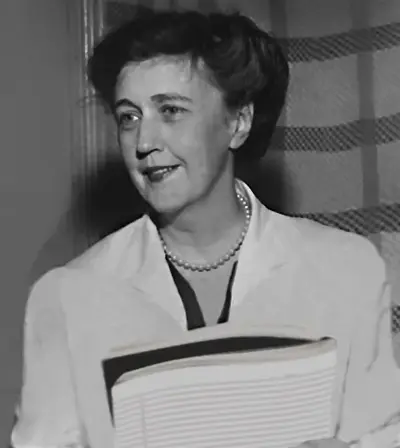
Virginia Foster Durr was an American white civil rights activist and lobbyist. She was born in Birmingham, Alabama in 1903 to Dr. Sterling Foster, an Alabama Presbyterian minister, and Ann Patterson Foster. At 22 she married lawyer Clifford Durr, with whom she had 5 children, one of whom died in infancy. Durr was a close friend of Rosa Parks and Eleanor Roosevelt, and was sister-in-law (through her sister's marriage) of Supreme Court Justice Hugo Black, who sat on many crucial civil rights cases. Her circle of friends extended to Alger Hiss. She was inducted into the Alabama Women's Hall of Fame in 2006.
