English Parliament Quotes
Anti-Christ’s Masse
Oliver Cromwell’s Puritan Parliament was opposed to the celebration of Christmas on religious grounds. See {629849} for more on the Puritans and Christmas. Generally, it was the Catholics who celebrated Christmas and typically they had a Christmas Mass. The anti-Catholic bias was so great that the Pope was often accused of being the Anti-Christ - a terrible insult.
English Parliament, Description of Christmas, ~1644
Sourced by: Eigen's Political and Historical Quotations

Christmas was not celebrated in England universally until relatively modern times as in the United States. However for much of the history of England it was outlawed to celebrate Christmas. Generally, Catholics celebrated Christmas and Protestants opposed it. See {629839}, {629840}, {629847}, {629848}, {76420}.
In 17th century England the Puritans were major opponents of the Celebration of Christmas which at the time had been celebrated mostly by Roman Catholics.


Whereas there are a small number of fundamentalist Christians who do not celebrate Halloween and oppose it because it has pagan origins, and they base their decisions on that fact, O’Donnell’s claim of human sacrifice was totally unfounded. There has not been a single case of Halloween human sacrifice ever documented in all the years the holiday has been celebrated by most Americans.


Luther’s attitude toward the Catholic mass was the main reason the Protestant churches abolished the mass.

In the city of Narragansett, RI, there Lester York had each Christmas season dressed up as St Nicholas, 4TH century Catholic Bishop, the precursor to Santa Clause. He played the part of the Bishop and discussed Christmas in that context. The presentation was very educational as students could learn of the culture of that time but they also received an authentic religious sermon of the time. By inviting York into the public elementary schools, the students were learning some history and culture but they were also involved in a religious service and doctrine—the divinity of Christ. The former was good; the latter illegal as the public schools were in addition to educating historically communicating religious messages. York’s presentations had many supporters who had argued that York’s presentation conveyed Christian messages very well and children should not be denied that opportunity. After much community discussion, the public schools withdrew their invitation to York, and he gave his excellent presentation in many community churches.
- Born:
- Nationality:
- Profession:
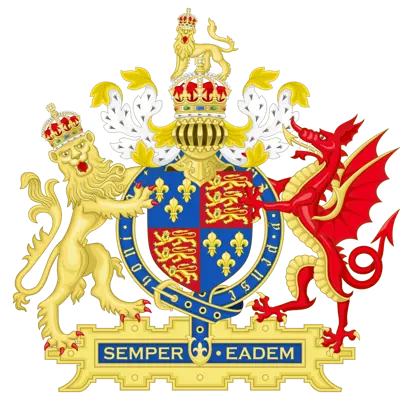
The Parliament of England was the legislature of the Kingdom of England, existing from the early 14th century until 1707, when it united with the Parliament of Scotland to become the Parliament of Great Britain after the political union of England and Scotland created the Kingdom of Great Britain.
