English Parliament Quotes
The liberties, franchises, and privileges of parliament are the ancient and undoubted birth-right and inheritance of the subjects of England.
English Parliament, Statement to King James I, 1621
Sourced by: Eigen's Political and Historical Quotations


The University Presidents had written to the American Public arguing that the German aggression was the result of the militarists in the German society dominating the people and pushing them to war. They argued that most German people were not really responsible. Lamprecht took exception and argued that the German policy was the democratic will of the majority of the German people. He claimed that Germany at the time was more of a de facto democracy than America—as the Untied States did not have a Voting Rights Act or any way of de facto ensuring that all citizens could vote—particularly Negroes in the South. While he was accurate about the voting aspects of a democracy, Germany neither had the Constitution nor a judiciary that was independent and co-equal to the executive and legislature, but Germany did not have the institutions with democratic traditions. The greatest embarrassment to modern Germans is that Adolf Hitler was actually elected by a majority of Germans and was very popular until things in Germany started to go poorly. This quotation is very important in that it shows the importance of a Constitution to limit the powers of even a popularly elected government.


Though not very dramatic or succinct, this is a very important quotation in American History. The original drafters of the Constitution concentrated on limiting the powers of the executive—the role of the King. But the Congress had no limits placed on them. In Britain, to this day, the Parliament can do whatever they wish as there is no restraint on them other than their prudence and reasonableness. Madison used the example of the Alien and Sedition Acts—huge infringements on the rights of Americans—to show why the legislative branch must also be more restrained and limited. And that was the logic behind adding the Bill of Rights to our Constitutions.

McCarthy was an alcoholic, paranoid demagogue who attacked anyone who went against him, usually calling him a Communists or agents of the Communist conspiracy. McCarthy was very powerful until some national leaders stood up to him and publicly demanded the proof he claimed he had. He was not able to prove he ‘uncovered’ a single communist. After that, he was censured by the Senate and lost his power and influence.

This quotation is a great demonstration of how much wiser and the better politician of all the crowned heads of Europe that Queen Victoria was. There were stirrings of freedom and desire for parliamentary government throughout Europe. Queen Victoria, even though and perhaps because she was a young woman, had a great feel for fairness and reasonableness and had read a great deal of history. There were some radical red socialists calling for complete radical revolution scaring European Royalty profoundly. They reacted very conservatively and with reaction, reverting to more tyrannical practices of the past urged in that path by very conservative, right wing advisors. Victoria also had little respect for some of the monarchs who had little interest in their people and much with their personal power and wealth. In the end, it was England which was the only nation which never had a serious radical socialist / communist threat, and that had much to do with Victoria’s political acumen and wisdom.

This quotation is historically important because Davis clearly states the reason for the rebellion of the South. The anti-slave states were growing at a greater rate than the slave states and despite the greater voting power that a southerner had (a result of the 3/5 count of slaves for census purposes, and the Senate), the handwriting was on the wall and the majority of the United States was against the vicious institution of slavery and would make it unprofitable, impossible and/or illegal in the coming years. Southern slavery advocates saw this as a “tyranny of the majority” and therefore took up arms. In the early 20th century, apologists for the Southern rebellion tried to promote the idea that there were reasons other than slavery, but this quotation and the resolutions of the states who withdrew from the Union make it clear that the right to maintain slavery was the only significant issue. In that sense it was a States’ Rights issue, but the South was opposed to States’ Rights when it came to States refusing to return fugitive slaves when Federal Law required such under the Dred Scott Supreme Court Decision.


The colonists in America had no representatives in Parliament. Galloway who opposed armed rebellion against Britain {621966} admitted that the British treatment of America was wrong but saw other solutions. It will never be known if any of them might have worked. The world would have been very different had they been tried.

Henry was advocating rejection of the Constitution without a Bill of Rights. He narrowly lost the vote, but his speech was one of the major catalysts for the later adoption of the Bill of Rights.


It was a quasi constitution in limited areas and declared the representatives of the people coordinate with the governor and council, and that no taxes could be laid without their consent—a degree of freedom and self-determinism what was far greater than those of the other colonies save Pennsylvania. Several years earlier, the English portion of the colony clamored for representative government and was ready to break into open rebellion against Governor Edmund Andros and the authority of the Duke of York. The Duke promised an elected assembly and 18 elected New Yorkers constituted the first representative assembly. Their first act was to pass the Charter of Liberties which was approved by the Duke’s new Governor Thomas Dongan. So the Charter of Liberties was the first set of laws in America passed by a vote of elected representatives of the people.


This was one of the first scholarly analysis of the history, psychology, and culture of the American Western Frontiersman. It is still considered one of the best.


Rynnymede was the location in England where the Barons of the realm confronted King John and forced him to sign the Magna Carta. This was the first event that limited the powers of the King
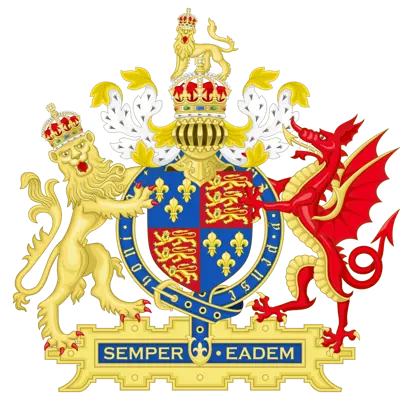
The Parliament of England was the legislature of the Kingdom of England, existing from the early 14th century until 1707, when it united with the Parliament of Scotland to become the Parliament of Great Britain after the political union of England and Scotland created the Kingdom of Great Britain.
