Elizabeth I Quotes
if any person or persons shall at any time hereafter relieve, maintain, retain, or keep in his or their house or otherwise, any person which shall obstinately refuse to come to some church, chapel, or usual place of common prayer, to hear divine service, and shall forbear the same by the space of a month together, contrary to the laws and statutes of this realm; that then every person who shall so relieve, maintain, retain, or keep any such person offending as aforesaid, after notice thereof to him or them given by the ordinary of the diocese, or any justice of assizes of the circuit, or any justice of peace of the county, or the minister, curate, or churchwardens of the parish where such person shall then be, or by any of them, shall forfeit to the queen's majesty for every person so relieved, maintained, retained, or kept, after such notice as aforesaid, ten pounds for every month that he or they shall so relieve, maintain, retain, or keep any such person so offending
The major targets of this law were the Puritans who would not attend the normal Church of England services but had their own, usually in a private home.
Elizabeth I, 1533-1603, Queen of England, The Act Against Puritans, 1593
Sourced by: Eigen's Political and Historical Quotations


This was his response when asked if he would inform the police of another suicide bombing mission by Islamic terrorists.

It was a crime to be a Christian. However, it is interesting that the Governor and the emperor would be concerned with this “crime” in much the same way as we today might discuss the issue of juvenile crime, repentance and recidivism. What is most dramatic to the modern reader is that religious profession was a crime, and is was so just like any other crime of the day. This is a view that most societies have held in the past and some still do today. See {618038} for the Emperor’s response. This exchange is the earliest writing that refers to Christians as problems.
In 17th century England the Puritans were major opponents of the Celebration of Christmas which at the time had been celebrated mostly by Roman Catholics.

Anne was a Protestant but her father James II was a Roman Catholic. There was always suspicion about her true religious allegiance by the extremists in the Church of England. The Act of Toleration, despite its name, required the Church of England to be the established church and the sovereign’s to be the heads of the church.


Gregory the Great. The particular offences under discussion were incest which was common among the English people before they had been Christianized. The responsibility for acts “in ignorance of the law” has been debated as long as there has been law. Gregory’s view is remarkably contemporary.

1st Viscount Bolingbroke. This is the argument that was and still is given by most theocracies and nations opposed to pluralism. It was also a quotation which with the American founders were familiar and were targeting this view when they demanded the 1st Amendment.


This remarkable advice to his followers was all the more remarkable in that the Methodists were gaining adherents by appealing to the rectitude of people and opposing the corruption of much religion that had become commonplace. With this kind of original leadership Methodists have been among the most tolerant of Christian groups.


People of this era not only saw epidemics as the wrath of God, but also saw military catastrophe, invasion and raids as a punishment of God for the sins of the people of the area.

Philip II, by this statement, and his subsequent behavior, made a major step forward in France for the separation of church and state. Previously, French kings played a major part in the selection of the bishops and other high clerics of the realm. Phillip ceased that type of interference. He did however, close down a religious commune for misbehavior, but that was at the request of both the church and civil authorities. See {617074} . The religious authorities at the time were delighted with this form of separation of church and state, but they were adamant that their church should be able to influence the monarchy and laws of the realm. In contrast today, the Chinese government does not allow any religion to interfere with the operation of the government, but insists that the Dali Lama and the Bishops of the Catholic church can only be appointed with their approval. Separation of church and state is a two way phenomenon.

It is this proclamation and others like it that caused many of the American Founding Fathers to include the doctrine of separation of church and state. In this case, and many others, the government actually proscribed and controlled the prayers and the liturgy. See {617532} where the government proscribes the proportion of revenues that must be spent on the poor.

While only certain kinds of songs were prohibited, all dancing was. This prohibition exists to this day in some Protestant sects.
With the exception of during church, drinking was allowed. However, inviting others to drink was prohibited. In a sense there is a modern European parallel in that drinking is legal in most countries but advertising alcohol on television is not. The deed is allowed; the marketing, not.
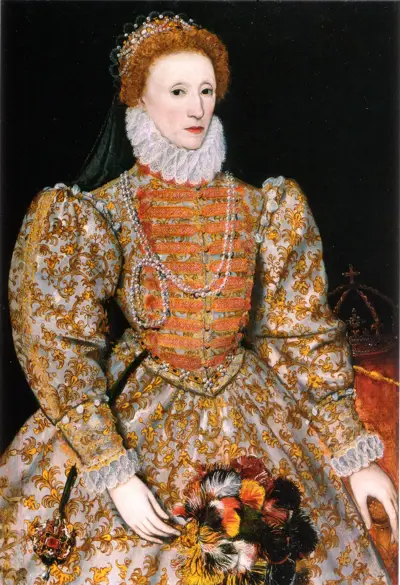
Elizabeth I was Queen of England and Ireland from 17 November 1558 until her death in 1603. Sometimes called the Virgin Queen, Gloriana or Good Queen Bess, Elizabeth was the last of the five monarchs of the House of Tudor.
