Martin Luther Quotes
1. That no one shall invite another to drink under penalty of 3 sous; 2. That taverns shall be closed during the sermon, under penalty that the tavern -keeper shall pay 3 sous, and whoever may be found therein shall pay the same amount; 3. If anyone be found intoxicated he shall pay for the first offence 3 sous and shall be remanded to the consistory ; for the second offence he shall he held to pay the sum of 6 sous, and for the third 10 sous and be put in prison.
With the exception of during church, drinking was allowed. However, inviting others to drink was prohibited. In a sense there is a modern European parallel in that drinking is legal in most countries but advertising alcohol on television is not. The deed is allowed; the marketing, not.
Martin Luther, 1483-1546, German Theologian & Founder of Protestantism, Ordinances For The Regulation of the Churches Dependent Upon the Seigniory of Geneva, 1547
Sourced by: Eigen's Political and Historical Quotations


This method of substance abuse prevention represents what scientists now call “environmental prevention” where instead of dealing with individual alcoholics the environment is altered to reduce the likelihood of developing fewer alcohol-related problems. Almost every state uses Locke’s principle and regulates the number of liquor outlets in any most areas. Those communities which have a very high density of bars and liquor stores tend to have more alcohol-related violence. The riots of the Watts area of Los Angeles in the late 20th century took place in one of the highest densities of liguor stores in the country.

While only certain kinds of songs were prohibited, all dancing was. This prohibition exists to this day in some Protestant sects.

Rush ran the hospitals for the Revolutionary Army and talked to many officers and enlisted men, and also observed much of the British military practices. These suggestions were discussed but never passed as regulations. They are fascinating insights into the problems of the general officers of the time who were generally selected for their socioeconomic status rather than other qualifications. Note the drunkenness limitation for a commanding general was proposed to be limited to only 1 allowed bout of drunkenness every 24 hours. It was, he thought, totally unrealistic to require generals to be always sober when on duty. With the mediocre quality of senior officers, Washington had to depend on foreigners like Lafayette, Von Steuben and others. And Generals who were leading attacks out in front of their men like Benedict Arnold immediately became heroes and one of the reasons he ended up as a traitor was that he thought that he was badly treated relative to the “society” Generals who would not accept him and denigrated his exploits when they themselves had never been close to a battle front.

Samuel Langhorne Clemens, 1835-1910. The Congressmen who voted for Prohibition in the next century had not read or believed this quotation of Twain’s.

With so much polluted water, it was much safer to drink wine, beer or other alcohol drink than water. The “buzz” of the alcohol offered more incentive.

This is a wonderful historical quotation which illustrates the effect of Prohibition on Norway—most of which was negative. Despite the fact that this article had been published in a leading American journal, virtually no one paid attention to it when Prohibition was being debated and instituted in America a few years later. Another aspect of the quotation is the economic effect. It illustrates how easy it is to start a trade war that was completely unintended. Also how a country, in this case Portugal and Spain, will make foreign policy decisions of which their poorer people bear the brunt.


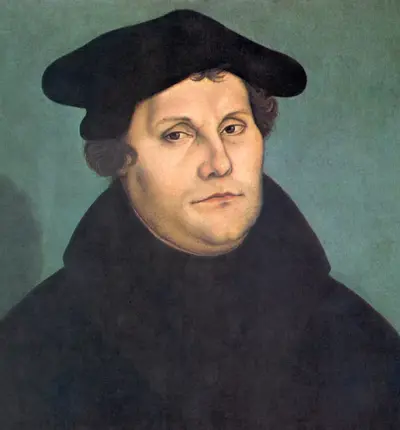
Martin Luther, O.S.A. was a German professor of theology, priest, author, composer, Augustinian monk, and a seminal figure in the Reformation. Luther was ordained to the priesthood in 1507. He came to reject several teachings and practices of the Roman Catholic Church; in particular, he disputed the view on indulgences. Luther proposed an academic discussion of the practice and efficacy of indulgences in his Ninety-five Theses of 1517. His refusal to renounce all of his writings at the demand of Pope Leo X in 1520 and the Holy Roman Emperor Charles V at the Diet of Worms in 1521 resulted in his excommunication by the pope and condemnation as an outlaw by the Holy Roman Emperor.
