John Locke Quotes
… a restraint of their debauchery by a strict execution of the laws provided against it, more particularly by the suppressing of superfluous brandy shops and unnecessary alehouses.
This method of substance abuse prevention represents what scientists now call “environmental prevention” where instead of dealing with individual alcoholics the environment is altered to reduce the likelihood of developing fewer alcohol-related problems. Almost every state uses Locke’s principle and regulates the number of liquor outlets in any most areas. Those communities which have a very high density of bars and liquor stores tend to have more alcohol-related violence. The riots of the Watts area of Los Angeles in the late 20th century took place in one of the highest densities of liguor stores in the country.
John Locke, 1632-1704, English Political Philosopher, Solution to the problem of alcoholism in society, An Essay on the Poor Laws
Sourced by: Eigen's Political and Historical Quotations

Samuel Langhorne Clemens, 1835-1910. The Congressmen who voted for Prohibition in the next century had not read or believed this quotation of Twain’s.


He was describing the way that the Colonial America, Native American communities coped with the adverse consequence of violence brought about by liquor which had been given to the Indians by white traders for the purpose of impairing the Indians’ judgment so that they would trade more easily and on better terms. Since then and into the 21st century, business people have entertained’ potential customers with alcohol for the same general purposes.


This establishment and enforcement of the Christian Sabbath was really made unconstitutional when the Constitution including the Bill of Rights was adopted in 1789. None the less, many communities in the United States maintained laws and law enforcement regarding the Christian Sabbath (called “Blue Laws”) for years. It was only into the 20th century before the practice died out after a number of cases were declared unconstitutional. Even into the 20th century, there are occasional cases where communities try and use the civil law to enforce their religious beliefs about the Sabbath. There was even a Jewish community in upstate New York which passed laws enforcing the Jewish Sabbath on Saturday. That also was a violation of the First Amendment and thus was unconstitutional.


Ever since Smith made this statement, Western societies have argued the issue of causality. Contemporary thinking is that the availability of alcohol outlets are both a cause and an effect of heavy and dangerous drinking. Most state alcohol authorities however do regulate the number of outlets and have not accepted Smith’s point.

Alcoholism is a disease that has affected people of every occupation, every socioeconomic class, every color and nationality, and we all have seen instances so often that most people realize that anyone might be addicted to alcohol. The result is any accusation that someone is an alcoholic is plausible to most of us. As a result of this, it has become a favorite untrue slander in political attacks. Even when false it is believable as in the earlier decades of America, drinking heavily was a part of political culture and many would become addicted.


This is a wonderful historical quotation which illustrates the effect of Prohibition on Norway—most of which was negative. Despite the fact that this article had been published in a leading American journal, virtually no one paid attention to it when Prohibition was being debated and instituted in America a few years later. Another aspect of the quotation is the economic effect. It illustrates how easy it is to start a trade war that was completely unintended. Also how a country, in this case Portugal and Spain, will make foreign policy decisions of which their poorer people bear the brunt.

Douglass had written of how the slave owners used alcohol to maintain control over the slaves: {611086}.

Father of Harriet Beecher Stowe and Henry Ward Beecher. Father of Harriet Beecher Stowe and Henry Ward Beecher


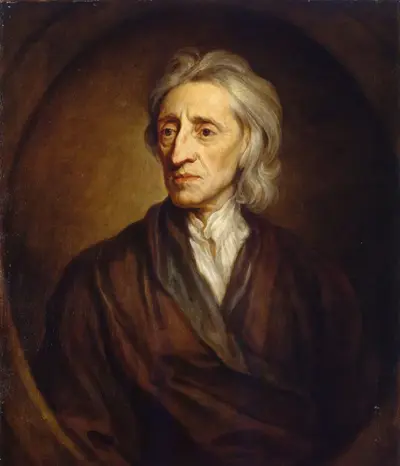
John Locke FRS was an English philosopher and physician, widely regarded as one of the most influential of Enlightenment thinkers and commonly known as the "Father of Liberalism". Considered one of the first of the British empiricists, following the tradition of Sir Francis Bacon, Locke is equally important to social contract theory. His work greatly affected the development of epistemology and political philosophy. His writings influenced Voltaire and Jean-Jacques Rousseau, and many Scottish Enlightenment thinkers, as well as the American Revolutionaries. His contributions to classical republicanism and liberal theory are reflected in the United States Declaration of Independence.
