Frederick Douglass Quotes
If we could make men sober, we would have no slavery.
Douglass had written of how the slave owners used alcohol to maintain control over the slaves: {611086}.
Frederick Douglasss, ~1817-1895, Abolitionist & Editor, Recorder of Deeds, District of Columbia, U. S. Minister to Haiti, Quoted on PBS Prohibition: A Nation of Drunkards, May 3, 2013
Sourced by: Eigen's Political and Historical Quotations

Douglass was also of the opinion that slavery could not continue without alcohol. See {632445}.


Most people only know about Garrison’s abolition crusade. However he had others like temperance.


At the time, the traders were mostly French who traded all kinds of goods and especially alcohol—usually rum—for fur animal pelts. Many of the Indians were partial to the French and French oriented traders who did not covet their land and would provide the Indians with alcohol and guns, lead and powder while English traders sometimes tried to restrict these items. Many tribes of American Indians are genetically very susceptible to alcohol—both in terms of immediate impairment—getting drunk and in developing a dependency on having alcohol—addiction or alcoholism.


The speech was transcribed and published in London


The great poet was trying to get a job with the BBC and Nicholson was to be his boss.


As part of his sermon, Beecher would auction the freedom of a slave girl.

This is one of the proverbs of King Solomon of the Jews, son of King David.
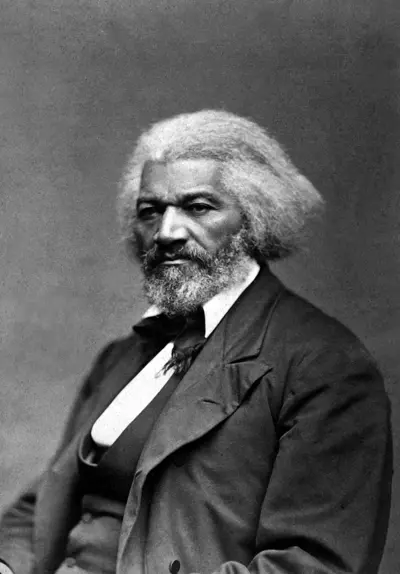
- Born: February 14, 1817
- Died: February 20, 1895
- Nationality: American
- Profession: Abolitionist, Suffragist, Author, Editor, Diplomat
Frederick Douglass was an American social reformer, abolitionist, orator, writer, and statesman. After escaping from slavery in Maryland, he became a national leader of the abolitionist movement in Massachusetts and New York, becoming famous for his oratory and incisive antislavery writings. Accordingly, he was described by abolitionists in his time as a living counterexample to slaveholders' arguments that slaves lacked the intellectual capacity to function as independent American citizens. Likewise, Northerners at the time found it hard to believe that such a great orator had once been a slave.
