Geneva Quotes
Whoever shall have blasphemed, swearing by the body or by the blood of our Lord, or in similar manner, he shall be made to kiss the earth for the first offence ; for the second to pay 5 sous, and for the third 6 sous, and for the last offence be put in the pillory for one hour.
Geneva, Switzerland, Ordinances For The Regulation of the Churches Dependent Upon the Seigniory of Geneva, 1547
Sourced by: Eigen's Political and Historical Quotations

The major targets of this law were the Puritans who would not attend the normal Church of England services but had their own, usually in a private home.

After this statement, he himself contracted syphilis.


At one level this quotation shows that Congress made the rules and regulations of the armed forces and not the Commander in Chief or the General Officers. But the quotation is important for several other reasons. First, it is the first federal attempt to regulate alcohol and drinking. It is also what we would regard today as a severe infringement of freedom of speech. Politically, it was very hard for any member of Congress not to support legislation to prevent blasphemy. But these and other examples of over a decade of the Continental Congress legislation persuaded most Americans that Congress was not to be trusted to protect their rights and there was a real need for a Bill of Rights so that much of the early activity of the Continental Congress would not continue.


This quotation illustrates two interesting facets of colonial politics. First, as in modern times, the title of an act often was inconsistent with the substance, and in many cases, this act among them, the act itself completely contradicts the implication of the title. The draconian intolerance exhibited by this clause was typical of the targets of the framers of the Constitution in erecting the separation of church and state. The fascinating thing about this act is another clause which acknowledged the difficulty of enforcing a common religion, and allowed that no one should be

While only certain kinds of songs were prohibited, all dancing was. This prohibition exists to this day in some Protestant sects.
With the exception of during church, drinking was allowed. However, inviting others to drink was prohibited. In a sense there is a modern European parallel in that drinking is legal in most countries but advertising alcohol on television is not. The deed is allowed; the marketing, not.


While Aquinas brought much wisdom and good to the Church, this statement and others laid a foundation for murdering non-believers and organizing the Inquisition.

At the time, the chief executive of these states were called Presidents because they presided over the legislature as well. This proclamation was issued before the Constitutional Convention in 1787 and the later ratification separating church and state. However, even after the Constitution was ratified some states continued to use state law to enforce the Christian Sabbath. That practice would continue in some places until the 2nd half of the 20th century.
Whoever teaches differently from what I have taught, … condemns God and must remain a child of hell.
Humility and doubt were not characteristics of Martin Luther.

This is the justification that some Muslims use for the murder of prisoners of war if the war is perceived to be an attack on Allah. This for most includes Westerners.


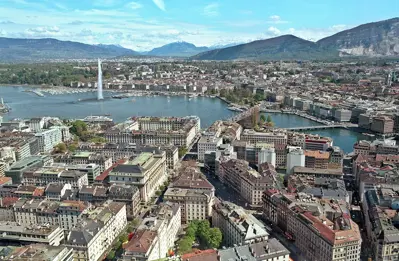
Geneva (/dʒɪˈniːvə/ jin-EE-və; French: Genève [ʒənɛv] (listen); Arpitan: Genèva [dzəˈnɛva] (listen); German: Genf [ɡɛnf] (listen); Italian: Ginevra [dʒiˈneːvra]; Romansh: Genevra) is the second-most populous city in Switzerland (after Zürich) and the most populous city of Romandy, the French-speaking part of Switzerland. Situated where the Rhône exits Lake Geneva, it is the capital of the Republic and Canton of Geneva.
