Martin Luther Quotes
If anyone sings immoral, dissolute or outrageous songs, or dance the virollet or other dance, he shall be put in prison for three days and then sent to the consistory.
While only certain kinds of songs were prohibited, all dancing was. This prohibition exists to this day in some Protestant sects.
Martin Luther, 1483-1546, German Theologian & Founder of Protestantism, Ordinances For The Regulation of the Churches Dependent Upon the Seigniory of Geneva, 1547
Sourced by: Eigen's Political and Historical Quotations

With the exception of during church, drinking was allowed. However, inviting others to drink was prohibited. In a sense there is a modern European parallel in that drinking is legal in most countries but advertising alcohol on television is not. The deed is allowed; the marketing, not.


The church was in constant roil with the Bishops, the Pope and the Holy Roman Emperor each striving for superiority over the other two, almost like branches of government fighting for power. This was the bishops attempt to “impeach” the Holy Roman Emperor who was never charged or given an opportunity to face or refute the charges. He was not even present at the Council. See {611260} for his reply.


The British Women’s Temperance Union was a firm advocate of the banning of ice cream shops as well as saloons on the Sabbath.
There are fundamentalist Muslim nations and subunits throughout the world, which make it a criminal offense for a women to exercise what, in the West and according to the UN International Charter of Human rights, are her legitimate rights. The punishments in some of these communities are very brutal and barbaric. Under Canadian law and policy a person who is in fear for their safety and/or life because they are exercising a fundamental right are eligible for political asylum and immigration status in Canada. Mayfield and a few other conservative Canadian legislators do not see the issue of women’s required dress as being in the same category of freedom of speech, criticism of the government, or the practice of one’s chosen religion. The same people generally favor more restrictions on immigration anyway, and they would not give Canadian asylum to women so aggrieved. Those legislators seem all to be men. The women in Parliament and the majority of the men do not agree, have maintained the right of women to seek asylum for these reasons.

The King Outlawed Protestant Worship.

The major targets of this law were the Puritans who would not attend the normal Church of England services but had their own, usually in a private home.

Henry of Navarre. Only 26 years earlier 50,000 Protestant Huguenots were slaughtered by the Catholics. The sectarian hatred was extreme. The King who had been a Protestant had converted to Catholicism, the faith of the vast majority of Frenchmen. Among the many different and usually futile efforts of reconciliation, the edict of the King ordering all subjects to forget the past was one of the more fascinating attempts.


He had just vetoed a bill to impose censorship on plays and dramas.


At the time, the chief executive of these states were called Presidents because they presided over the legislature as well. This proclamation was issued before the Constitutional Convention in 1787 and the later ratification separating church and state. However, even after the Constitution was ratified some states continued to use state law to enforce the Christian Sabbath. That practice would continue in some places until the 2nd half of the 20th century.
Whoever teaches differently from what I have taught, … condemns God and must remain a child of hell.
Humility and doubt were not characteristics of Martin Luther.


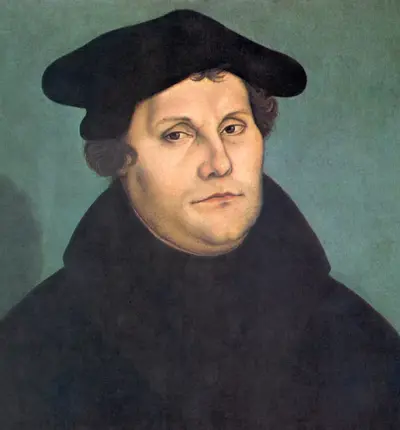
Martin Luther, O.S.A. was a German professor of theology, priest, author, composer, Augustinian monk, and a seminal figure in the Reformation. Luther was ordained to the priesthood in 1507. He came to reject several teachings and practices of the Roman Catholic Church; in particular, he disputed the view on indulgences. Luther proposed an academic discussion of the practice and efficacy of indulgences in his Ninety-five Theses of 1517. His refusal to renounce all of his writings at the demand of Pope Leo X in 1520 and the Holy Roman Emperor Charles V at the Diet of Worms in 1521 resulted in his excommunication by the pope and condemnation as an outlaw by the Holy Roman Emperor.
