John Dickinson Quotes
All persons are hereby fervently exhorted, to observe the Lord's Day, commonly called Sunday, and thereon constantly to attend the worship of GOD…. it is hereby enjoined, that all magistrates, and others whom it may concern, be very vigilant and exact in discovering, prosecuting, and punishing all persons who shall be guilty of profanation of the Lord's Day, commonly called Sunday, blasphemy, profane swearing or cursing, drunkenness, lewdness, or other dissolute or immoral practices
At the time, the chief executive of these states were called Presidents because they presided over the legislature as well. This proclamation was issued before the Constitutional Convention in 1787 and the later ratification separating church and state. However, even after the Constitution was ratified some states continued to use state law to enforce the Christian Sabbath. That practice would continue in some places until the 2nd half of the 20th century.
John Dickenson, 1732–1808, President of Pennsylvania, President of Delaware, Member of the Continental Congress, Pennsylvania Proclamation on the Sabbath, 1782
Sourced by: Eigen's Political and Historical Quotations

This establishment and enforcement of the Christian Sabbath was really made unconstitutional when the Constitution including the Bill of Rights was adopted in 1789. None the less, many communities in the United States maintained laws and law enforcement regarding the Christian Sabbath (called “Blue Laws”) for years. It was only into the 20th century before the practice died out after a number of cases were declared unconstitutional. Even into the 20th century, there are occasional cases where communities try and use the civil law to enforce their religious beliefs about the Sabbath. There was even a Jewish community in upstate New York which passed laws enforcing the Jewish Sabbath on Saturday. That also was a violation of the First Amendment and thus was unconstitutional.

In effect this was one of the earliest civil Blue Laws.


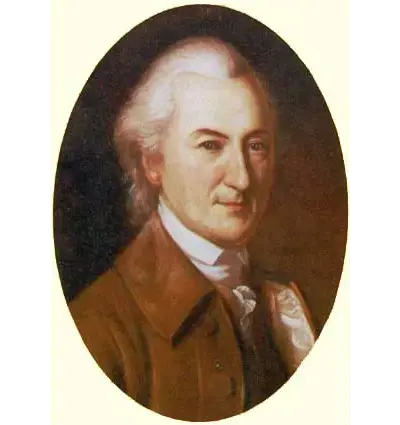
John Dickinson, a Founding Father of the United States, was a solicitor and politician from Philadelphia, Pennsylvania, and Wilmington, Delaware, known as the "Penman of the Revolution" for his twelve Letters from a Farmer in Pennsylvania, published individually in 1767 and 1768. As a member of the First Continental Congress, where he was a signee to the Continental Association, Dickinson drafted most of the 1774 Petition to the King, and then, as a member of the Second Continental Congress, wrote the 1775 Olive Branch Petition. When these two attempts to negotiate with King George III of Great Britain failed, Dickinson reworked Thomas Jefferson's language and wrote the final draft of the 1775 Declaration of the Causes and Necessity of Taking Up Arms. When Congress then decided to seek independence from Great Britain, Dickinson served on the committee that wrote the Model Treaty, and then wrote the first draft of the 1776–1777 Articles of Confederation and Perpetual Union.
