Henry IV of France Quotes
First, that the recollection of everything done be one party or the other, between March, 1585 and our accession to the crown, and during all the preceding period of troubles, remain obliterated and forgotten, as if no such things had ever happened.... We forbid on all our subjects, of some state and quality that they are, to renew the memory, to attack, to feel, to scold, nor to provoke each other by reproach of what took place, for some cause and excuse whether it is, to compete for it, to dispute, quarrel nor offend itself or take offence actually or at word, but contain itself and live peacefully together as brothers, friends and fellow countrymen, on punishment to the offenders to be punished as infracteurs of peace and troublemakers of the public rest.
Henry of Navarre. Only 26 years earlier 50,000 Protestant Huguenots were slaughtered by the Catholics. The sectarian hatred was extreme. The King who had been a Protestant had converted to Catholicism, the faith of the vast majority of Frenchmen. Among the many different and usually futile efforts of reconciliation, the edict of the King ordering all subjects to forget the past was one of the more fascinating attempts.
Henry IV, 1553-1610, King of France, Edict of Nantes, 1598
Sourced by: Eigen's Political and Historical Quotations

It was uttered in the King’s name by soldiers and officials throughout the land. It is not certain that the exact words of choice were created by Louis but they were uttered in his name. Protestants had been given the right to practice their religion in France by the King’s grandfather (the Edict of Nantes {617664}), but Louis XIV rescinded that {617765} and gave Protestants this choice. Some converted. Some were murdered. Some escaped to other countries.


Starting with the Crusades, the Popes began giving indulgences to those who would die in battle fighting for a holy cause. The Papacy was then at one of it’s lowest points. Two men, Clement and Urban, both claimed the Papacy and each had raised an army to fight the other. Each was promising indulgences to those who would fight, and in a modality similar to the Muslim terrorists of the 21st century, the soldiers were promised ascendancy to Heaven if the fell in battle for such a holy cause. Wycliffe, in a wonderfully original notion, proposed that the people who live in peace be granted the indulgences. See {618086}.


See {618216} for a seemingly contradictory quotation by White.


Shelly was a reformer and admired Jesus Christ and his preaching. However, he was an opponent of organized religion and was an atheist himself.


She had been asked what she had hoped to accomplish be killing Marat. Of all people Marat had been the most active and vigorous in calling for the beheading of thousands in the French Revolution. It was known as the Reign of Terror.


1st Earl Baldwin of Bewdley

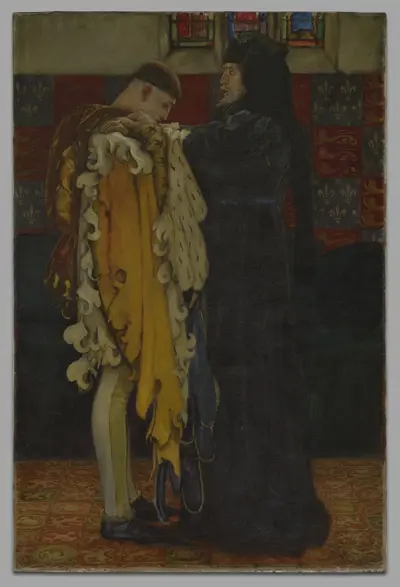
Henry IV (French: Henri IV; 13 December 1553 – 14 May 1610), also known by the epithets Good King Henry or Henry the Great, was King of Navarre (as Henry III) from 1572 and King of France from 1589 to 1610. He was the first monarch of France from the House of Bourbon, a cadet branch of the Capetian dynasty. He was assassinated in 1610 by François Ravaillac, a Catholic zealot, and was succeeded by his son Louis XIII.
