Continental Congress Quotes
...If any shall be heard to swear, curse, or blaspheme the name of God, the Commander is strictly enjoined to punish them for every offence, by causing them to wear a wooden collar, or some other shameful badge of distinction, for so long time as he shall judge proper. If he be a commissioned officer, he shall forfeit one shilling for each offence, and a warrant or inferior officer six pence. He who is guilty of drunkenness, if a seaman, shall be put in irons until he is sober, but if an officer, he shall forfeit two days' pay....
At one level this quotation shows that Congress made the rules and regulations of the armed forces and not the Commander in Chief or the General Officers. But the quotation is important for several other reasons. First, it is the first federal attempt to regulate alcohol and drinking. It is also what we would regard today as a severe infringement of freedom of speech. Politically, it was very hard for any member of Congress not to support legislation to prevent blasphemy. But these and other examples of over a decade of the Continental Congress legislation persuaded most Americans that Congress was not to be trusted to protect their rights and there was a real need for a Bill of Rights so that much of the early activity of the Continental Congress would not continue.
Continental Congress, Rules for the Conduct of Servicemen, November 28, 1775
Sourced by: Eigen's Political and Historical Quotations

Rush ran the hospitals for the Revolutionary Army and talked to many officers and enlisted men, and also observed much of the British military practices. These suggestions were discussed but never passed as regulations. They are fascinating insights into the problems of the general officers of the time who were generally selected for their socioeconomic status rather than other qualifications. Note the drunkenness limitation for a commanding general was proposed to be limited to only 1 allowed bout of drunkenness every 24 hours. It was, he thought, totally unrealistic to require generals to be always sober when on duty. With the mediocre quality of senior officers, Washington had to depend on foreigners like Lafayette, Von Steuben and others. And Generals who were leading attacks out in front of their men like Benedict Arnold immediately became heroes and one of the reasons he ended up as a traitor was that he thought that he was badly treated relative to the “society” Generals who would not accept him and denigrated his exploits when they themselves had never been close to a battle front.


This establishment and enforcement of the Christian Sabbath was really made unconstitutional when the Constitution including the Bill of Rights was adopted in 1789. None the less, many communities in the United States maintained laws and law enforcement regarding the Christian Sabbath (called “Blue Laws”) for years. It was only into the 20th century before the practice died out after a number of cases were declared unconstitutional. Even into the 20th century, there are occasional cases where communities try and use the civil law to enforce their religious beliefs about the Sabbath. There was even a Jewish community in upstate New York which passed laws enforcing the Jewish Sabbath on Saturday. That also was a violation of the First Amendment and thus was unconstitutional.


After this statement, he himself contracted syphilis.


This has always been a problem for the US Military. Attempts at prohibition have been bad for morale, and there is a cultural tradition that military men drink alcohol. However in the Gulf War, our military men and women stationed in Saudi Arabia could not drink as a consequence of the Islamic prohibition of alcohol in Saudi Arabia. There has never been, in the history of our military a period with fewer courts martials, and discipline problems in general. Very few assaults, rapes and murders.

During the American Revolution, conditions were very difficult for Washington’s soldiers who were ill armed, ill clothed, and ill fed while they were paid irregularly. At one point morale was so low that some of the soldiers revolted. Smyth observes that Washington and Congress disciplined the mutineers very mildly, especially when compared with the way the British would deal with such things. The British Governor Clinton tried to take advantage of the mutiny and the poor morale by announcing that all of Washington’s troops who wished could obtain amnesty and join the British forces where the pay and conditions were much better. Professor Smyth found it fascinating that none of the Americans would join the British and he credits it to the wise and mild discipline policies of Washington and Congress as well as the general perception of the justice of the American cause among the American troops.
Public Statement to all the Marines after it had been revealed that some male marines had posted nude pictures of female marines without their knowledge of consent.


This is a very important quotation because it and {641522} show the great difficulty that Washington was under and the fact that he repeatedly asked Congress for assistance very little of which was provided. Washington began to be disillusioned about the militias at this time; see {641525} for the conclusions he reached about the state militias.


Mechanics was a general term for people who made things, or fixed things. Ramsay was the first major historian of the American Revolution.


Ivan Khrfistoforovich Bagramyan. Mikhailovich was looking for military scapegoats for the very unsuccessful defense of Russian Soil against the onslaught of the invading Nazis in WWII. He was given command of a combat division and became one of the Russian heroes in slowing the German Forces, taking enormous losses, and finally repulsing the Germans.

Douglass had written of how the slave owners used alcohol to maintain control over the slaves: {611086}.
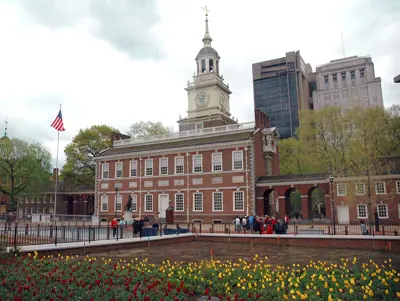
The Continental Congress was a series of legislative bodies which met in the British American colonies and the newly declared United States just before, during, and after the American Revolution. The term "Continental Congress" most specifically refers to the First and Second Congresses of 1774–1781 and may also refer to the Congress of the Confederation of 1781–1789, which operated as the first national government of the United States until being replaced by the current congress. Thus, the term covers the three congressional bodies of the Thirteen Colonies and the new United States that met between 1774 and 1789.
