George Washington Quotes
Our situation is truly distressing; the militias are dismayed, intractable, and impatient to return; great numbers of them have gone off, in some instances almost by whole regiments. With the deepest concern I am obliged to confess my want of confidence in the generality of the troops. I have more than once taken the liberty of mentioning this to congress.
This is a very important quotation because it and {641522} show the great difficulty that Washington was under and the fact that he repeatedly asked Congress for assistance very little of which was provided. Washington began to be disillusioned about the militias at this time; see {641525} for the conclusions he reached about the state militias.
George Washington, 1732-1799, 1st President of the United States (VA), Letter to The Continental Congress
Sourced by: Eigen's Political and Historical Quotations

This is a very important quotation because it and {641523} show the great difficulty that Washington was under and the fact that he repeatedly asked Congress for assistance very little of which was provided.
Congress and most of the Founding Fathers were very distrustful of standing armies. They were aware that standing armies had taken over societies ever since ancient Rome and Julius Caesar.

The issue of how to raise an army plagued the Founding Fathers. The State Militias had very short enlistment periods so that as soon as the soldiers had been trained and were effective, their enlistments would be up. Washington and others wanted a draft or at least long enlistment periods in an American Army. The debate which then began has never ended. How much regular Army as opposed to the Army Reserves—the equivalent of the State Militias, whether or not there should be a draft, whether or not an enlistment period may be extended if there is a military need—none of these are new issues but have been with us since the country was founded. See {591369} for more of Washington’s view of this issue.


There was no conscription during the War of 1812 and the State militias were notoriously unreliable.

There is a , romantic American myth about the Militiamen in Colonial and Revolutionary America—the citizen soldiers who would leave their farms and rise to the military necessity of the day. However, not only were the militia very hard to muster to duty, but most actually didn’t own or have experience with firearms, and the prevailing opinion of knowledgeable military leaders from George Washington on down was that the militia were not very good soldiers. See {613015}, {613016}, {613022}, {613027}, {621987}, {621988}, {613030}, {613033}, & {613056}.

General Washington and his officers were constantly trying to get around the Southern bloc in the Continental Congress. South Carolina was willing because, perhaps more so than any other region of the country the South Carolina civilian population were suffering from the British military initiatives. See related quotes.
This quotation illustrates the dire economic straights the new country was in. There was no money to pay the troops, but worse, not enough money to provide food and clothing for even those patriots who would forgo their pay. It illustrates the critical importance of France in the success of the American Revolution.

Mechanics was a general term for people who made things, or fixed things. Ramsay was the first major historian of the American Revolution.
Washington was describing the British strategy at the start of the war. The expectation was not only that of the British high command in America but was the prevailing expectation in the Court, Parliament, and the media in London. British critics of the military strategy point to this as a key reason the British lost the war in the end. Instead of waiting for the American troops to fall apart during the hard winter and gain a cheap and easy victory, the critics argue that the British should have initiated full scale attacks on the weakened and ill provisioned American soldiers.

During the American Revolution, conditions were very difficult for Washington’s soldiers who were ill armed, ill clothed, and ill fed while they were paid irregularly. At one point morale was so low that some of the soldiers revolted. Smyth observes that Washington and Congress disciplined the mutineers very mildly, especially when compared with the way the British would deal with such things. The British Governor Clinton tried to take advantage of the mutiny and the poor morale by announcing that all of Washington’s troops who wished could obtain amnesty and join the British forces where the pay and conditions were much better. Professor Smyth found it fascinating that none of the Americans would join the British and he credits it to the wise and mild discipline policies of Washington and Congress as well as the general perception of the justice of the American cause among the American troops.

Washington took advantage of the new technology of explosives that had been developed and created an innovative new unit under the command of David Bushnell (1740–1824) the Yale University student who had invented the first time bomb and the Turtle submarine.

Montgomery was killed later that year commanding the failed attempt to capture Montreal in Canada

This militia shall be ready to march with only In the popular vernacular, they were called “Minute Men”. Within a few weeks, similar reorganizations took place in Essex, Suffolk, and Middlesex Counties. In early October, the First Massachusetts Provincial Congress, meeting in Concord, adopted the Minute Man concept for the entire state.


FDR, Eleanor and lost liberals of the time were advocates of a strong military, and unlike after the 2nd Word War, most of the Republicans were conservative isolationists who were opposed to spending much public money for the armed services or weapons.


Marshall was then the chief of staff of the army. He was staving off a Congressional attempt to eliminate the draft.

This was a fairly unique notion. In Russia the army never played this role to the same degree. The Long March in Chinese History blended and amalgamated the people and the army in a way that was unique in World History.


The debate had come to an impasse over the issue of voting and taxation by state equally or proportional to the population. Witherspoon warned of the consequence of there being no agreement on some form of unity.

Washington and Green won very few battles as the strategy was, like many revolutionary movements, simply to avoid losing and being wiped out—the strategy that finally won the war.
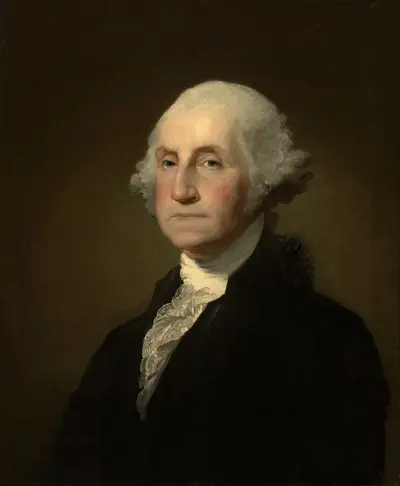
- Born: February 22, 1732
- Died: December 14, 1799
- Nationality: American
- Profession: President
George Washington was the first President of the United States (1789-97), the Commander-in-Chief of the Continental Army during the American Revolutionary War, and one of the Founding Fathers of the United States. He presided over the convention that drafted the current United States Constitution and during his lifetime was called the "father of his country".
