George Washington Quotes
My situation is inexpressibly distressing, to see the winter frost approaching upon a naked army, the time of their service within a few weeks of expiring, and no provision yet made for such important events. The military chest is totally exhausted; the paymaster has not a single dollar; the quartermaster the same; the greater part of the troops are not far from mutiny, upon the deduction from their stated allowances : if there is not more punctuality in future, the army must absolutely break up
This is a very important quotation because it and {641523} show the great difficulty that Washington was under and the fact that he repeatedly asked Congress for assistance very little of which was provided.
George Washington, 1732-1799, 1st President of the United States (VA), Letter to The Continental Congress, September 1775
Sourced by: Eigen's Political and Historical Quotations

This is a very important quotation because it and {641522} show the great difficulty that Washington was under and the fact that he repeatedly asked Congress for assistance very little of which was provided. Washington began to be disillusioned about the militias at this time; see {641525} for the conclusions he reached about the state militias.
Washington was describing the British strategy at the start of the war. The expectation was not only that of the British high command in America but was the prevailing expectation in the Court, Parliament, and the media in London. British critics of the military strategy point to this as a key reason the British lost the war in the end. Instead of waiting for the American troops to fall apart during the hard winter and gain a cheap and easy victory, the critics argue that the British should have initiated full scale attacks on the weakened and ill provisioned American soldiers.

Washington and Green won very few battles as the strategy was, like many revolutionary movements, simply to avoid losing and being wiped out—the strategy that finally won the war.

During the American Revolution, conditions were very difficult for Washington’s soldiers who were ill armed, ill clothed, and ill fed while they were paid irregularly. At one point morale was so low that some of the soldiers revolted. Smyth observes that Washington and Congress disciplined the mutineers very mildly, especially when compared with the way the British would deal with such things. The British Governor Clinton tried to take advantage of the mutiny and the poor morale by announcing that all of Washington’s troops who wished could obtain amnesty and join the British forces where the pay and conditions were much better. Professor Smyth found it fascinating that none of the Americans would join the British and he credits it to the wise and mild discipline policies of Washington and Congress as well as the general perception of the justice of the American cause among the American troops.

He was then serving as the U. S. Ambassador to Russia


Although it seems incredible to us today, thousands of people were arrested and prosecuted under the Espionage Act. The government particularly targeted leftists such as Eugene V. Debs, Bill Haywood, J. Philip Randolph, Victor Berger, John Reed, Max Eastman, and Emma Goldman. Debs was sentenced to 20 years in prison for criticizing the Act itself.


Even in democratic America, this has been true. We spend almost any amount of money to give our military the weapons of war that will make them more effective soldiers, but when they return with mental and physical wounds, government money is not so easy to come by to preserve them in good health. Cost is a major consideration in Veterans benefits and care, but weapons expenditures have little restraint. It has been so for many years in many cultures.

There were so many Blacks fighting for the Americans in the Revolution that the British Commander had to issue a special proclamation which would make slaves of any Negro captured but issued freedom to those who would desert. Despite the greater risk to Negro Revolutionaries than their white counterparts many volunteered and few deserted.
This quotation illustrates the dire economic straights the new country was in. There was no money to pay the troops, but worse, not enough money to provide food and clothing for even those patriots who would forgo their pay. It illustrates the critical importance of France in the success of the American Revolution.

He won the debate and the Congress created the first committee to investigate and oversee military affairs.

Congress and most of the Founding Fathers were very distrustful of standing armies. They were aware that standing armies had taken over societies ever since ancient Rome and Julius Caesar.

Eisenhower was then Supreme Allied Commander.


The Seminole Wars were one of the low points in American military behavior. With the specific permission of Commanding General Jesup, the soldiers were to loot the homes and personal possessions of the enemy civilians as well as fighters, but he favored extermination and there were many atrocities. He even seized the Seminole Leaders who had been invited for Peace Talks.

The Wars continued over a decade, costing thousands of American (and Coalition) troops their lives, many more their limbs and mental well-being, with a monetary cost of over trillions of dollars, and the achievements have been few and meager.

Mechanics was a general term for people who made things, or fixed things. Ramsay was the first major historian of the American Revolution.


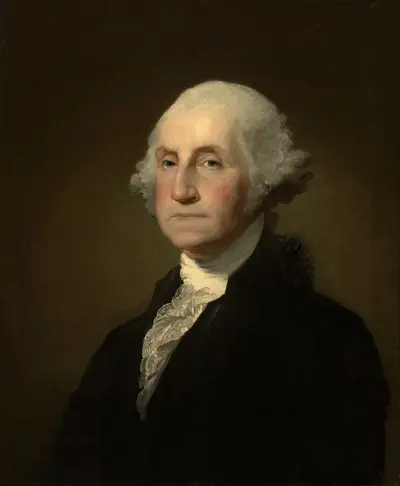
- Born: February 22, 1732
- Died: December 14, 1799
- Nationality: American
- Profession: President
George Washington was the first President of the United States (1789-97), the Commander-in-Chief of the Continental Army during the American Revolutionary War, and one of the Founding Fathers of the United States. He presided over the convention that drafted the current United States Constitution and during his lifetime was called the "father of his country".
