George Washington Quotes
The enemy, finding us so well prepared, mean to bombard us out of our present line of defense; or are waiting in expectation that the colonists must sink under the weight of the expense, or the prospect of a winter campaign, so discouraging to our troops, as to break up our army.
Washington was describing the British strategy at the start of the war. The expectation was not only that of the British high command in America but was the prevailing expectation in the Court, Parliament, and the media in London. British critics of the military strategy point to this as a key reason the British lost the war in the end. Instead of waiting for the American troops to fall apart during the hard winter and gain a cheap and easy victory, the critics argue that the British should have initiated full scale attacks on the weakened and ill provisioned American soldiers.
George Washington, 1732-1799, 1st President of the United States (VA), Letter to The Continental Congress, August 1775
Sourced by: Eigen's Political and Historical Quotations

Mad Anthony Wayne. The quotation may be apocryphal, as solid, multiple confirmation has never been found.

Washington’s strategy was brilliant in that he wanted to avoid open, fixed position, European style battle. Instead, he fought a defensive war where he moved his troops and had them dig in by constructing defensive works that would be easier to defend against experienced European troops. It was only when the French forces combined with his that Washington went on the attack in the open.


See {613496} for the origin of the “thrashing a cannibal” phrase.

This is an early example of spinning. The Crusaders had been routed very badly. Conrad, attempting to report to the home front, describes the event as a strategic retreat.

The Muslims had internal wars but they had—and still have--two sets of morality as to the laws of war. This illustrates the classic Islamic discrimination against non-believers to which the minority of Muslim terrorists still adhere,

The Emperor had sent a challenging message to the young Ottoman Sultan {634798}. Constantine would not negotiate terms of surrender despite the overwhelming strength of the Turkish forces. The Sultan attacked and took the city in a battle where not only was Constantine killed but a large part of his people as well. The Muslims have held Byzantium (Constantinople, now Istanbul) since.

2nd Earl of Guilford. Britain had a double standard of how they would fight wars and battles. If the contention was a rebellion, more mild military means would be used. But if a foreign war, they would use all means. For example, the use of mercenaries would not be used in most rebellions. With this letter, Lord North was escalating the American Revolution into a “foreign war”. As a result, not only would mercenaries be used, but so would Indian allies whose mode of war was not as restrained as the British troops. It also allowed for emancipating slaves and inviting them to take up arms. With this quotation, the American Revolution was raised to a new and more serious military level. See {634115} for the instructions to implement this policy.
The American plan was to capture Quebec and add that province to the 13 colonies. See {636940} . However, the American officers botched the invasion and did not attack as soon as they arrived when the British had almost no troops to defend Quebec.


Cornwallis, who had the misfortune to be the Commanding General of the British forces which were defeated by the brilliant strategy of George Washington and his French Allies, never approved of the British Strategy in America. As a loyal officer, he was a field commander and did not control the overall strategy which most military historians agree was not very sound. While the British controlled New York City, they were surrounded by Washington’s troops and a hostile population. They Armies were separated and while generally too strong to defeat in the field were never strong enough or numerous enough to pacify large areas of the colonies.

Some scholars look back at the allied bombing of German Cities in WWII with criticism that it was morally improper to bomb populated cities, and that the use of the adjective “exterminating” indicated that Churchill was more interested in killing Germans than strategic victory. This revisionist history has two failings. First, the Germans had already bombed Coventry, London and other civilian targets in England as well as cities in Holland, Poland and other countries killing many civilians. As a result, under the rules of war, Germany was no longer entitled to protection for their cities. Further, Hamburg and other targets were manufacturing sites of war material and as such lost the protection anyway. Even Dresden, which had very little war manufacturing was the main location for R&R of German Officers and by their military presence in the city converted it into a legitimate target. FDR agreed with Churchill, that the bombing was a good strategy to cause Hitler to fall as they thought the public would rebel. They were wrong however and his grip on the population through the Gestapo and the military was so strong that, it took a land invasion and occupation to put an end to Hitler. However, the devastating bombing all but crippled the German weapons development and deployment. For example. The Germans had developed the Jet Airplane Engine and actually put a few in the fight at the end if the war. Without the bombing, they would have had many more and countered the allied air supremacy. However, it is also true that Churchill and many Englishmen and some Americans believed that the English were morally entitled to retaliation for the innocent civilians killed with the German bombing of civilian targets.
This is a very important quotation because it and {641523} show the great difficulty that Washington was under and the fact that he repeatedly asked Congress for assistance very little of which was provided.


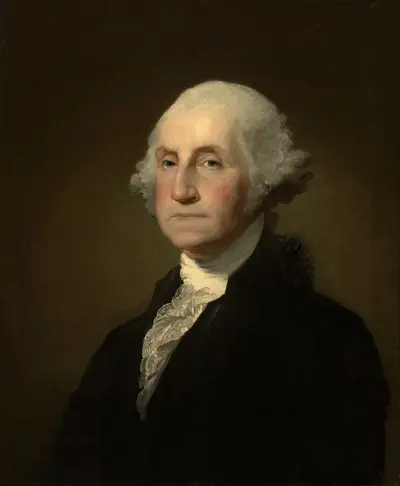
George Washington was the first President of the United States (1789-97), the Commander-in-Chief of the Continental Army during the American Revolutionary War, and one of the Founding Fathers of the United States. He presided over the convention that drafted the current United States Constitution and during his lifetime was called the "father of his country".
