Sun Tzu Quotes
All warfare is based on deception. Hence, when we are able to attack, we must seem unable; when using our forces, we must appear inactive; when we are near, we must make the enemy believe we are far away; when far away, we must make him believe we are near.
Sun Tzu, c. 400 BC, Chinese writer of the Age of Warring States, The Art of War
Sourced by: Eigen's Political and Historical Quotations


This is the earliest known explicit writing about physiological warefare and its effect on morale of the enemy.

Not understanding this point has been the cause of much difficulty for military leaders from the war of 1812 through the Iraq war, the success or failure of the effort depended on a successful peace.

His hubris soon backfired as the Indians learned how to tactically cope with firearms. For example they soon learned that they would see the flash of the musket before the ball would discharge, so would lie down and the bullets would pass overhead. The muskets were effective as defensive weapons from behind barricades though not very accurate. Swords and pikes turned out to be more effective in most cases.


He was a strong believer in surprise attack and preemption.

The quotation was given by Defense Secretary Donald Rumsfeld just prior to the war with Iraq, 2003.


So far as the Iraq government was concerned the important enemy were the minority Sunni Muslims who had dominated the Shiites before the American Invasion. For America the enemy was Al Qaeda and the terrorists as well as the Sunnis. We ended up fighting Sunnis and even Shiites as the definition of the enemy changed with time.
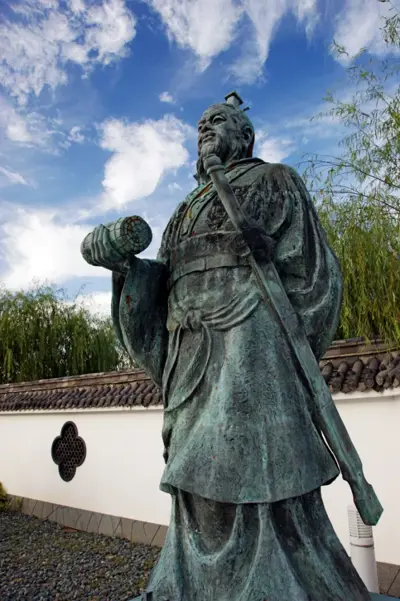
Sun Tzu was a Chinese general, military strategist, writer, and philosopher who lived in the Eastern Zhou period of ancient China. Sun Tzu is traditionally credited as the author of The Art of War, an influential work of military strategy that has affected both Western and East Asian philosophy and military thinking. His works focus much more on alternatives to battle, such as stratagem, delay, the use of spies and alternatives to war itself, the making and keeping of alliances, the uses of deceit, and a willingness to submit, at least temporarily, to more powerful foes. Sun Tzu is revered in Chinese and East Asian culture as a legendary historical and military figure. His birth name was Sun Wu and he was known outside of his family by his courtesy name Changqing. The name Sun Tzu by which he is best known in the Western World is an honorific which means "Master Sun".
