Sun Tzu Quotes
You should always try to deceive your enemy.
Sun Tzu, c. 400 BC, Chinese writer of the Age of Warring States, The Art of War
Sourced by: Eigen's Political and Historical Quotations


Theodore Roosevelt was the Presidential nominee. See {634097} and {585962}--Samuel Johnson, for a 1758 version of this idea.


One of the major reasons that President George W. Bush had given for invading Iraq was that Iraq had weapons of mass destruction. None were found.


President George W. Bush, to justify the invasion of Iraq had told the public that the Iraqi regime was developing nuclear weapons and other weapons of mass destruction, and had participated in the September 11 attack on the United States by assisting Al Qaeda. It turned out that these statements were false. The administration claimed that their error was well intentioned and the result of faulty intelligence. Opponents claimed that the administration officials knew that they were exaggerating and had pressured the intelligence agencies to create intelligence conclusions that supported their story.

Under this interpretation of Islamic law – Sharia – virtually anything regardless of how sinful or immoral under normal circumstances is morally permissible if Islam is being defended from attack. Not all Muslim theologians agree with this principle. See {589498}. There was a similar perversion of theological logic used by Christian Popes during the Crusades.

Ingersoll was considered to be the greatest orator and political thinker of his day, but his overt atheistic views curtailed his elected political career.

The quotation was given by Defense Secretary Donald Rumsfeld just prior to the war with Iraq, 2003.

In December of 1940 President Roosevelt delivered a Fireside Chat calling for full aid to Britain. The senator described it as:

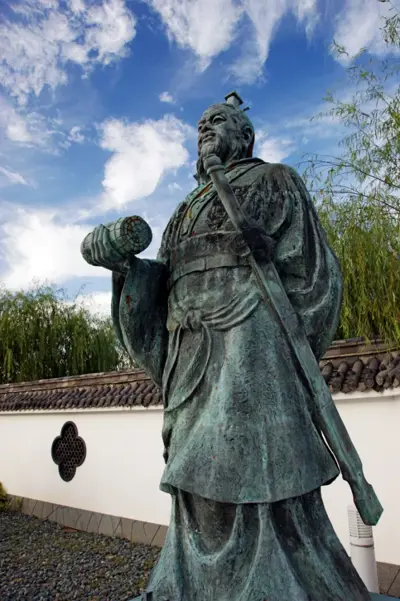
Sun Tzu was a Chinese general, military strategist, writer, and philosopher who lived in the Eastern Zhou period of ancient China. Sun Tzu is traditionally credited as the author of The Art of War, an influential work of military strategy that has affected both Western and East Asian philosophy and military thinking. His works focus much more on alternatives to battle, such as stratagem, delay, the use of spies and alternatives to war itself, the making and keeping of alliances, the uses of deceit, and a willingness to submit, at least temporarily, to more powerful foes. Sun Tzu is revered in Chinese and East Asian culture as a legendary historical and military figure. His birth name was Sun Wu and he was known outside of his family by his courtesy name Changqing. The name Sun Tzu by which he is best known in the Western World is an honorific which means "Master Sun".
