Daniel Levitin Quotes
When it comes to snowing people, one effective technique is to get a whole bunch of verifiable facts right and then add one or two that are untrue.
Levitin, Daniel J. A Field Guide to Lies: Critical Thinking in the Information Age. Dutton, 2016.

Ingersoll was considered to be the greatest orator and political thinker of his day, but his overt atheistic views curtailed his elected political career.

Sinclair was running for the governorship of California and initial polls showed that he was way ahead. Major Conservatives from the country over contributed money to defeat him—more money at the time than had ever been raised even for a Presidential campaign. The Conservatives hired the first political consultants who would advise on an American Campaign throughs a corporation they established Campaigns Inc. The consultants began creating posters and pamphlets many of which were total fabrications attacking Sinclair and then went through his novels that he had written and took quotes from character dialogues in his novels including some of the villain characters who said vile things. They attributed all these terrible quotation to Sinclair, put them into printed pamphlets and distributed them all over the state. Sinclair lost making the assumption that few people would believe the lies that were being issued from Campaign Inc. After that race, political consultants began to work in many campaigns, and with that came more negative campaigning, attacks and more falsehood and lies entered the American political scene.


Accusing her of being a fellow traveler with Communist sympathies, Nixon called her "the Pink Lady" and said she was "pink right down to her underwear." See {627826} and {619498}. Douglas and her campaign thought the accusations were so absurd that at first they did not even bother to respond. Nixon repeated the them and stayed “on message” and by the time that Douglas, who had opposed communism all her life, was believed to be one or at least a “fellow traveler” by most Californians—and finally she responded with statements like this, but it was way too late to turn public perception around. She awarded Nixon the derogatory nickname “Tricky Dick” which the majority of the public used for him throughout his career--{600036}.


One classic example was the fact that in 2012 about one third of Republicans believed that President Obama was a Muslim when he was a devout Christian. The infamous lie had 3 grains of truth: Obama’s father was a Muslim. his middle name was an Islamic name. and he had lived and gone to school as a young boy in Indonesia, the largest Islamic country.

Alsop, a political hawk was convinced, as many other right wingers were at the time that the Russians had forged ahead of us in offensive missiles. When he asked President Eisenhower, the President never denied it, but never went to Congress to ask for more money to close the “missile gap”. Alsop made this shocking accusation which offended many Americans, but pleased the ultra-hawks and anti-communists. Most of the nation however then believed that there was a missile gap, with varying explanations of Eisenhower’s silence on the matter. Two years later John F. Kennedy, used the “missile gap” when running in 1960 against Nixon by attacking Nixon and Eisenhower for allowing us to fall behind the Russians at have a missile gap. When Kennedy became President, he was very surprised that there was no missile gap favoring the Russians—it was favoring the United States. Eisenhower did not want the Russians to know that he knew exactly what they were producing and deploying in missiles through great espionage sources. By not saying anything in the face of the accusations, the Russians assumed that the Americans really thought that they had more capacity than they did. And Eisenhower wanted that so that they would be secure that the United States had no real knowledge of their missile capacity. If Eisenhower had actually told the nation that the Russians were really behind us, the Russians would suspect a security leak and our sources could be compromised.


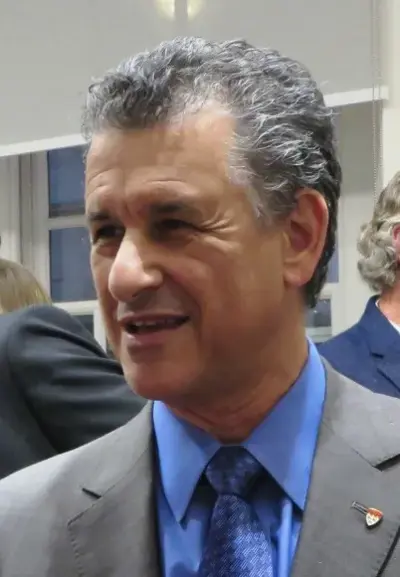
Daniel Joseph Levitin, FRSC is an American-Canadian cognitive psychologist, neuroscientist, writer, musician, and record producer. He is the author of four New York Times best-selling books.
