Sun Tzu Quotes
Hence that general is skilful in attack whose opponent does not know what to defend; and he is skilful in defense whose opponent does not know what to attack.
Sun Tzu, c. 400 BC, Chinese writer of the Age of Warring States, The Art of War
Sourced by: Eigen's Political and Historical Quotations


Clark was particularly brilliant in the Serbian War, where he led America and NATO to a major victory without a single American being killed. There had never been a major war like it, where air power and negotiating carried the victory. And yet, that strategy was not very useful for Iraq and Afghanistan Wars. See {597899} for another of his quotations in this theme.


Not understanding this point has been the cause of much difficulty for military leaders from the war of 1812 through the Iraq war, the success or failure of the effort depended on a successful peace.

His hubris soon backfired as the Indians learned how to tactically cope with firearms. For example they soon learned that they would see the flash of the musket before the ball would discharge, so would lie down and the bullets would pass overhead. The muskets were effective as defensive weapons from behind barricades though not very accurate. Swords and pikes turned out to be more effective in most cases.

Clark had commanded the American and NATO forces in the Serbian War where all the military and political objectives were accomplished with heavy losses to the Serbian’s and none to the allied side—what many think was the most successful war in American History. Like Eisenhower in WWII one great challenge was the political and strategic one of keeping the coalition of all the allied governments working together. His perspective had been like Eisenhower’s which was much wider and geopolitical than most military officers.

Very few societies ever had the wealth accumulated so that they could afford prolonged military operations. In addition, long, prolonged conflicts erode morale, both civilian and military. The Afghanistan War that went on for over a decade caused both and put a great strain on the U. S. national budget.


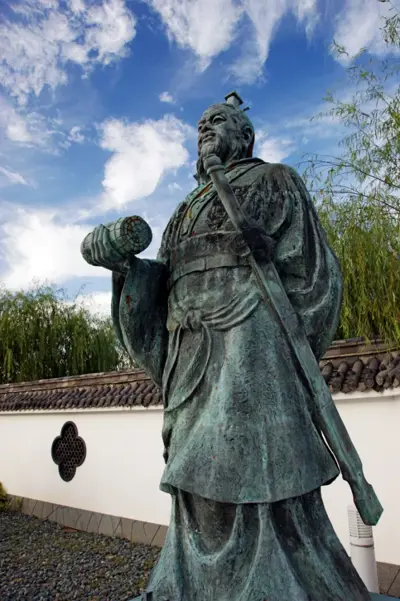
Sun Tzu was a Chinese general, military strategist, writer, and philosopher who lived in the Eastern Zhou period of ancient China. Sun Tzu is traditionally credited as the author of The Art of War, an influential work of military strategy that has affected both Western and East Asian philosophy and military thinking. His works focus much more on alternatives to battle, such as stratagem, delay, the use of spies and alternatives to war itself, the making and keeping of alliances, the uses of deceit, and a willingness to submit, at least temporarily, to more powerful foes. Sun Tzu is revered in Chinese and East Asian culture as a legendary historical and military figure. His birth name was Sun Wu and he was known outside of his family by his courtesy name Changqing. The name Sun Tzu by which he is best known in the Western World is an honorific which means "Master Sun".
