Charles Cornwallis, 1st Marquess Cornwallis Quotes
If we mean an offensive war in America, we must abandon New York and put out whole force into Virginia … If our plan is defensive mixed with desultory expeditions, let us quite the Carolinas--which cannot be held defensively while Virginia can be so easily armed against us—and stick to our salt pork in New York, sending now and then a to steal tobacco.
Cornwallis, who had the misfortune to be the Commanding General of the British forces which were defeated by the brilliant strategy of George Washington and his French Allies, never approved of the British Strategy in America. As a loyal officer, he was a field commander and did not control the overall strategy which most military historians agree was not very sound. While the British controlled New York City, they were surrounded by Washington’s troops and a hostile population. They Armies were separated and while generally too strong to defeat in the field were never strong enough or numerous enough to pacify large areas of the colonies.
Charles [Marquis] Cornwallis, 1738-1805, British General, Letter to a fellow general, April 1871
Sourced by: Eigen's Political and Historical Quotations


Washington was describing the British strategy at the start of the war. The expectation was not only that of the British high command in America but was the prevailing expectation in the Court, Parliament, and the media in London. British critics of the military strategy point to this as a key reason the British lost the war in the end. Instead of waiting for the American troops to fall apart during the hard winter and gain a cheap and easy victory, the critics argue that the British should have initiated full scale attacks on the weakened and ill provisioned American soldiers.


The Indian allies of the French scalped some American colonists which for some whites was akin to the modern reaction to terrorist atrocities. The British and Americans then justified the scalping of their Indian allies as simple retaliation. While Indians had scalped before the whites ever came, the whites accelerated the practice. There was an economic element to scalping. The French “paid” their Indian allies in arms, blankets, trinkets and alcohol by the scalp as it was a crude way of “performance measurement.” Not to be outdone, the English adopted the same custom with the French allied Indians as targets. In North Carolina, for example, the “volunteer” rangers were paid the enormous rate of 10 pounds a scalp.


Mad Anthony Wayne. The quotation may be apocryphal, as solid, multiple confirmation has never been found.

He was arguing for a preemptive attack rather than wait to be attacked.

Clark was particularly brilliant in the Serbian War, where he led America and NATO to a major victory without a single American being killed. There had never been a major war like it, where air power and negotiating carried the victory. And yet, that strategy was not very useful for Iraq and Afghanistan Wars. See {597899} for another of his quotations in this theme.

Clark’s men had English Colonel Hamilton under siege by making him think there were many more Americans in Clarks army than the real 180 or so. He tried to get Hamilton to surrender by threatening if they had to take the fort they would treat Hamilton and the British as murderers—Hamilton had paid hostile Indians for American scalps. At that point a party of Clark’s men arrived with 4 or 5 Indian prisoners who had been captured raiding
civilian farms. After the Indians were executed, Hamilton agreed to surrender.

There was a significant opposition in England who opposed the war against the rebellious colonies. Fox was one of the most outspoken who thought that England would not win.

See {636935}for the policy decision that triggered this order.

2nd Earl of Guilford. Britain had a double standard of how they would fight wars and battles. If the contention was a rebellion, more mild military means would be used. But if a foreign war, they would use all means. For example, the use of mercenaries would not be used in most rebellions. With this letter, Lord North was escalating the American Revolution into a “foreign war”. As a result, not only would mercenaries be used, but so would Indian allies whose mode of war was not as restrained as the British troops. It also allowed for emancipating slaves and inviting them to take up arms. With this quotation, the American Revolution was raised to a new and more serious military level. See {634115} for the instructions to implement this policy.

Newport, Rhode Island, was a “hotbed” of patriots and was the 5th largest city in Colonial America. Wallace’s flag ship shelled military targets from the sea and threatened to bombard and destroy the town with naval gunfire. However, his superior, Admiral Graves, and he both thought that was too severe a step to take. So there was some restraint exercised by some British commanders in the American Revolution. The worst atrocities were in the South and committed by the British Army—the subject of the American motion picture, “The Patriot”.

The American plan was to capture Quebec and add that province to the 13 colonies. See {636940} . However, the American officers botched the invasion and did not attack as soon as they arrived when the British had almost no troops to defend Quebec.

Some scholars look back at the allied bombing of German Cities in WWII with criticism that it was morally improper to bomb populated cities, and that the use of the adjective “exterminating” indicated that Churchill was more interested in killing Germans than strategic victory. This revisionist history has two failings. First, the Germans had already bombed Coventry, London and other civilian targets in England as well as cities in Holland, Poland and other countries killing many civilians. As a result, under the rules of war, Germany was no longer entitled to protection for their cities. Further, Hamburg and other targets were manufacturing sites of war material and as such lost the protection anyway. Even Dresden, which had very little war manufacturing was the main location for R&R of German Officers and by their military presence in the city converted it into a legitimate target. FDR agreed with Churchill, that the bombing was a good strategy to cause Hitler to fall as they thought the public would rebel. They were wrong however and his grip on the population through the Gestapo and the military was so strong that, it took a land invasion and occupation to put an end to Hitler. However, the devastating bombing all but crippled the German weapons development and deployment. For example. The Germans had developed the Jet Airplane Engine and actually put a few in the fight at the end if the war. Without the bombing, they would have had many more and countered the allied air supremacy. However, it is also true that Churchill and many Englishmen and some Americans believed that the English were morally entitled to retaliation for the innocent civilians killed with the German bombing of civilian targets.
Washington’s strategy was brilliant in that he wanted to avoid open, fixed position, European style battle. Instead, he fought a defensive war where he moved his troops and had them dig in by constructing defensive works that would be easier to defend against experienced European troops. It was only when the French forces combined with his that Washington went on the attack in the open.

Martel’s strategy was to allow the Saracen invaders to take a few towns and accumulate plenty of booty. This would slow them down as an army, and many of the individual soldiers was carrying looted goods of one kind or another.

Ruling group of France during the French Revolution. The purchase and transportation of an army in the field was a very expensive element of war and was very difficult as well. The Directory urged its generals to live off the land and get their food from the enemy country they were invading. Rarely did they pay for it but typically just took it from the civilians. Napoleon who served under the directory took this principle one step further. He also stole the invaded country’s art—paintings and statues mostly. These he sent back to Paris where they were sold to rich people. This way he could pay the salaries of the troops and buy more weapons and ammunition. Napoleon could conquer so much territory because France did not have to pay for the military effort as other countries did. This is one of the major reasons for example that the Louvre Museum in Paris has so many great Italian and Spanish paintings.


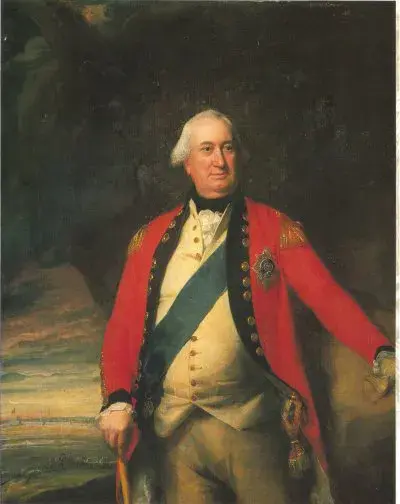
Charles Cornwallis, 1st Marquess Cornwallis, KG, PC, styled Viscount Brome between 1753 and 1762 and known as the Earl Cornwallis between 1762 and 1792, was a British Army general and official. In the United States and the United Kingdom he is best remembered as one of the leading British generals in the American War of Independence. His surrender in 1781 to a combined American and French force at the siege of Yorktown ended significant hostilities in North America. He later served as a civil and military governor in Ireland, where he helped bring about the Act of Union; and in India, where he helped enact the Cornwallis Code and the Permanent Settlement.
