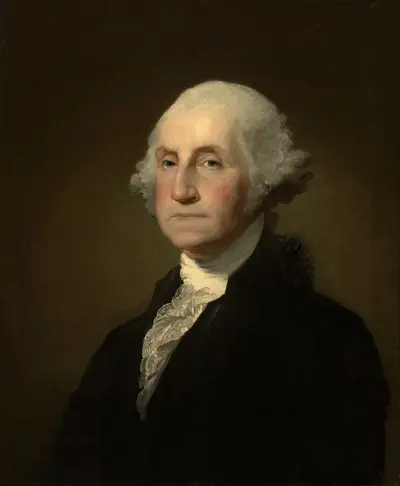
George Washington Quotes
I am religiously persuaded that the duration of the War and the greatest part of the misfortunes and perplexities we have hitherto experienced, are chiefly to be attributed to the System of temporary enlistments. Had we in the commencement raised an Army for the War, such as was within the reach of the Abilities of these States to raise and maintain we should not have suffered those military Checks which have so frequently shaken our cause, nor should we have incurred such enormous expenditures as have destroyed our paper Currency and with it all public credit. A moderate compact force on a permanent establishment capable of acquiring the discipline essential to military operations would have been able to make head against the enemy without comparison better than the throngs of Militia.
The issue of how to raise an army plagued the Founding Fathers. The State Militias had very short enlistment periods so that as soon as the soldiers had been trained and were effective, their enlistments would be up. Washington and others wanted a draft or at least long enlistment periods in an American Army. The debate which then began has never ended. How much regular Army as opposed to the Army Reserves—the equivalent of the State Militias, whether or not there should be a draft, whether or not an enlistment period may be extended if there is a military need—none of these are new issues but have been with us since the country was founded. See {591369} for more of Washington’s view of this issue.
George Washington, 1732-1799, 1st President of the United States (VA), Circular to the State Governments, October 18, 1780, F
Sourced by: Eigen's Political and Historical Quotations
The issue of how to raise an army plagued the Founding Fathers. The State Militias had very short enlistment periods so that as soon as the soldiers had been trained and were effective, their enlistments would be up. Washington and others wanted a draft or at least long enlistment periods in an American Army. The debate which then began has never ended. How much regular Army as opposed to the Army Reserves—the equivalent of the State Militias, whether or not there should be a draft, whether or not an enlistment period may be extended if there is a military need—none of these are new issues but have been with us since the country was founded. See {591368} for more of Washington’s view of this issue.
While most modern armies treat officers and enlisted men who desert equally or even favor the officers, the Visigoths made desertion by an officer the severest of crimes. A centurion was the officer in charge of 100 men. There were 10 decurians (leaders of 10) under him, They were the modern equivalent of the Sergeants—non-commissioned officers. Their penalty for desertion was only the paying of a heavy fine. It was the officers who had to set the example. This set of laws is the most formalized and sophisticated compendium of laws of the so-called “barbaric peoples” of Europe. The compilation was in many ways a documentation of the traditional laws of the Visigoths that had evolved over hundreds of years.
Greek invaders were marching on Istanbul
“Those in power” referred to the Continental Congress and the Governors of the States. Washington, Hamilton, Greene and other senior officers throughout the war pleaded with Congress and the States to provide for the Army. The Governors and state legislatures cared little for a national government as it might reduce their authorities and powers, and the Continental Congress was extremely weak with its leaders very timid. As Greene reported, everyone realized that they might all be ruined but few would act especially if it would cost money. And the Continental Congress had few ways of raising money. It was this obvious failure of the States and the Continental Congress that led to the Constitution.
During the presidential debates George W. Bush stated that he would be very hesitant to use the military for nation building around the world. Less than a year later, the Bush administration, faced with the September 11, 2001 terrorist attacks, launched a massive attack on the Taliban regime in Afghanistan. After fighting and winning the war, the military soon realized that they would in fact be involved in nation building. However, with the assistance of the United Nations much of the humanitarian burden was lifted from the U.S. military.
Even in a relatively frontier state like Indiana at the time, there was little enthusiasm for a militia. See {613320}.
He lost the vote on this issue, and the Congress created the first committee to investigate and oversee military affairs.
Eggleston was an accomplished writer who had served in the Confederate army of the Civil War. 20 year after the war he wrote a series of articles for the prestigious Northern Atlantic Monthly trying to convey the war from the Southerner’s point of view.
General Howe was the Commander of British Troops in the American Revolution. The early American Army was neither professional, experienced, or well officered. Execution as a means of punishment was much more common than in the larger, professional British army. Rush ran the hospitals for the Revolutionary Army and talked to many officers and enlisted men, and also observed much of the British military practices.
This is a very important quotation because it and {641522} show the great difficulty that Washington was under and the fact that he repeatedly asked Congress for assistance very little of which was provided. Washington began to be disillusioned about the militias at this time; see {641525} for the conclusions he reached about the state militias.
Congress and most of the Founding Fathers were very distrustful of standing armies. They were aware that standing armies had taken over societies ever since ancient Rome and Julius Caesar.
- Born: February 22, 1732
- Died: December 14, 1799
- Nationality: American
- Profession: President
George Washington was the first President of the United States (1789-97), the Commander-in-Chief of the Continental Army during the American Revolutionary War, and one of the Founding Fathers of the United States. He presided over the convention that drafted the current United States Constitution and during his lifetime was called the "father of his country".