George Cary Eggleston Quotes
They were certainly not soldiers. They were as ignorant of the alphabet of obedience as their officers were of the art of commanding. And yet they acquitted themselves reasonably well, a fact which can be explained only by reference to the causes of their insubordination in camp. These men were the people of the South, and the war was their own; wherefore they fought to win it of their own accord, and not at all because their officers commanded them to do so. Their personal spirit and their intelligence were their sole elements of strength. Death has few terrors for such men, as compared with dishonor, and so they needed no officers at all, and no discipline, to insure their personal good conduct on the field of battle. The same elements of character, too, made them accept hardship with the utmost cheerfulness…
Eggleston was an accomplished writer who had served in the Confederate army of the Civil War. 20 year after the war he wrote a series of articles for the prestigious Northern Atlantic Monthly trying to convey the war from the Southerner’s point of view.
George Cary Eggleston, 1839-1911, Writer & Confederate Soldier, Description of the Confederate Soldier, “A Rebel's Recollections”, The Atlantic Monthly, 1874
Sourced by: Eigen's Political and Historical Quotations

See {629263} for more on the “Gentleman” Southern officers.

Eggleston was an accomplished writer who had served in the Confederate army of the Civil War. 20 year after the war he wrote a series of articles for the prestigious Northern Atlantic Monthly trying to convey the war from the Southerner’s point of view.

Rush ran the hospitals for the Revolutionary Army and talked to many officers and enlisted men, and also observed much of the British military practices. These suggestions were discussed but never passed as regulations. They are fascinating insights into the problems of the general officers of the time who were generally selected for their socioeconomic status rather than other qualifications. Note the drunkenness limitation for a commanding general was proposed to be limited to only 1 allowed bout of drunkenness every 24 hours. It was, he thought, totally unrealistic to require generals to be always sober when on duty. With the mediocre quality of senior officers, Washington had to depend on foreigners like Lafayette, Von Steuben and others. And Generals who were leading attacks out in front of their men like Benedict Arnold immediately became heroes and one of the reasons he ended up as a traitor was that he thought that he was badly treated relative to the “society” Generals who would not accept him and denigrated his exploits when they themselves had never been close to a battle front.


The Shakers were an American religion and pacifists Lincoln learned. He was so impressed with their sincerity and way of life that he exempted Shaker men from the draft—the first conscientious objectors formally recognized in America. However, Lincoln made the statement to the Shakers which greatly impressed them and caused much reflection. Quakers had been pacifists also, but until the Civil War Draft there was no mechanism to test.

At this point, Stearns had already organized and trained 3,000 Black Troops from the South. He was a strong advocate of recruiting and enlisting as many slaves as they could. Ironically, the desire to serve in the Army with a weapon, was symbolically a powerful symbol of equality and manliness that it was effective with Northern free Blacks and Southern escaped slaves. Another interesting thing was that Stearns insisted that the ex-slaves not only made better soldiers than the Confederates but that they were better than most Union White troops. That view was not promulgated very publically.

The poem was to the Union Volunteer soldiers in the Civil War.
Public opinion in the Union was quite different and more complex. Eggleston was an accomplished writer who had served in the Confederate army of the Civil War. 20 year after the war he wrote a series of articles for the prestigious Northern Atlantic Monthly trying to convey the war from the Southerner’s point of view.

When the Confederate Government realized that the Union was planning to arm escaped slaves and induct them into the Union Army, they quickly passed a law that declared any escaped slave who joined the Union Army or wore its uniform was guilty of Treason and would be executed. Most Union Generals one way or another got word to the Confederate Officers that they had better treat all Negro Union Soldiers as prisoners of war. Even President Lincoln warned the South. Butler, however, had a large number of Negro troops in his area and had heard threats of some of the Southerners to execute Black prisoners of war. He had a way of making things very clear, and he was able to prevent murder of any of his Negro troops despite the Treason law.

Some southerners had gotten out of the Confederate chain of command and were attacking civilian steamboats killing Southerners as well as “Yankees”. See {633900} . While Sherman had trouble with some of his own men on parts of his March Through Georgia, at this time, it was Southerners who were acting independently and improperly. Legally, the Confederates were responsible for any people committing terror. Sherman tried to persuade the Confederate commanders with letters like this, but was very quick to retaliate for every violation. He also complained to some Union officers that they were not moving quickly enough to retaliate and prevent future behavior--{584048}

Eisenhower was then the Supreme Allied Commander of the Allied Forces.

Socioeconomic class was a major factor in the Continental Army just as it was in the British Army. New York, unlike New England, did not have the clear-cut majority in favor of independence. Most of the working class at this stage had no opinion on independence as they did not need to and were not of the social class that had been discussing and arguing about the relationship with England. The upper class had been discussing the issue for some time and were polarized into Patriot and Loyalist sympathies. When the Patriots of New York voted to raise its first Regiment, the first people to volunteer were the men of the upper class who had been debating the question for some time. Because of their social class, they had to be officers. The lower classes got into the intellectual and political debate later, and they too were divided. The Patriots among them then volunteered to provide the privates and other enlisted men to the NY regiment. But the early contingents of New Yorkers were very top heavy with officers. While not as rigid as the Continental Army, the modern American Armed Services are still affected by this tradition. While there are many exceptions, there is still a strong correlation between military rank and socioeconomic family status.

Shortly thereafter, Ma Hongkui, and his soldiers ran for their lives and barely escaped to Taiwan as the Communists took over all of the Chinese mainland.

He was Chancellor of the Exchequer at the time of this speech. Gladstone was certain about most of his views on foreign policy but correct on only some with many blunders on his watch. This view was very important for the Confederacy as it was a prerequisite to diplomatic recognition. The latter never came.

The historical import of this quotation is that North Carolina was unable to support its troops fighting in Virginia so they resorted to asking for private donations. In addition greedy speculators were offering inflated prices to citizens for needed military supplies and after buying them jacking the price up much higher and selling it to the state who because of the lack of productivity, the men in the field and the Union embargo had very few options to obtain needed supplies.

Moltke’s plan for the Marne Campaign did not work out as planned and he and the Kaiser had a difference of opinion so Moltke was replaced as military commander. This quotation is of critical importance as it shows that the Germans were actually planning the First World War and simply used the assassination of Archduke Ferdinand as an excuse. Thus, the reparations Germany was required to pay when they lost the war. See {642096} for more quotational evidence.
This quotation is historically very interesting. Southern educational materials were extremely scarce with paper one of the commodities most in short supply as the only book paper in the South came from England and had to be smuggled through the Union blockade. Yet the priority was so high that paper was made available in the midst of the Civil War. Confederate civilian morale was a very serious problem while at the same time large numbers of Southern civilians and military were delusional about the Confederate fighting capability. Central to that theme was the myth that the Southern soldier, fighting for such a righteous cause, was several times more effective than his Yankee counterpart. Therefore, the fact that the South was outmanned, out gunned, and out supplied, did not imply a Union victory. So teaching this to the young Southern children who would spread it to the adults on the home front, was a conscious Confederate propaganda effort at this time. Also, the use of these kinds of death and killing arithmetic problems for young children, while considered patriotic in the South was thought to be gross, crude, uncivilized and unchristian by most in the North. The implied 90 to 1 superiority ratio was laughed at in the North, but actually believed by a substantial number of Southerners.

He had been a politician and was serving in the Union Army. At the time he was an Army officer just returned from the front and was not yet president.


As the military governor of Louisiana during the Civil War he issued this order in response to the insults and abuse that Federal officers were routinely receiving from the women of New Orleans. For this he was branded a criminal by Jefferson Davis and received a derogatory nickname. See {633651}.
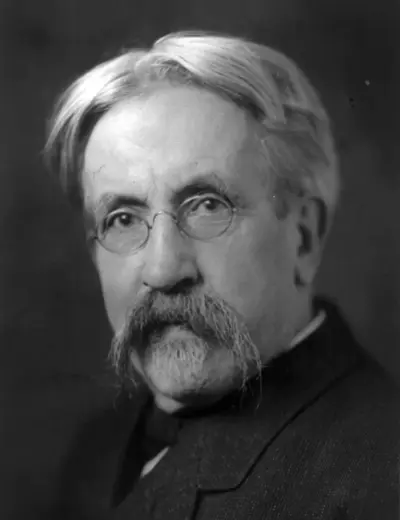
George Cary Eggleston American author and brother of fellow author Edward Eggleston (1837–1902). Sons of Joseph Cary Eggleston and Mary Jane Craig. After the American Civil War he published a serialized account of his time as a Confederate soldier in The Atlantic Monthly. These serialized articles were later collected and expanded upon and published under the title "A Rebel's Recollections."
