George Cary Eggleston Quotes
Our ideas of the life and business of a soldier were drawn chiefly from the adventures of Ivanhoe and Charles O'Malley, two worthies with whose personal history almost every man in the army was familiar. The men who volunteered went to war of their own accord, and were wholly unaccustomed to acting on any other than their own motion…. Their officers were of themselves, chosen by election, and subject, by custom, to enforced resignation upon petition of the men…. There was one sort of rank, however, which was both maintained and respected from the first, namely, that of social life. The line of demarkation between gentry and common people … rests … upon an indeterminate something or other, known as family. To come of a good family is a patent of nobility, and there is no other way whatever by which any man or any woman can find a passage into the charmed circle.
Eggleston was an accomplished writer who had served in the Confederate army of the Civil War. 20 year after the war he wrote a series of articles for the prestigious Northern Atlantic Monthly trying to convey the war from the Southerner’s point of view.
George Cary Eggleston, 1839-1911, Writer & Confederate Soldier, “A Rebel's Recollections”, The Atlantic Monthly, 1874
Sourced by: Eigen's Political and Historical Quotations

See {629263} for more on the “Gentleman” Southern officers.

Eggleston was an accomplished writer who had served in the Confederate army of the Civil War. 20 year after the war he wrote a series of articles for the prestigious Northern Atlantic Monthly trying to convey the war from the Southerner’s point of view.


This quotation dramatically shows one of the class and occupational bias that existed during the Civil War and, albeit to a lesser extent, still existed till the draft was ended after the Vietnam War. The upper and professional classes had connections with physicians and others controlling the drafting process, and any possible physical infirmity was used by the powerful and well connected to gan a deferment.


Theoretically every male citizen was supposed to serve in the Militia at that time. But if one did not, the penalty was a small fine. It became a status symbol. Those middle and upper class men who could get commissions as officers would serve, but those who did not have the political connections or the money to equip his own troops, would rather pay the fine than serve with men he thought beneath him. There is a , romantic American myth about the Militiamen in Colonial and Revolutionary America—the citizen soldiers who would leave their farms and rise to the military necessity of the day. However, not only were the militia very hard to muster to duty, but most actually didn’t own or have experience with firearms, and the prevailing opinion of knowledgeable military leaders from George Washington on down was that the militia were not very good soldiers. See {613015}, {613016}, {613022}, {613027}, {621987}, {621988}, {613030}, {613033}, & {613056}


Chivalry was a set of rules that regulated the behavior of knights especially as to their behavior in battle. It was the Medieval equivalent of the Geneva Convention. At the time knights fought against knights and peasants fought against peasants. After time the fighting was mixed. Previously, if a knight was subdued by other knights, he would surrender and promise to fight any more and that would be honored. But when a small group of peasants brought down a knight in armor, he could not surrender. He had probably killed other lightly armored peasants who were friends, and the peasants did not trust the knights. So typically, the peasants just killed the fallen knight. Social class determined the concepts of honor, fairness, trust, and chivalry came to an end.


He had been a politician and was serving in the Union Army. At the time he was an Army officer just returned from the front and was not yet president.


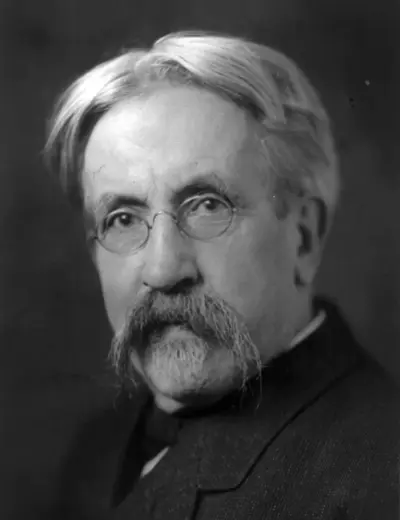
- Born: November 26, 1839
- Died: April 14, 1911
- Nationality:
- Profession:
George Cary Eggleston American author and brother of fellow author Edward Eggleston (1837–1902). Sons of Joseph Cary Eggleston and Mary Jane Craig. After the American Civil War he published a serialized account of his time as a Confederate soldier in The Atlantic Monthly. These serialized articles were later collected and expanded upon and published under the title "A Rebel's Recollections."
