Thomas Wentworth Higginson Quotes
Wherever a class or profession possesses more than its numerical share of power, it has usually less than its proportion of physical vigor. This is easily shown from the vast body of evidence collected during our Civil War. In the volume containing the medical statistics of the Provost Marshal General's Bureau, we have the tabulated reports of about 600,000 persons subject to draft, and of about 500,000 recruits, substitutes, and drafted men; showing the precise physical condition of more than a million men. It appears that, out of the whole number examined, rather more than 257 in each 1000 were found unfit for military service. It is curious to see how generally the physical power among these men is in inverse ratio to the social and political prominence of the class they represent. Out of 1000 unskilled laborers, for instance, only 348 are physically disqualified; among tanners, only 216; among iron-workers, 189. On the other hand, among lawyers, 544 out of 1000 are disqualified; among journalists, 740; among clergymen, 954.
This quotation dramatically shows one of the class and occupational bias that existed during the Civil War and, albeit to a lesser extent, still existed till the draft was ended after the Vietnam War. The upper and professional classes had connections with physicians and others controlling the drafting process, and any possible physical infirmity was used by the powerful and well connected to gan a deferment.
Thomas Wentworth Higginson, 1823–1911, Unitarian Minister, Author, Abolitionist, Feminist, Reformer & Soldier., Women and the Alphabet, 1881
Sourced by: Eigen's Political and Historical Quotations

Theoretically every male citizen was supposed to serve in the Militia at that time. But if one did not, the penalty was a small fine. It became a status symbol. Those middle and upper class men who could get commissions as officers would serve, but those who did not have the political connections or the money to equip his own troops, would rather pay the fine than serve with men he thought beneath him. There is a , romantic American myth about the Militiamen in Colonial and Revolutionary America—the citizen soldiers who would leave their farms and rise to the military necessity of the day. However, not only were the militia very hard to muster to duty, but most actually didn’t own or have experience with firearms, and the prevailing opinion of knowledgeable military leaders from George Washington on down was that the militia were not very good soldiers. See {613015}, {613016}, {613022}, {613027}, {621987}, {621988}, {613030}, {613033}, & {613056}


Eggleston was an accomplished writer who had served in the Confederate army of the Civil War. 20 year after the war he wrote a series of articles for the prestigious Northern Atlantic Monthly trying to convey the war from the Southerner’s point of view.


At the beginning of the Civil War Northern recruiting was easy


The Shakers were an American religion and pacifists Lincoln learned. He was so impressed with their sincerity and way of life that he exempted Shaker men from the draft—the first conscientious objectors formally recognized in America. However, Lincoln made the statement to the Shakers which greatly impressed them and caused much reflection. Quakers had been pacifists also, but until the Civil War Draft there was no mechanism to test.
This principle became the Civil War Draft. Ironically, when the draft was legislated by Congress, there were relatively few men drafted as enlistments increased. See {621897} .

This was the inception of the Civil War draft.


This is a fascinating quotation of the then leader of the Mormons. Historically, it shows us that many from the North, primarily to avoid the military draft of the Civil War, left their homes and emigrated to California, Washington and Oregon. In doing so, many passed through Salt Lake City and many became Mormons and stayed. These “Copperheads” included a serious peace movement at the time along with racists who didn’t want to risk their lives over the issue of slavery. Next we see the affinity that the Mormons had for the Copperheads. Actually, although the Mormons did not own slaves the church leadership had not been, well before the civil war, opposed to slavery and some were supportive of the institution. See {629157} and {629154}. Note the hostility that Young had for Abolitionists. At that time, a large proportion of the Abolitionists were religious Protestant laymen and laywomen and ministers. They were very outspoken and used writing and the media of the time to make their case. In almost all cases they also opposed polygamy and from a sexual morality point of view, saw it as little different from the slave owners sexual exploitation of his female slaves. Moreso than any other issue, polygamy was damaging the Mormon image amongst other Americans, It was the Abolitionists who were principle drivers of this negative image problem of the Mormons, So Young resented these “busybodies” and empathized with the Southerners not because he personally favored slavery, but they were both “victims” of the same set of do gooders. Young had a very limited narrow view of the rest of the country, and completely overestimated the prospects of the Southern Rebels.

See {629263} for more on the “Gentleman” Southern officers.
Eggleston was an accomplished writer who had served in the Confederate army of the Civil War. 20 year after the war he wrote a series of articles for the prestigious Northern Atlantic Monthly trying to convey the war from the Southerner’s point of view.


When the Confederate Government realized that the Union was planning to arm escaped slaves and induct them into the Union Army, they quickly passed a law that declared any escaped slave who joined the Union Army or wore its uniform was guilty of Treason and would be executed. Most Union Generals one way or another got word to the Confederate Officers that they had better treat all Negro Union Soldiers as prisoners of war. Even President Lincoln warned the South. Butler, however, had a large number of Negro troops in his area and had heard threats of some of the Southerners to execute Black prisoners of war. He had a way of making things very clear, and he was able to prevent murder of any of his Negro troops despite the Treason law.


The lack of military preparedness of the United States for the First World War by then was evident and a major subject of political discussion. Mitchel was a “hawk” for his day. He was defeated the next year and joined the military flying service but died in 1918 when he forgot to fasten his seat belt in the airplane and fell from the plane to his death.
Socioeconomic class was a major factor in the Continental Army just as it was in the British Army. New York, unlike New England, did not have the clear-cut majority in favor of independence. Most of the working class at this stage had no opinion on independence as they did not need to and were not of the social class that had been discussing and arguing about the relationship with England. The upper class had been discussing the issue for some time and were polarized into Patriot and Loyalist sympathies. When the Patriots of New York voted to raise its first Regiment, the first people to volunteer were the men of the upper class who had been debating the question for some time. Because of their social class, they had to be officers. The lower classes got into the intellectual and political debate later, and they too were divided. The Patriots among them then volunteered to provide the privates and other enlisted men to the NY regiment. But the early contingents of New Yorkers were very top heavy with officers. While not as rigid as the Continental Army, the modern American Armed Services are still affected by this tradition. While there are many exceptions, there is still a strong correlation between military rank and socioeconomic family status.

This statement during the First World War so frightened the Woodrow Wilson administration that they jailed Debs for saying it and other similar statements like {640244}. The statement was generally suppressed with few newspapers carrying it. The problem for the administration was that enlistments might decrease and force them to draft the wealthy and their sons which was, with very few exceptions, not acceptable to the “upper classes”.

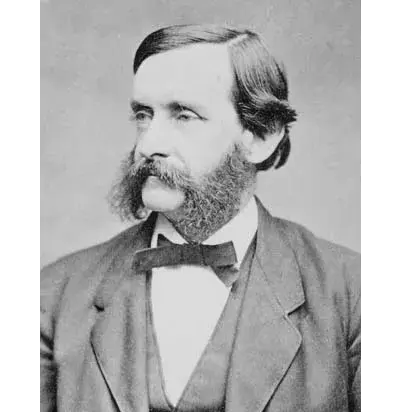
Thomas Wentworth Higginson was an American Unitarian minister, author, abolitionist, and soldier. He was active in the American Abolitionism movement during the 1840s and 1850s, identifying himself with disunion and militant abolitionism. He was a member of the Secret Six who supported John Brown. During the Civil War, he served as colonel of the 1st South Carolina Volunteers, the first federally authorized black regiment, from 1862–1864. Following the war, Higginson devoted much of the rest of his life to fighting for the rights of freed people, women and other disfranchised peoples.
