George Washington Quotes
I am convinced our System of temporary enlistments has prolonged the War and encouraged the enemy to persevere. Baffled while we had an Army in the field, they have been constantly looking forward to the period of its reduction, as the period to our opposition, and the season of their successes. They have flattered themselves with more than the event has justified; for they believed when one Army expired, we should not be able to raise another: undeceived however in this expectation by experience, they still remained convinced, and to me evidently on good grounds, that we must ultimately sink under a system which increases our expense beyond calculation, enfeebles all our measures, affords the most inviting opportunities to the enemy, and wearies and disgusts the people.]
The issue of how to raise an army plagued the Founding Fathers. The State Militias had very short enlistment periods so that as soon as the soldiers had been trained and were effective, their enlistments would be up. Washington and others wanted a draft or at least long enlistment periods in an American Army. The debate which then began has never ended. How much regular Army as opposed to the Army Reserves—the equivalent of the State Militias, whether or not there should be a draft, whether or not an enlistment period may be extended if there is a military need—none of these are new issues but have been with us since the country was founded. See {591368} for more of Washington’s view of this issue.
George Washington, 1732-1799, 1st President of the United States (VA), Circular to the State Governments, October 18, 1780
Sourced by: Eigen's Political and Historical Quotations

The issue of how to raise an army plagued the Founding Fathers. The State Militias had very short enlistment periods so that as soon as the soldiers had been trained and were effective, their enlistments would be up. Washington and others wanted a draft or at least long enlistment periods in an American Army. The debate which then began has never ended. How much regular Army as opposed to the Army Reserves—the equivalent of the State Militias, whether or not there should be a draft, whether or not an enlistment period may be extended if there is a military need—none of these are new issues but have been with us since the country was founded. See {591369} for more of Washington’s view of this issue.

While most modern armies treat officers and enlisted men who desert equally or even favor the officers, the Visigoths made desertion by an officer the severest of crimes. A centurion was the officer in charge of 100 men. There were 10 decurians (leaders of 10) under him, They were the modern equivalent of the Sergeants—non-commissioned officers. Their penalty for desertion was only the paying of a heavy fine. It was the officers who had to set the example. This set of laws is the most formalized and sophisticated compendium of laws of the so-called “barbaric peoples” of Europe. The compilation was in many ways a documentation of the traditional laws of the Visigoths that had evolved over hundreds of years.


There was little thought of emancipating slaves or their value to the South by the senior officers of the Union Army at the beginning of the war. The Secretary of War changed that. See {629183}for a typical Union General’s view at the beginning of the war.


This historic speech is regarded as one of the most important in Australia's history, marking a turning point in Australia's relationship with its founding country, the United Kingdom. Many felt that Prime Minister Curtin was abandoning Australia's traditional ties to the British Isles. -- Wikipedia

Ruling group of France during the French Revolution. The purchase and transportation of an army in the field was a very expensive element of war and was very difficult as well. The Directory urged its generals to live off the land and get their food from the enemy country they were invading. Rarely did they pay for it but typically just took it from the civilians. Napoleon who served under the directory took this principle one step further. He also stole the invaded country’s art—paintings and statues mostly. These he sent back to Paris where they were sold to rich people. This way he could pay the salaries of the troops and buy more weapons and ammunition. Napoleon could conquer so much territory because France did not have to pay for the military effort as other countries did. This is one of the major reasons for example that the Louvre Museum in Paris has so many great Italian and Spanish paintings.
Washington was describing the British strategy at the start of the war. The expectation was not only that of the British high command in America but was the prevailing expectation in the Court, Parliament, and the media in London. British critics of the military strategy point to this as a key reason the British lost the war in the end. Instead of waiting for the American troops to fall apart during the hard winter and gain a cheap and easy victory, the critics argue that the British should have initiated full scale attacks on the weakened and ill provisioned American soldiers.
This is a very important quotation because it and {641522} show the great difficulty that Washington was under and the fact that he repeatedly asked Congress for assistance very little of which was provided. Washington began to be disillusioned about the militias at this time; see {641525} for the conclusions he reached about the state militias.
Congress and most of the Founding Fathers were very distrustful of standing armies. They were aware that standing armies had taken over societies ever since ancient Rome and Julius Caesar.

Grant’s overall strategy of attrition of the Southern troops and interdicting supplies and targeting Southern manufacturing and transportation was taking its toll and the Confederates tried a desperate gamble. Robert E. Lee’s tried to attack the Union in the North—Pennsylvania and Maryland threatening Washington and hoping to force the Union to sue for peace. But that left the Eastern part of the Southern heartland relatively undefended. Grant and Sherman, noting the opportunity, then sent Sherman to take Atlanta and destroy all the factories, railroads, and warehouses of food, arms and munitions, then march to the sea and back up the Atlantic Seaboard, freeing slaves and destroying anything and everything that could support an Army and putting enormous pressure on the Southern men fighting with Lee to return home and prevent starvation as there were now few slaves to work the farms. It was the stroke that, as intended, crippled the Confederacy’s ability to wage war. But Grant and Sherman both credited the Southern strategy with opening the opportunity—hence it was the Confederacy that “planned” Sherman’s March. The details of the plan were worked out by Sherman and his staff.


Tojo was a hawk and didn’t want the flawed findings going to other cabinet members.

The Barbary Pirates had an incredible extortion racket going in the Mediterranean. If nations would pay them an annual sum each year, they would not attack and seize merchant ships of that country and sell the ships and goods while holding the sailors for ransom. There were political differences in America over whether to pay tribute and ransom or respond militarily.

Then Chief of Staff of the Army, he was asking for a large military appropriation.

Mechanics was a general term for people who made things, or fixed things. Ramsay was the first major historian of the American Revolution.
This is a very important quotation because it and {641523} show the great difficulty that Washington was under and the fact that he repeatedly asked Congress for assistance very little of which was provided.

So far as the Iraq government was concerned the important enemy were the minority Sunni Muslims who had dominated the Shiites before the American Invasion. For America the enemy was Al Qaeda and the terrorists as well as the Sunnis. We ended up fighting Sunnis and even Shiites as the definition of the enemy changed with time.
The “surge” was the short term injection of a large number of American combat troops into Iraq when the Iraq War was going badly. President George W. Bush, who at the urging of Vice President Cheney and the neoconservatives had invaded Iraq and while the invasion went well the administration botched the so-called peace and America was in the midst of a Iraqi civil war. Bush went ahead with the surge despite the advice of the Joint Chiefs. What makes the quotation particularly interesting, beyond the fact that the senior military advice was ignored, was that the President had always campaigned on the principle that the President should listen to the senior American Military officials on military tactics and strategy. He like Franklin Roosevelt, Harry Truman, Dwight Eisenhower, John F. Kennedy, and other presidents found that the military leadership perspective was often very narrow and not even militarily infallible. The Iraq War turned in our favor after the surge albeit that there have been arguments since then as to whether or not the surge was the reason or was it due to other factors which occurred at the same time. Probably, all were factors.

Note that even then, De Gaulle’s nationalist ego focused not only on glory but glory that need not be shared. It was always a great strength and a great weakness for him. He and many French officers were so fixed on the glory of beating the Germans, that they did not focus on their ½ million casualties and were not prepared for the German countermeasures that turned the battle from a French victory to a long standoff and stalemate of the “Western Front” where neither side could advance much. Note also that De Gaulle failed to mention the British Expeditionary Force that twice saved the French from being overrun. Denial for the honor of France was always one of De Gaulle’s characteristics. See {642233} for the English commander’s view of the outcome of the Battle of the Marne.

This was a fairly unique notion. In Russia the army never played this role to the same degree. The Long March in Chinese History blended and amalgamated the people and the army in a way that was unique in World History.

This is a very controversial Franklin quotation. In fact, Franklin never sent this letter to Strahan, but it is one of the most famous of the Franklin quotations. It was even famous in 1775. Franklin saw to it that copies of his “letter” reached most American newspaper editors, many of who reprinted it. It was not the first time that an American politician had made quotations for domestic consumption only, and it certainly was not the last. So Franklin never said this to his friend Strahan, but he did claim that he did to all who Americans who would listen. The result is that Franklin developed a reputation for really ‘telling off those Englishmen.’ This was important for him because since he had many friends and admirers in England, he was suspect to many anti-British Americans.

Men were being recruited to volunteer for the new American Revolutionary army throughout the colonies. However, the sons of many Virginia planters were neither recruited, nor did most of them volunteer. The reality was that few of them had an education that might fit them for many of the military needs. However, they were not very fit to be foot-soldiers (infantry) as they were mostly, having lived on a slave plantation where they did not work and were truly indolent and would not have the discipline or endurance to march long distances. Jefferson came up with this idea: Create a special Cavalry unit. They could all serve together and would not be a bad example to other men, and they all could ride a horse as that was their primary mode of transportation. This is another of the examples negative effects on whites what Negro slavery wrought.

He was leading the Gordon Highlanders of the British Army against the Boers during the Boer War. He was seriously wounded and could not go on himself with a charge he had ordered, However, waifing his sword he made this famous qutation. Particualrly noteorthy is the derrogatory terms which he used to describe the enemy--the Boers of South Africa. In many wars and cultures, one or more of the combatants, in order to overcome the avarage soldier's reluctance to kill an enemy, characterizes them as less than human. In this case, vermin, who were to be exterminated. There were two predominant groups of whites who came to South Africa, the English who were generally well-educated and were interested in trading with the exhisting inhabitants and investing in businesses using mostly native labot and the Boers. The latter were of Dutch and German origin, poor farmers with little or no land in the home country and little education. Their interest was to create a nation where they could own land to farm. And the lest expensive way for them to increase their farmland was to sieze it from the native Blacks and who were the major forces behind the racial discrimination which became apartheid. The British contolled the government and sought stability and as in most of the British Empire, they wanted English law to prevail including the rights of the Black natives. The Boers had left Europe for good and would thrive or not in Southern Africa. Proportiopnately, the English might have a career in South Africa or serve there for a few years. They were Englishmen in a foreign country. The Boers saw themselves as citizens of Southern Africa who were fighting the native Blacks for control of the land. The English legal system would not allow any of the land seizures and political discrimination that the Boers saw as existential for their survival in Africa. Soon, the Boers took more and more of the law into their own hands and saw English rule and dmination as inimical to their interests in Africa and they tried to create their own independent states in Southern Africa. That was the essense of the Boer Wars. Dick-Cunyngham was awarded the Victoria Cross, the highest military decoration of Great Britain, for his exploits in the Afghan War.

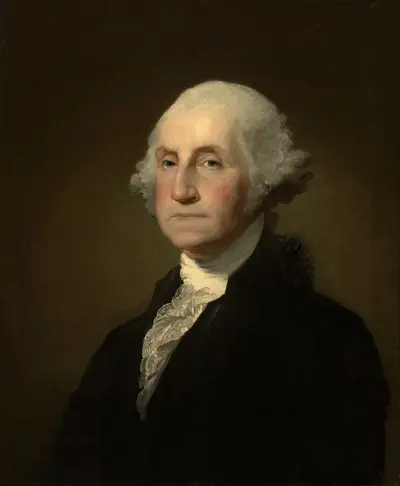
- Born: February 22, 1732
- Died: December 14, 1799
- Nationality: American
- Profession: President
George Washington was the first President of the United States (1789-97), the Commander-in-Chief of the Continental Army during the American Revolutionary War, and one of the Founding Fathers of the United States. He presided over the convention that drafted the current United States Constitution and during his lifetime was called the "father of his country".
