John Curtin Quotes
The Australian Government, therefore regards the Pacific struggle as primarily one in which the United States and Australia must have the fullest say in the direction of the Democracies' fighting plan. Without any inhibitions of any kind, I make it clear that Australia looks to America, free of any pangs as to our traditional links or kinship with the United Kingdom. We know the problems that the United Kingdom faces. We know the dangers of dispersal of strength, but we know too, that Australia can go and Britain can still hold on. We are, therefore, determined that Australia shall not go, and we shall exert all our energies towards the shaping of a plan, with the United States as its keystone, which will give to our country some confidence of being able to hold out until the tide of battle swings against the enemy.
This historic speech is regarded as one of the most important in Australia's history, marking a turning point in Australia's relationship with its founding country, the United Kingdom. Many felt that Prime Minister Curtin was abandoning Australia's traditional ties to the British Isles. -- Wikipedia
John Curtin, 1885–1945, Australian Prime Minister (Labour), National Address a few weeks after Pearl Harbor, December 26, 1941
Sourced by: Eigen's Political and Historical Quotations


During WWII, Mauldin was at the front lines and in the fox holes with the troops getting ideas for his cartoons most of which were drawn on the battle field;

Mussolini allied with Hitler. Ciano turned out to be right.


This has been true in just about every conflict. In WWII however, there were a highly disproportionate ration of atrocities with those of the axis forces dwarfing those of the U. S. and its allies. Further, after the war, those allied atrocities that did take place were published. In addition, one basic difference is in the policies of the fighting forces and their governments as opposed to individual actions by soldiers. In WWII, the allied atrocities were of the latter type, but the axis atrocities involved both.

Things were looking bleak for the British & they were dependent on material help from the U.S. to give them a chance. The British navy was one of the largest and most powerful in the world & this cable was a veiled threat that if U.S. military aid did not come, England could not defend the country in the air, Churchill might be kicked out of office & his successors surrender to Germany turning over the British fleet to Hitler giving Germany control of the seas & with their ally Japan a naval force stronger than America’s. Anglophiles would not describe it as a threat, but merely a statement of the reality of the time. Roosevelt’s Ambassador to Britain, Joseph P. Kennedy, a Nazi sympathizer & some American military officers were opposed to aid to Britain seeing it as a lost cause. Roosevelt, however, acting on his own marvelous instinct, his advice from Harry Hopkins, and his back-channel contacts in England, decided that if armed Britain could hold out. He turned out to be right.

The allies had differences in desirable strategy alternatives. Russia was facing the German Army on its Eastern front and causing huge German casualties but were paying for them in large loss of Russian life—civilian and military (The Russians suffered 22 million deaths as a result of WWII.) Stalin wanted to open a second front in France which would force the Germans to move some divisions from the Russian front, thereby relieving some of the pressure.

He has exactly right, but at the time there was much isolationist sentiment arguing against getting involved in “foreign wars”. To obtain the full industrial power of the United States, most of the manufacturing capability and raw materials would have to be taken from the civilian sector and devoted to military production. That would take men like Nelson, but primarily President Franklin Delano Roosevelt who would persuade the American people to make the immediate sacrifice to insure the future. See {642356} as an example.

Note that even then, De Gaulle’s nationalist ego focused not only on glory but glory that need not be shared. It was always a great strength and a great weakness for him. He and many French officers were so fixed on the glory of beating the Germans, that they did not focus on their ½ million casualties and were not prepared for the German countermeasures that turned the battle from a French victory to a long standoff and stalemate of the “Western Front” where neither side could advance much. Note also that De Gaulle failed to mention the British Expeditionary Force that twice saved the French from being overrun. Denial for the honor of France was always one of De Gaulle’s characteristics. See {642233} for the English commander’s view of the outcome of the Battle of the Marne.

American official foreign policy had been officially isolationist—to not get involved in the squabbles and fights of other nations. Angell however pointed out that even before WWII, America had formally been involved in 6 foreign wars and used military incursions on foreign soil on almost 100 occasions.

Hopkins was a social worker with no military of political experience. But the President trusted him implicitly. Most American military officers and Ambassador to England Joseph P. Kennedy, a Nazi sympathizer & father of JFK, believed that England could not stand up to Hitler. Any military aid we gave England would fall into the hands of the Germans. Everyone was shocked when Roosevelt sent Hopkins to England to make a military recommendation. Hopkins, FDR’s closest advisor made this powerful and moving statement to Churchill and other British leaders. The combination of the first Biblical phrase with the second recognition of the possibility of failure, was inspirational for the British—just the effect Roosevelt sought.


Eisenhower was then Supreme Allied Commander.

Note that he assumes that not only will there be another World War, but he assumes that we will be on opposite sides.

The Prime Minister, Neville Chamberlain, preceded him with the announcement of declaration of war against Germany, but it was left up to the Foreign Minister to explain the implications. This was the first time in history that a nation had used radio to communicate such momentous events to its population.

War between England and Germany had just commenced.

The issue is whether Kansas would enter the Union as a slave state of a free state. If a free state, the free states would be able to block further slavery. If Kansas were to become a slave state, the slave states would have a sufficient majority to make all future expansion hospitable to slavery. The slavery forces started sending men and families into Kansas so that they could vote; the abolitionists did the same. Both sides armed and a war began with each faction trying to kill or drive the other faction out of Kansas before the vote. See {612516} for the anti-slavery perspective.

She was referring to the aftermath of the Iraq War.


An example of this was the landing in the beaches of Normandy in WWII. Once on the beaches the allied troops had to win or die. Some of the most heroic fighting in American and English military history occurred on those beaches. Another was the Spanish Explorer Hernando Cortez who after landing in the New World, had his ships burned so that he and his soldiers had to conquer or they would die.
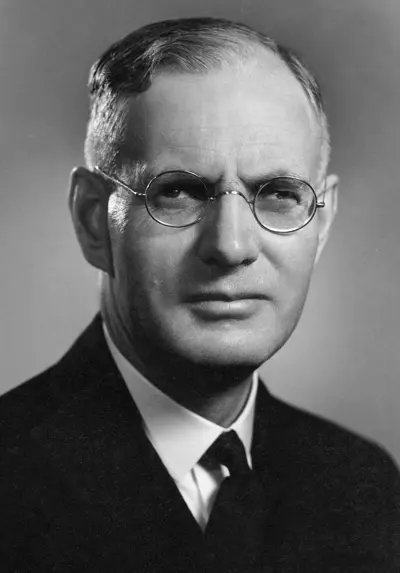
John Curtin was an Australian politician who served as the 14th Prime Minister of Australia from 1941 until his death in 1945. He led the country for the majority of World War II, including all but the last few weeks of the war in the Pacific. He was the leader of the Australian Labor Party (ALP) from 1935 to 1945, and its longest serving leader until Gough Whitlam. Curtin's leadership skills and personal character were acclaimed by his political contemporaries. He is frequently cited as one of Australia's greatest prime ministers.
