Stefan Starzyński Quotes
Warsaw is burning. Warsaw is fighting its enemy in this last mortal battle. All the promises let us down, the help did not arrive. Lack of food and lack of potable water paralyzes and weakens. Yet we fight: with the enemy, with the fire and with the epidemics. Everyone is fighting. Whole city is tied in this mortal struggle. You send us letters of compliments and best wishes from London and Paris. We don't want wishes any more, nor do we await your help. It's too late for help. Before it arrives there will be only rubble here, a corpses-covered, leveled terrain. What we await is revenge. We expect that you will start fighting one day, just like Warsaw is… A day will come when Berlin will be set on flames, when German women and children will die just like ours are dying. I hope all of you will understand then that there is God's justice.
Stefan Starzyński, 1893-1943, Governor of Warsaw, Poland, Last Radio Broadcast before Warsaw fell to the invading German Army, September 27, 1939
Sourced by: Eigen's Political and Historical Quotations


This is a very interesting quotation in that it began as a bogus quotation. Someone made it up and posted it on the internet. Soon it had been picked up by many of the Internet quotation sites which just “scrape” other sites and do no research themselves. Soon it was all over the internet. When he appeared on Meet the Press, Tim Russert asked him about the attribution. He then embraced the quotation as representing his real feelings. In the area of the Internet, this phenomenon has been possible and in this case actually happened.


Sherman, one of the most gifted generals of the Civil War. He hated the cruelty of war and the Civil War in particular as he had specifically warned his Southern friends ahead of time about what war would bring. See {585882}. Sherman was one of the first American military men to look at war without any of the romantic, patriotic, noble attributes that most others did.

Ironically, when he attacked Athens in 480 BC, the Athenians under Themistocles, abandoned the city—see {612656}—and lured the overly-confident Xerxes into a sea battle at Salamis where the Persians were totally destroyed. A few public buildings of Athens were burned, but before Xerxes could fulfill his vow, he was defeated and had to retreat to Persia.

The Nazis occupied the cities, but the partisans survived in the mountains. The resistance was ferocious and very effective. From a German Soldier’s point of view, the Yugoslav front was the most dangerous assignment where his odds of being killed was even greater than the Russian front.

There were other factors which Stalin did not mention. There was a major factor of revenge and retaliation. The Germans had killed 22 million Russians (many murdered deliberately), and forced millions of others into slave labor. They had looted everything of value, artistically or commercially from Russian, homes, churches and other buildings. Many of the Russian officers believed that treatment of the Germans was only just given the barbaric behavior of the Germans and applauded by most of the German population.

The Chinese were massacred when the Japanese invaded with atrocities against civilians that were inconceivable until Hitler began his in Europe. However, there were many Chinese we worked against the Japanese including the Communists who made a truce with Chiang (see {636322}) so that they could oust the Japanese invaders.


Prior to this order, some German submarines had assisted the survivors of torpedoed ships. None did after and some actually machine gunned survivors in the water. One aspect of the quotation that is particularly interesting was the Admiral’s justification example of the Allied bombing of German Cites. What he did not say was that this practice did not begin until Germany—at the insistence of Hitler—ignored the Geneva Conventions and bombed London, Coventry and other English cities. Hitler declared London an “Open City”. The Allies retaliated by bombing factories that were in German Cities. After the war Donitz was found guilty of Unrestricted Submarine Warfare and using thousands of slave laborers in his shipyards. He was sentenced to 10 years, one of the lightest sentences if the German War Crimes Trials.
“Lebensraum” was a German expansionist concept of the time which has no good English translation. Literally, it means “living room”. The Germans had this notion that the German race and nation had to have more land to accommodate the growth of the German people. And because the Germans were a superior race, they were entitled to the land surrounding Germany in which to have Germans grow and thrive. The “inferior” peoples who lived on the land could be exterminated so that Germany would have this expansion room. The “Death’s Head units” were special German elite troops who used the Death’s Head as a symbol on their uniforms. Some of the Generals were concerned that the rest of the world would condemn Germany and possibly interfere if they exterminated the Poles. Hitler pointed to the example of the Turks who had killed most of the Armenians in the Armenian Genocide in the early 20th century. They got away with it with no outside interference, and there were no international consequences for Turkey. Hitler, convinced that the Armenian genocide was the precedent, thought Germany could easily get away with murdering the Gypsies, seriously handicapped, homosexuals, Russians, Poles and Jews. For other quotations on the Armenian Genocide, see {51838}, {638251}, {620602}, {620603}, {620604}, {620605}, {620600}, and {620606}

They had seen many other abolitionists attacked and butchered by the pro-slavery forces. The civil war of Kansas was over whether Kansas would enter the Union as a slave state of a free state. If a free state, the free states would be able to block further slavery. If Kansas were to become a slave state, the slave states would have a sufficient majority to make all future expansion hospitable to slavery. The slavery forces started sending man and families into Kansas so that they could vote; the abolitionists did the same. Both sides armed and a war began with each faction trying to kill or drive the other faction out of Kansas before the vote. See {617388} and {612516}.

Attila the Hun

At first reading, this is just a common report of a German war correspondent riding along on a bombing mission. However what makes it a very important historical quotation is the description of the fires and the date. In WWII the allies firebombed Hamburg {624722} and Dresden, and were then accused by the Germans—and by some historical revisionists in the 21st century—of bombing civilian cities and using the firbombing technique where one huge conflagrant sucked the air out of the area and roasted even people in bomb shelters. However, it was clear that the Germans had started the bombing of civilian cities, but the firebombing was less clear. This quotation proves that it was the Germans who first broke the rules of war and that made the subsequent Allied use of the technique legal and for most people then moral.
He always appeared in a military uniform after that.

This is a very controversial Franklin quotation. In fact, Franklin never sent this letter to Strahan, but it is one of the most famous of the Franklin quotations. It was even famous in 1775. Franklin saw to it that copies of his “letter” reached most American newspaper editors, many of who reprinted it. It was not the first time that an American politician had made quotations for domestic consumption only, and it certainly was not the last. So Franklin never said this to his friend Strahan, but he did claim that he did to all who Americans who would listen. The result is that Franklin developed a reputation for really ‘telling off those Englishmen.’ This was important for him because since he had many friends and admirers in England, he was suspect to many anti-British Americans.

A number of the American soldiers refused to obey Calley's illegal order. Some helped some villagers to escape, and a helicopter pilot landed betreen Callery's men and the villagers they were shooting at, and ordered his helicopter machine gun crew to fire on the soldiers if they did back off. The soldiers stopped firing at the civillians. However, his and other reports of the massacre were covered up by the military for a few years. Mai Lai was not the only major war crime perpetrated by Americans in the Vietnam War; there had been a few others. But given the years of fighting and the many opportunities war crimes violations under orders were quite rare. The Viet Cong had many more war crimes that they perpetrated, and our South Vietnamese allies repeatedly committed war crimes against their own people.

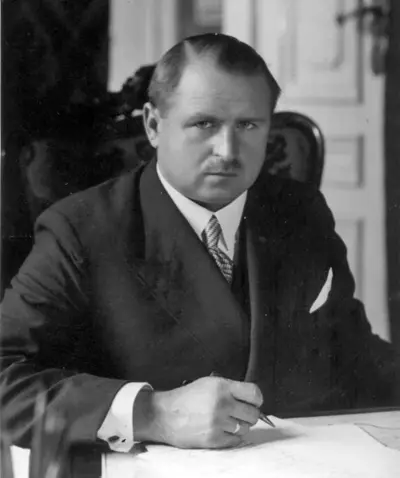
Stefan Bronisław Starzyński was a Polish statesman, economist, military officer and Mayor of Warsaw before and during the Siege of 1939.
