Benjamin Franklin Quotes
You are a Member of Parliament and one of that majority that has doomed my country to destruction. You have begun to burn our towns and murder our people. Look upon your hands! They are stained with the blood of your relatives. You and I were long friends: You are now my Enemy, and I am yours.
This is a very controversial Franklin quotation. In fact, Franklin never sent this letter to Strahan, but it is one of the most famous of the Franklin quotations. It was even famous in 1775. Franklin saw to it that copies of his “letter” reached most American newspaper editors, many of who reprinted it. It was not the first time that an American politician had made quotations for domestic consumption only, and it certainly was not the last. So Franklin never said this to his friend Strahan, but he did claim that he did to all who Americans who would listen. The result is that Franklin developed a reputation for really ‘telling off those Englishmen.’ This was important for him because since he had many friends and admirers in England, he was suspect to many anti-British Americans.
Benjamin Franklin, 1706-1790, Governor of Pennsylvania, Member of the Continental Congress & the Constitutional Convention, Governor of Pennsylvania, President of the Pennsylvania Assembly, U.S. Minister to France, Postmaster General of the American Colonies, Letter to William Strahan, July 5, 1775
Sourced by: Eigen's Political and Historical Quotations


Nathaniel Bacon had led a rebellion in Virginia and had routed the Governor’s troops and caused him to flee leaving control of Virginia to Bacon and his followers who were far more democratic and advanced. However Bacon succumbed to swamp fever, and his followers could not hold the colony together giving the Governor a chance to establish his authority. He then went on a vengeful reign of terror, executing all of Bacon’s followers he could get his hands on. With no danger to the authority of the Crown, King Charles felt that Berkeley had gone too far. The King’s father Charles I had been executed in the aftermath of the English Civil War, but he had executed far fewer than Berkely had done in Virginia.

Sherman, one of the most gifted generals of the Civil War. He hated the cruelty of war and the Civil War in particular as he had specifically warned his Southern friends ahead of time about what war would bring. See {585882}. Sherman was one of the first American military men to look at war without any of the romantic, patriotic, noble attributes that most others did.

Newport, Rhode Island, was a “hotbed” of patriots and was the 5th largest city in Colonial America. Wallace’s flag ship shelled military targets from the sea and threatened to bombard and destroy the town with naval gunfire. However, his superior, Admiral Graves, and he both thought that was too severe a step to take. So there was some restraint exercised by some British commanders in the American Revolution. The worst atrocities were in the South and committed by the British Army—the subject of the American motion picture, “The Patriot”.


Once blood is shed in a national quarrel, reason and right are swept aside by the rage of angry men.
1st Earl Lloyd-George of Dwyfor

Attila the Hun


by recent Southern military losses Ironically, it was the Southern States and Southern politicians who had ever since President Andrew Jackson, illegally appropriated most of the Indian lands. It was the Supreme Court who ordered Jackson not to remove the Cherokee, but he and the other Southerners did so anyway with mild protest coming from the North. Neither section treated the Indians fairly, but the South had been much worse.

He was a German physician and explorer who had converted to Islam. Nonetheless, he was caught up in the Arab uprising of the Madhists, who had conquered much African territory.

Lawrence was a thriving community of abolitionists. Quantrill’s irregular force generally murdered prisoners, scalped them, mutilates their bodies, and wore scalps and body parts as clothing decoration. Quantrill “cleansed” Lawrence by burning virtually every building and killing the male population, See {617769}. It has been a source of great argument as to whether the Confederate command and politicians were fully aware of his actions and endorsed them or didn’t know. Since many of his escapades were printed in the Newspapers of the day, it is probably the case that the Confederate authorities had so much to do, that they just didn’t want to determine the truth of the accusations.

The President had earlier threatened to execute Confederate prisoners, if the South implemented its threat to execute any Union Negro soldiers they captured. The threat seems to have worked. See Lincoln.

Part of French Sudan—now Mali. This was a Province of the Fulani Islamic Empire, Bambara, of the Greater Sudan. Despite fierce resistance, the French prevailed and colonized the territory. Muntaga, the brother of the Tukulor Islamic ruler Amhadu , provided a great example of the fiery rhetorical style which survives to this day in much of the Islamic world.

He was a zealous monarchist who used all means necessary to defend the monarchy of Queen Isabel II.

Right wing conservatives were not always in favor of large defense expenditures. Prior to WWII most were opposed to defense spending and they were the pacifists. Clark was one of the few that maintained this view after WWII.

This proverb only makes sense in the light of understanding the Arab concept of revenge—“blood.” In a rural desert environment where little can be expected of government, the Arabs have developed a law enforcement and peace keeping mechanism which while primitive from modern standards, nevertheless worked to some degree. It is that revenge—“blood” is a moral necessity and obligation of all people, and revenge is not limited by time or to the individuals involved in the first incidence. The immediate family are the first to exact revenge, but the extended family follows and often the entire clan. Sometimes revenge is tribal or even national. Anyone who fails to revenge a member in his group is not only a disgrace, but is a clear and present danger to the group because then they can be attacked with impunity. So revenge is a strong obligation of the group members and blood must be paid with blood no matter how many generations it may take. The only thing that keeps me and my family safe, is the surety what whosoever kills one of us will themselves be killed or if they die a natural death we will take revenge on one of the evildoers relatives. Crime must never pay! Needless to say, this often produces cycles of violence that might never end but for the principle of this proverb—that the obligation of revenge is heavier upon the relatives of the first victim than upon this who are seeking revenge for previous acts of vengeance.
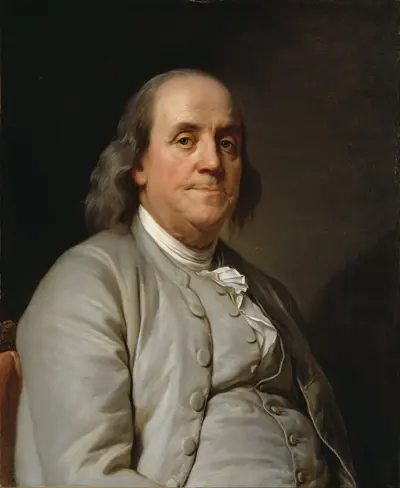
Benjamin Franklin FRS FRSA FRSE was one of the Founding Fathers of the United States. A polymath, he was a leading writer, printer, political philosopher, politician, Freemason, postmaster, scientist, inventor, humorist, civic activist, statesman, and diplomat. As a scientist, he was a major figure in the American Enlightenment and the history of physics for his discoveries and theories regarding electricity. As an inventor, he is known for the lightning rod, bifocals, and the Franklin stove, among other inventions. He founded many civic organizations, including the Library Company, Philadelphia's first fire department, and the University of Pennsylvania.
