Thomas Graves Quotes
We ought to act hostilely from this time forward by burning and laying waste the whole country.
Thomas Graves, 1725–1802, British Admiral in America During the Revolution, April 20, 1775
Sourced by: Eigen's Political and Historical Quotations


He grossly underestimated the intensity of the American patriotic feeling and the fighting ability of the Colonists. He Commanded the Royal Marines at the Battle of Bunker Hill where he was killed by a shot fired by ex-slave and Black Patriot, Peter Salem. Note the recommendation to destroy towns. At the time, that was considered improper in warfare between nations, yet it was not so clear in fighting a rebellion. However, this was against British policy and it was not a tactic employed in trying to suppress the American Revolution.


The British wanted to turn over control of India to Nehru's Congress Party and make India independent. However, there had been sectarian rioting and murder between Muslims and all the other religions of India—Hindus, Sikhs, Buddhists, and Christians. Wavell was not confident that Nehru and Congress could control the situation and huge massacres would result. Gandhi, who normally did everything to avoid violence, this time placed Indian independence first and demanded continuation of the complete transition process including the police and military powers. This is one of the very few occasions on which non-violence was not pre-eminent for Gandhi.

Over the years Sherman’s advocacy of Indian extermination went beyond the Sioux to all Indians.

Although politics can get very rough, Rove took revenge for disagreement or what he perceived as disloyalty to an extreme that was new to the American experience. In one case, to punish an ex ambassador who had made public statements disagreeing with George W. Bush’s policy, Rove leaked the fact that the ambassador’s wife was a covert CIA agent, thus blowing her cover, ending her career, and endangering her life and the lives of some of her contacts. Rove pretended to be a devoted Christian for political image, his behavior towards opponents was far from Christian and his language as can be seen by this quote was not consonant with a religious person’s behavior.
Sherman, one of the most gifted generals of the Civil War. He hated the cruelty of war and the Civil War in particular as he had specifically warned his Southern friends ahead of time about what war would bring. See {585882}. Sherman was one of the first American military men to look at war without any of the romantic, patriotic, noble attributes that most others did.


During the American Revolution, the Iroquois sided with the British, aiding them militarily and other ways. The revolutionaries responded by attacking and destroying most of the Iroquois who retreated to British Canada.

It is not known whether Agamemnon ever existed other than in Greek legends. The “quotation” comes to us from Homer’s Iliad which itself was based on oral histories before and itself was oral for years before it was written. So the dialogue may be written by Homer. However, if real, was the earliest reference to genocide. The photograph is of a mask believed to be of the period but there is no certainty is was the King even though was associated with him by Heinrich Schliemann—the 19th century archeologist who found the object.


This is a very controversial Franklin quotation. In fact, Franklin never sent this letter to Strahan, but it is one of the most famous of the Franklin quotations. It was even famous in 1775. Franklin saw to it that copies of his “letter” reached most American newspaper editors, many of who reprinted it. It was not the first time that an American politician had made quotations for domestic consumption only, and it certainly was not the last. So Franklin never said this to his friend Strahan, but he did claim that he did to all who Americans who would listen. The result is that Franklin developed a reputation for really ‘telling off those Englishmen.’ This was important for him because since he had many friends and admirers in England, he was suspect to many anti-British Americans.


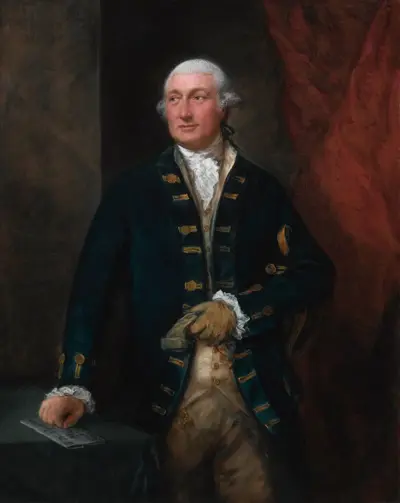
Admiral Thomas Graves, 1st Baron Graves, KB was a British officer of the Royal Navy and a colonial official. He served in the Seven Years' War and the American War of Independence. He was also the Commodore-Governor of Newfoundland for a period of time.
